
AI Powered SEO Explained, A Practical Framework For Modern Search Optimization

AI powered seo in 2026 means using machine learning systems to speed up SEO decisions and production, while humans still own strategy, accuracy, and risk. The confusion comes from noisy claims about “fully automated rankings”, but in practice AI works best as a co-pilot for research, drafting, prioritization, and quality control.
- AI powered SEO is not “set-and-forget”; it is a controlled process where AI assists, and humans verify against data, brand, and policy.
- The highest-leverage uses map cleanly to core disciplines: keyword research, content, on-page, technical SEO, internal linking, and digital PR.
- A weekly workflow with prompts plus QA guardrails (sources, SERP checks, and change logs) reduces risk and keeps outputs measurable.

What AI Powered SEO Means, And What It Does Not
AI powered SEO is a set of repeatable SEO tasks where AI helps generate options (keywords, outlines, drafts, fixes, hypotheses) and humans validate them against real search behavior, site data, and publishing standards. “Powered” should be read as “assisted”, not “automated rankings”.
A practical definition you can operationalize
- AI does: summarize SERP patterns, cluster keywords, draft content structures, suggest internal links, detect anomalies in logs or GSC exports, and generate test ideas.
- Humans do: choose the target query, set search intent, approve claims, verify sources, align to brand voice, and decide what ships.
What it does not do (the myths that cause wasted time)
- Myth: “AI can guarantee rankings.” Reality: rankings depend on competition, relevance, technical constraints, and trust signals that no tool controls end-to-end.
- Myth: “More AI text equals more traffic.” Reality: thin, repetitive pages often fail to satisfy intent and can dilute crawl budget and internal linking signals.
- Myth: “AI knows your business facts.” Reality: models can hallucinate; every non-obvious claim needs a source or must be removed.
Limitations to plan for in 2026
- Data freshness: LLMs are not your analytics. Use Google Search Console, analytics, and crawls as the source of truth.
- Attribution: AI suggestions rarely explain “why”; you need tests, change logs, and before-after checks.
- Compliance: Publishing policies (medical, finance, legal) require stricter review and citations.
Where AI Helps Most In SEO, Mapped To The Core SEO Disciplines
AI adds the most value when you use it to compress analysis time and increase coverage, then anchor decisions in measurable SEO outputs like impressions, clicks, indexation, and conversion. The framework below maps common AI use-cases to each discipline, plus the human check that prevents expensive mistakes.
Use-case map with “AI task” plus “human QA”
| SEO discipline | Where AI helps | Human QA you must keep |
|---|---|---|
| Keyword research | Cluster keywords by intent, generate topic gaps, draft seed lists for long-tail | Confirm intent by checking live SERPs, validate with GSC and competitor coverage |
| Content strategy | Outline structures, suggest supporting questions, propose content briefs | Decide the “point of view”, avoid duplicate angles, ensure topical differentiation |
| On-page SEO | Suggest title variations, headings, schema candidates, rewrite for clarity | Verify claims, match page intent, ensure internal consistency and brand style |
| Technical SEO | Summarize crawl issues, classify errors, draft fix tickets | Reproduce issues in crawl tools, validate fixes in staging, monitor post-release |
| Internal linking | Suggest link targets and anchors based on topical similarity | Check relevance, avoid over-optimization, keep navigational logic intact |
| Digital PR | Find outreach angles, draft pitches, build journalist and site lists | Vet sites for quality and fit, personalize outreach, maintain brand safety |
Two quick “do this, not that” guardrails
- Do this: Treat AI outputs as hypotheses to validate in Search Console and the SERP. Not that: Publish AI drafts without a fact-check pass and intent check.
- Do this: Use AI to create multiple options fast, then choose one based on your constraints. Not that: Use the first answer as the strategy.
In our experience working with service businesses, the biggest win from ai powered seo comes from better prioritization: teams stop debating ideas and start shipping the top 3 tasks that are easiest to validate and measure within 2 to 4 weeks.
A Repeatable AI Powered SEO Workflow You Can Run Weekly
A reliable ai powered seo workflow runs in weekly cycles: pull data, generate candidates, pick priorities, produce assets, then verify outcomes in the same place you measured the baseline. The goal is not “more AI”, it is fewer untracked changes.
Step 1: Pull a “single source of truth” snapshot (30 to 60 minutes)
- Export from Google Search Console: queries and pages for the last 28 days (and previous 28 days for comparison).
- Run a crawl (or reuse last crawl) to list indexability and status codes.
- Collect top landing pages by conversions (if you have analytics goals set).
Step 2: Use AI to produce a prioritized backlog (but force it to show its work)
Prompt example you can copy:
- Prompt: “Given this GSC export (queries, clicks, impressions, position) and this list of pages, identify (a) pages with high impressions and low CTR, (b) pages ranking 8 to 20, and (c) cannibalization candidates. Output a backlog with impact and effort, and list the specific rows that justify each recommendation.”
Human check: ensure every recommendation references a real query-page row from the export, not a guess.
Step 3: Create one-page briefs that reduce rewriting
- Define target query and intent (what the searcher wants to accomplish).
- List must-include facts you can verify (internal docs, product pages, policies).
- List “cannot say” claims (unverified numbers, medical/legal advice, competitor comparisons).
What surprised our team was how often drafts fail because the brief is missing one sentence: “What would make this page uniquely useful compared to the current top results?” Adding that constraint improves clarity more than any prompt tweaking.
Step 4: Draft with AI, then run a three-pass QA before publishing
- Pass A: Intent QA (human): does the intro answer the query directly; do headings match common sub-questions in SERP?
- Pass B: Truth QA (human): every non-obvious claim has a source link, internal reference, or is removed.
- Pass C: SEO QA (tooling + human): title and headings are descriptive, internal links added where relevant, images have alt text, page is indexable.
Step 5: Ship, log changes, and measure the same way you started
- Keep a change log: URL, change type (rewrite, internal links, schema), date.
- Recheck after 7 and 28 days in GSC for impressions, clicks, and query mix shifts.

AI Powered SEO Software, Categories, Must-Have Features, And A Selection Checklist
AI powered seo software works best as a stack of categories, not one “all-in-one robot”, because each category depends on different data sources and governance needs. The selection process should start with your constraints: data access, review workflow, and the types of mistakes you cannot afford.
Tool categories (and when each is worth paying for)
- LLM writing and analysis tools: best for outlining, rewriting, summarizing exports, and drafting briefs.
- SEO platforms: best for rank tracking, keyword databases, backlink data, and site auditing.
- Crawlers and log analyzers: best for technical diagnosis and verifying indexability at scale.
- Content QA tools: best for readability checks, duplication detection, and workflow approvals.
Must-have features checklist (evaluate before you commit)
- Data transparency: can you see where metrics came from (GSC import vs third-party database) and export the underlying rows?
- Governance: roles, approvals, and history so you can audit who changed what and when.
- Integrations: ability to connect GSC, analytics, and your CMS or at least support clean exports.
- Prompt control: reusable templates and the ability to constrain output format (tables, JSON, brief structures).
- Safety controls: citations support, PII handling, and enterprise policy alignment if needed.
A simple scoring rubric for vendor selection
- Accuracy risk (0 to 5): how likely the tool is to generate confident but untraceable recommendations.
- Workflow fit (0 to 5): how well it matches your weekly cycle: snapshot, backlog, brief, QA, publish, measure.
- Time saved (0 to 5): minutes saved per URL or per audit cycle based on a pilot.
- Adoption cost (0 to 5): training, permissions, and process change required.
When we tested tool stacks with teams that publish weekly, the clearest pattern was that integrations and change logging beat “smarter text generation” because they make results attributable, which is essential for deciding what to repeat.
| Workflow step | AI assist output | Human verification | Pass criteria |
|---|---|---|---|
| Research | Keyword clusters and SERP summary | Spot-check live SERP, confirm intent | Cluster labels match SERP page types |
| Brief | Outline and questions to answer | Add unique angle and constraints | Brief includes “must-verify facts” list |
| Draft | Section drafts, rewrites | Truth QA and brand edit | No unsupported claims remain |
| Publish | On-page suggestions | Technical and indexability checks | Page is indexable, internally linked |
| Measure | Anomaly summary | Compare to baseline and change log | Result tied to a specific change |
FAQ
If you want help applying this ai powered seo workflow to your site with clear QA guardrails, Freeways can share a lightweight readiness checklist and walk through your current process to identify the quickest, safest wins.

Written by Joyce Ng.

Is Your Website an Open Book or a Black Box to AI?
Learn optimization artificial intelligence with a clear taxonomy, a weight-update example, a method selection matrix, and a measurable project workflow.
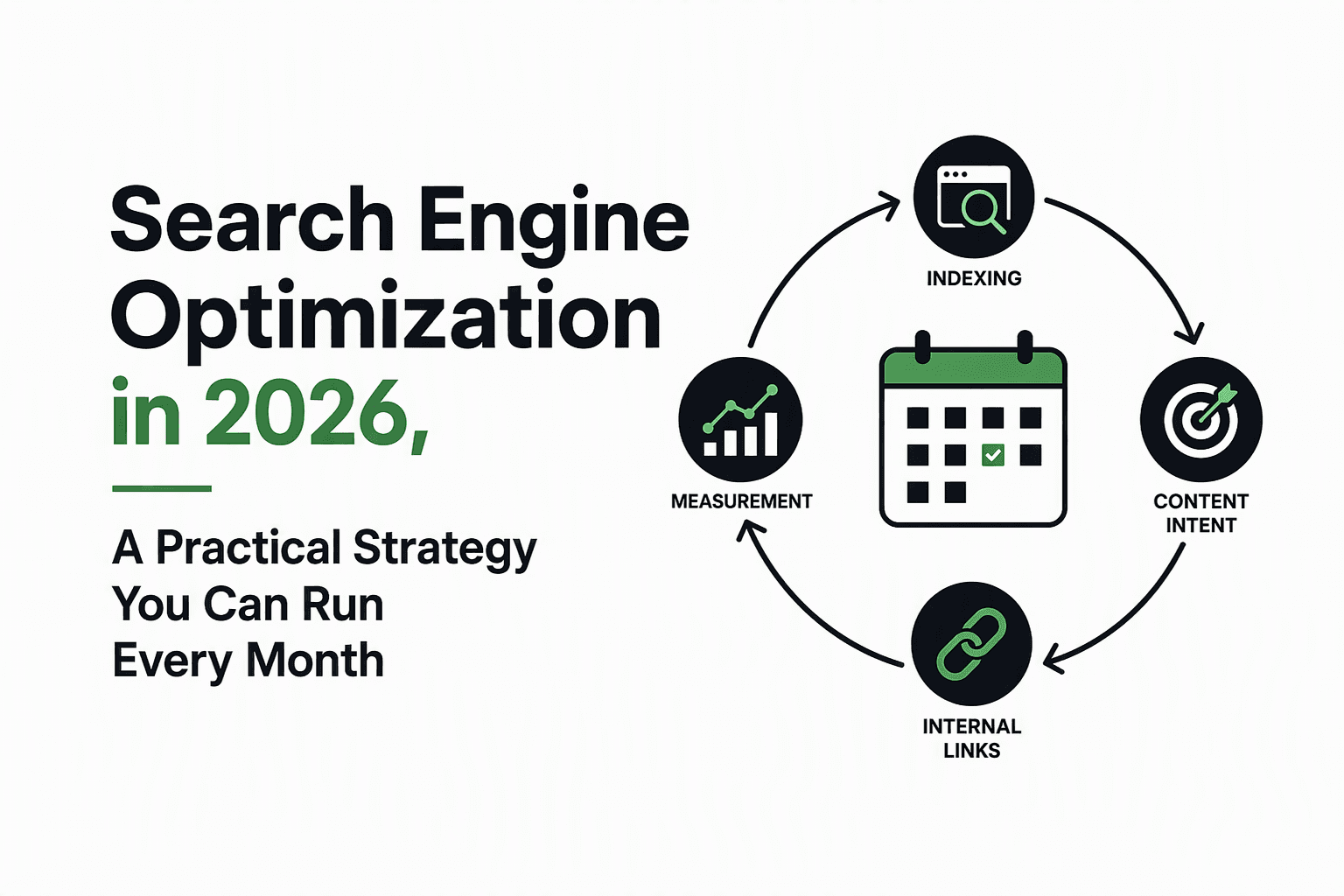
Search Engine Optimization in 2026, A Practical Strategy You Can Run Every Month
Run search engine optimization as a monthly system in 2026: fix indexability, build intent pages, strengthen links, and measure ROI in GSC.
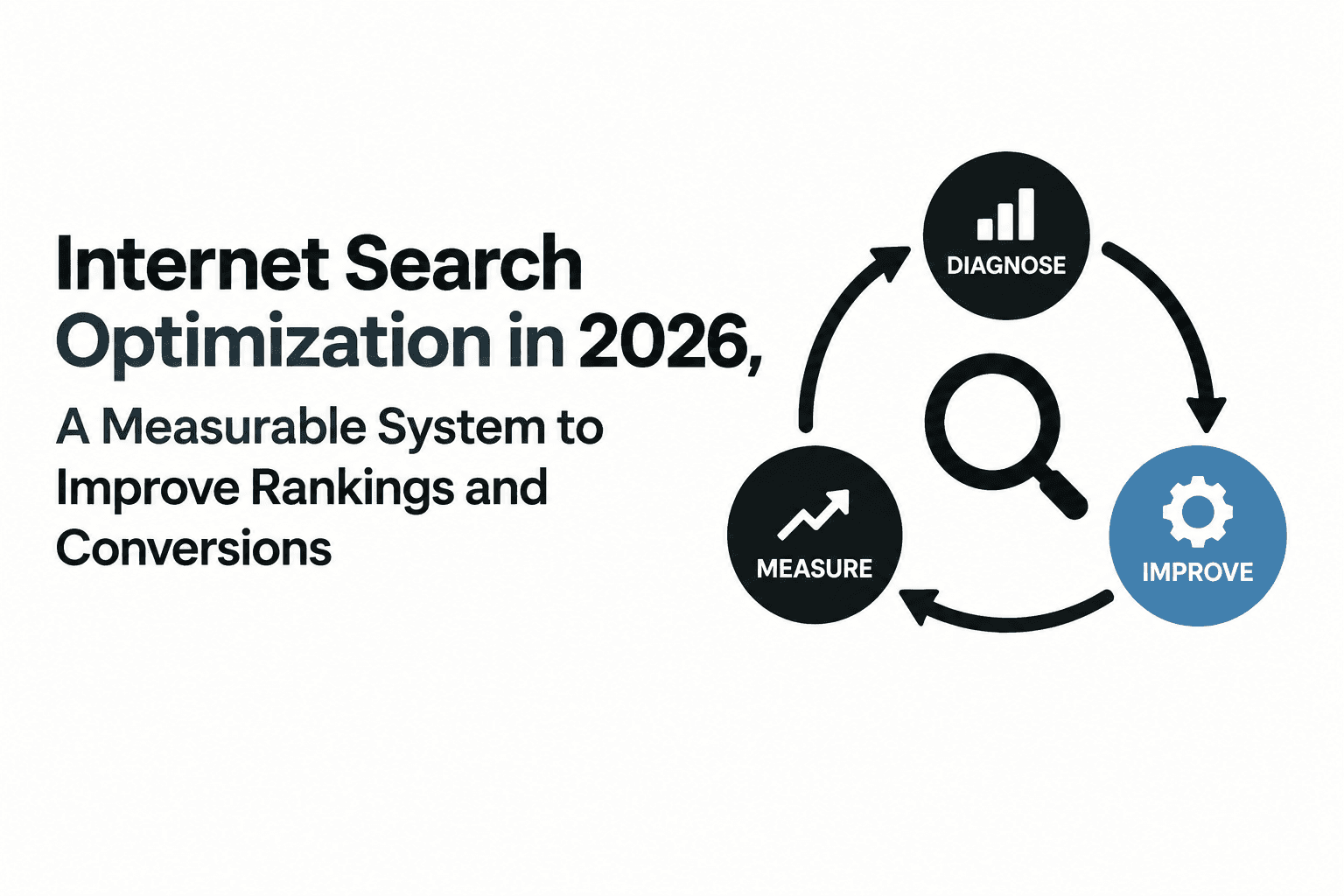
Internet Search Optimization in 2026, A Measurable System to Improve Rankings and Conversions
Run internet search optimization as a measurable loop: diagnose, prioritize, and track KPIs that improve rankings, CTR, and conversions.