
AI Visibility in 2026 What It Is and How to Improve It

AI visibility is the measurable likelihood that your brand, products, or content are mentioned, cited, or used as a source inside AI answers (Google AI Overviews, ChatGPT, Perplexity, Gemini, and copilots) for the queries that matter to your business.
- AI visibility is not “ranking higher”; it is being selected as a trustworthy source in AI-generated answers, often without a click.
- You can baseline AI visibility in one afternoon by testing a fixed prompt set, logging citations and brand mentions, and mapping which entities and proof points AI systems can verify.
- The fastest early wins usually come from clarifying your entity, publishing proof-rich content formats, earning citations in places AI models repeatedly rely on, and removing technical blockers to crawling and extraction.
What AI Visibility Means Now and Why It’s Not Just Rankings
AI visibility is about getting selected into an answer, not simply appearing as a blue link on a results page.
In 2026, “being visible” increasingly happens in places where users never see a list of ten links: AI Overviews, chat-style results, in-browser copilots, and voice responses. Those systems frequently synthesize a response and may cite a few sources (or none), which means classic SEO outcomes like “position #3” do not translate 1:1.
Where AI visibility shows up (and what to record)
- Mentions: your brand is named as an option or example.
- Citations: your site (or another source) is linked as evidence for a claim.
- Attribution: specific frameworks, definitions, or steps are credited to you.
- Recommendation context: you are suggested for a use case (industry, budget, geography, constraints).
A practical definition you can actually measure
For measurement, treat AI visibility as a repeatable set of outcomes per query, not a vibe:
- Presence rate: in how many of your tracked prompts does the AI mention your brand or cite your domain?
- Quality of presence: are you listed as a primary recommendation, a secondary option, or a passing mention?
- Correctness: are descriptions accurate (pricing model, locations served, what you do)?
The pain point we see most often is a brand that “ranks fine” but is absent from AI answers, because the AI system can’t confidently extract who they are, what they do, and what proof supports it.
How AI Systems Decide What to Mention, Quote, and Recommend
AI systems tend to mention sources that are directly relevant, easy to verify, and consistently described across the web.
Even when models differ, the same drivers show up in practice: the answer generator looks for passages that clearly address the prompt, then cross-checks with other sources (training-time patterns, retrieval systems, and highly repeated references across the public web). Your job is to make the “right” answer easy to assemble with minimal ambiguity.
Four inputs that usually determine selection
- Direct relevance in extractable passages
A paragraph that states the criteria, steps, or definition in plain language is more likely to be lifted and cited than a meandering thought-leadership intro. - Entity strength and disambiguation
If your brand name is similar to others, or your service description changes across pages, the system has a harder time matching you to the query. Consistent “who we are, what we do, where we do it” language matters. - Verifiable proof points
AI answers lean toward claims that can be checked: named standards, documented processes, transparent assumptions, and specific examples. “We’re the best” with no substantiation is easy to ignore. - Citations and distribution sources
If reputable sites repeatedly describe your category and reference certain sources, AI systems learn those patterns. You do not need hundreds of links, but you do need to appear in the places that define your entity and category.
What surprised our team when validating prompts
What surprised our team was how often a single “definition plus checklist” section outperformed a long guide for citation, because the short section answered the prompt in one self-contained chunk. In our experience working with service businesses, AI systems quote the page that reduces interpretation risk, not the page with the most words.
How this differs from classic SEO (quick comparison)
- Classic SEO: you can win by being the most relevant page and earning links; the click delivers the value.
- AI answers: you win by being the most quotable and verifiable source; the answer itself delivers much of the value.
If you want the foundations, it still helps to understand how search works end-to-end. A useful starting point is organic search vs search engine optimization, because AI visibility builds on the same discoverability fundamentals, then adds “answer selection” dynamics.
A Simple AI Visibility Audit You Can Run in One Afternoon
A one-afternoon AI visibility audit is a controlled prompt test plus a source and entity check, recorded in a spreadsheet so you can repeat it monthly.
Keep it lightweight and consistent. The goal is not to “game prompts”; it is to create a baseline you can improve against.
Step 1: Build a fixed prompt set (12 to 20 prompts)
Choose prompts that match business intent, not vanity curiosity. Use three buckets:
- Category discovery: “Best [service] agencies for [industry] in [market]”
- Comparison: “[option A] vs [option B] for [use case]”
- How-to: “How to evaluate a [service provider] for [constraint]”
Add at least 3 prompts where your brand should be relevant, and 3 where you should not show up. The “should not” set helps you spot hallucinated or over-broad mentions.
Step 2: Run the same prompts across 2 to 3 engines
- Google AI Overviews (where available)
- ChatGPT (with browsing or citations when available)
- Perplexity (typically citation-forward)
Record date, prompt, engine, and the exact answer text. If citations exist, copy the cited URLs.
Step 3: Log outcomes using a simple rubric
Use a 0 to 3 score per prompt:
- 0: not mentioned, not cited
- 1: mentioned but not cited, or described inaccurately
- 2: mentioned correctly, or cited as one of several sources
- 3: recommended prominently, cited clearly, and described accurately
Step 4: Map the “why” behind every mention or absence
For each prompt, add two columns:
- Evidence type used: definition, checklist, pricing, case example, standards, reviews, directory, Wikipedia/knowledge panel-like entity info, etc.
- Primary source class: vendor sites, editorial blogs, directories, forums, documentation, or news.
After running dozens of these audits, the pattern was clear: when the answers cite the same 5 to 15 domains repeatedly, your fastest path is to become present on those source classes, and to publish the kind of extractable content those sources reward.
Step 5: Do a fast entity consistency check
Review the top 5 pages that define your entity:
- Homepage
- About page
- Primary service page
- Contact page
- One high-performing informational post
Confirm these elements match across pages: brand name, short description of what you do, geographic/service coverage, and primary proof points (process, certifications, client types). If those disagree, AI systems often “hedge” and pick someone else.
The AI Visibility Flywheel Four Levers That Usually Move the Needle
The most reliable way to improve AI visibility is to pull four levers in order: entity clarity, proof-rich content, distribution and citations, then technical accessibility.
Think of this as a flywheel because each lever strengthens the next: clear entity data makes content easier to attribute, proof makes distribution more likely, and distribution reinforces the entity across the web.

Lever 1: Entity clarity (make “who you are” unmissable)
- Write a one-sentence “positioning line” and reuse it consistently (homepage hero, about, service page intros).
- Standardize naming for your service categories (avoid calling the same thing three different names).
- Create a short “facts” block that is easy to extract: locations served, ideal client, deliverables, constraints.
Lever 2: Content proof (publish passages that can be quoted)
Prioritize formats that AI systems can lift directly into answers:
- Definition blocks: 2 to 3 sentence definition + “when it matters”
- Checklists: 7 to 12 bullet criteria for evaluating or doing something
- Frameworks: 3 to 5 steps with clear inputs/outputs
- Examples: “Here is a good vs bad version” with concrete wording
Technical content still matters here, because if a crawler cannot fetch or render your page, you do not get cited. If you need a practical foundation, this guide on website technical SEO explains common blockers that reduce both traditional and AI-driven visibility.
Lever 3: Distribution and citations (be present where the category is defined)
Do not chase random mentions; chase the sources your audit showed the engines already rely on. A simple approach:
- List the top 10 repeatedly cited domains for your prompt set.
- Classify them (editorial, directory, documentation, community).
- Pick 3 where you can legitimately contribute: profiles, expert quotes, guest contributions, partnerships, or data references.
Lever 4: Technical accessibility (remove extraction friction)
- Make key pages indexable and not blocked by robots rules.
- Ensure primary content is server-rendered or reliably rendered for crawlers.
- Use clear headings, tables, and lists where appropriate so content is easy to extract.
- Keep page templates consistent so the “facts” about your brand do not move around.
How to Measure AI Visibility Without Lying to Yourself
Measuring AI visibility credibly requires a fixed prompt set, versioned logging, and KPIs that separate “mentions” from “business-relevant presence.”
Because AI answers can change daily, you need a cadence and a baseline. Avoid single screenshots as proof of progress.
A starter KPI set (small but honest)
- Prompt presence rate: % of tracked prompts where your brand/domain appears (mention or citation).
- Citation rate: % of prompts where your domain is cited as a source (stronger than mention-only).
- Recommendation share: among prompts with “best”, “top”, “recommended”, how often you appear in the top set described.
- Accuracy score: % of appearances with correct service description, geography, and positioning.
Baseline and tracking cadence (30 days)
- Day 1: run the full prompt set across your chosen engines and log results.
- Day 7: rerun the top 5 revenue-intent prompts only (quick check).
- Day 30: rerun the full set and compare deltas by prompt bucket.
When we tested a “fixed prompt set plus rubric scoring” approach, it reduced internal debate dramatically, because everyone could see the same inputs, outputs, and changes over time. The main practical win is focus: you stop celebrating random mentions and start prioritizing the prompts that map to pipeline.
How to interpret movement (and what not to over-read)
- Mentions up, citations flat: your entity clarity may be improving, but your proof or distribution is still weak.
- Citations up, accuracy down: your content is being used, but your positioning language may be inconsistent across pages.
- No change after 30 days: revisit direct relevance and source class presence; you may be optimizing your site while engines cite third-party explainers and directories.
Common Mistakes That Reduce AI Visibility and What to Do Instead
AI visibility drops fastest when teams chase prompt hacks, publish vague thought leadership, or make claims that cannot be verified anywhere else.
Mistake 1: Prompt-chasing instead of query coverage
- What it looks like: rewriting copy to match a single viral prompt format.
- Do instead: build a prompt set that covers your category, comparisons, and evaluation questions, then create content that answers those directly in extractable blocks.
Mistake 2: Thin “insights” with no decision support
- What it looks like: broad predictions with no steps, criteria, or examples.
- Do instead: publish checklists, buyer criteria, and “good vs bad” examples. AI systems can quote them, and humans can act on them.
Mistake 3: Unverifiable claims and missing corroboration
- What it looks like: “industry-leading”, “trusted by thousands”, unnamed awards.
- Do instead: state what you can support on-page: your process, deliverables, constraints, and concrete examples. If you have third-party corroboration (profiles, standards memberships, published talks), make it easy to find and consistent.
Mistake 4: Ignoring basic search foundations
- What it looks like: pages blocked from indexing, messy canonicals, duplicated service pages, or content that is hard to render.
- Do instead: fix technical accessibility first, then invest in proof-rich content and citations. If you are comparing providers for help, a reference list of top search engine optimization companies can help you evaluate approaches transparently.
One external standard worth aligning with
For a grounded baseline on how content is discovered and indexed, Google’s documentation on search essentials is still the clearest public reference for technical accessibility and content guidelines: Google Search guidance on helpful content.
| Goal | What to track | What usually improves it |
|---|---|---|
| Get mentioned | Presence rate (mentions + citations) on your prompt set | Entity clarity, category pages, consistent positioning |
| Get cited | Citation rate and which URLs are cited | Proof-rich formats, quotable passages, distribution to cited sources |
| Be recommended | Recommendation share on “best/top” prompts | Evaluation criteria content, comparisons, corroborating third-party references |
| Be described accurately | Accuracy score (service, geography, constraints) | Consistency across core pages, updated facts blocks, reduced ambiguity |
FAQ about AI visibility
If you want a second set of eyes on your baseline and a prioritized 30-day plan, Freeways can help you interpret your audit results and map the quickest, evidence-led actions to improve ai visibility without chasing vanity mentions.

Written by Joyce Ng.

Is Your Website an Open Book or a Black Box to AI?
Learn optimization artificial intelligence with a clear taxonomy, a weight-update example, a method selection matrix, and a measurable project workflow.
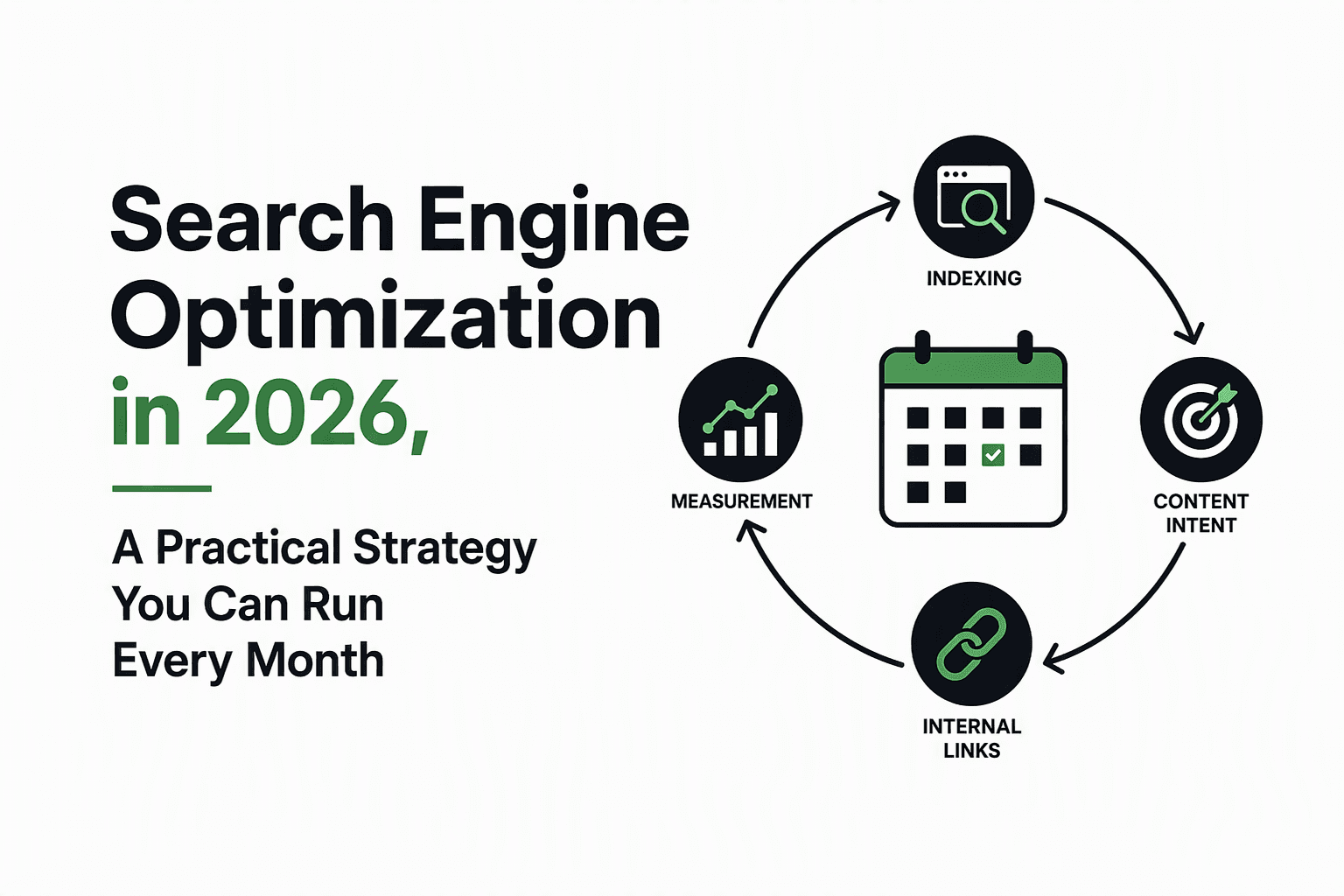
Search Engine Optimization in 2026, A Practical Strategy You Can Run Every Month
Run search engine optimization as a monthly system in 2026: fix indexability, build intent pages, strengthen links, and measure ROI in GSC.
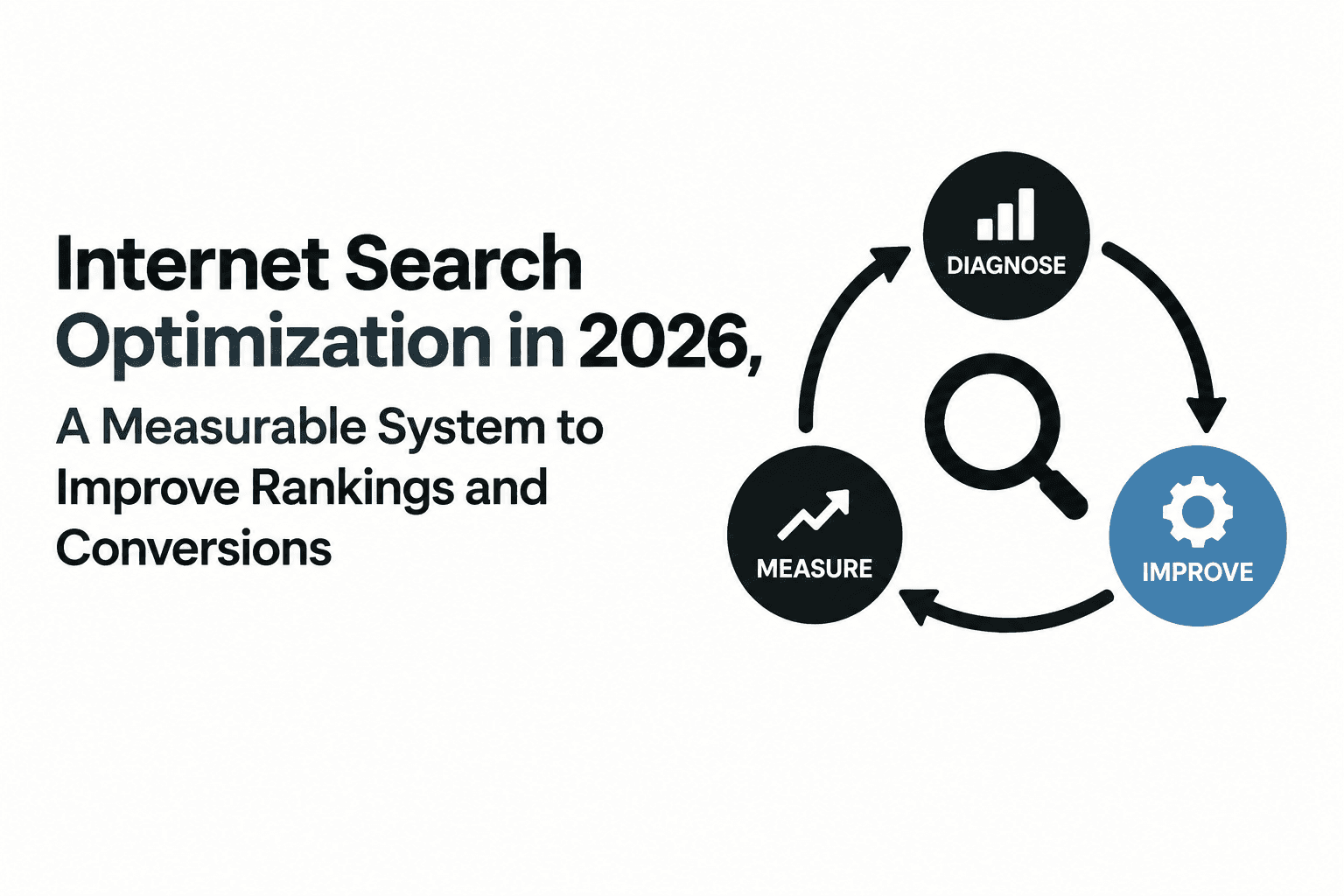
Internet Search Optimization in 2026, A Measurable System to Improve Rankings and Conversions
Run internet search optimization as a measurable loop: diagnose, prioritize, and track KPIs that improve rankings, CTR, and conversions.