
Chat GPT for SEO in 2026, A Practical Workflow and Prompt Library

Chat gpt for seo in 2026 means using ChatGPT as a practical assistant for research, outlining, on-page improvements, and content refreshes, while you keep humans in charge of accuracy, intent, and performance tracking.
- Use ChatGPT to speed up SEO tasks, but validate every claim with a QA checklist before publishing.
- Run a repeatable workflow from keyword research to refreshes, then measure with GSC queries, page groups, and visibility checks.
- Separate classic SEO work from GEO or “being cited by ChatGPT” so your plan stays measurable and realistic.

What ChatGPT for SEO Actually Means in 2026 (And What It Does Not)
Chat gpt for seo works best when you treat ChatGPT as an SEO copilot that drafts, clusters, summarizes, and suggests, while you verify facts, align to search intent, and decide what ships.
A quick terminology map so you do not mix goals
| Term | What it is | What you can measure | Common mistake |
|---|---|---|---|
| SEO | Improving pages so they rank and earn clicks from search engines | Impressions, clicks, rankings, conversions (GSC + analytics) | Publishing “AI content” without intent match or QA |
| ChatGPT-assisted SEO | Using ChatGPT to accelerate research, outlines, drafts, and audits | Time saved, output consistency, fewer revisions, faster refresh cycles | Letting the model invent facts, sources, or “best practices” |
| GEO / LLMO | Optimizing to be referenced by generative engines in answers | Mentions/citations, brand recall, assisted conversions (harder attribution) | Chasing keyword repetition instead of clear, quotable passages |
| AI Overviews | Google’s answer-like UI that can reduce or reshape clicks | Query mix changes, CTR shifts, page-level performance | Panicking at CTR drops without segmenting query intent |
Where ChatGPT helps and where it reliably fails
- Helps: clustering keywords, generating outlines, rewriting for clarity, extracting entities, drafting FAQs, creating test plans for titles and intros.
- Fails without QA: factual accuracy, source citations, competitor claims, “what Google prefers,” and anything that requires real-time data.
We initially assumed ChatGPT would be strongest at “keyword strategy,” but our team found it is more dependable at producing multiple angle options fast, then humans select based on SERP review and business fit.
If you are still separating foundational work like crawlability and indexing from content, start with a baseline technical checklist first. A practical reference is our guide on website technical SEO.
A QA-First ChatGPT SEO Workflow From Keyword Research to Content Refresh
A QA-first workflow for chat gpt for seo is a repeatable SOP that forces validation at each stage, so you get speed without publishing errors or mismatching intent.
Step 1: Choose one page objective and one search intent
- Input: product/service context, audience, conversion goal, and one topic bucket.
- Human check: confirm whether the intent is informational, comparative, or transactional by scanning the top results for that query family.
Step 2: Build a keyword set, then cluster by intent not by wording
- Input: GSC queries, competitor headings, People Also Ask, Bing suggestions.
- ChatGPT output: clusters with a label like “definition,” “workflow,” “templates,” “mistakes,” “tools,” “pricing.”
- Human check: remove clusters that do not match your product reality or audience maturity.
Step 3: Draft a brief and outline that can be audited
- Brief must include: primary query, secondary questions, target reader, “what success looks like,” and excluded topics.
- Outline rule: every H2 starts with a self-contained answer sentence so it can stand alone in snippets and generative results.
Step 4: Draft sections, then run a hard QA pass before editing for style
- Hard QA checklist: factual claims, tool capabilities, definitions, and step order.
- Evidence rule: if you cannot verify a statement in your own data or a reliable source, rewrite it as a criterion or a “how to validate” instruction.
Step 5: Publish, then schedule refresh triggers
- Refresh triggers: impressions up but CTR down, ranking stable but conversions down, new competitors, or new SERP features dominating the query.
- Cadence: many teams start with a 60 to 90 day review cycle for top pages, then adjust based on volatility.
To keep the workflow measurable, we recommend agreeing internally on the difference between “organic discovery” and “SEO execution.” If that distinction is fuzzy, this explainer on organic search vs SEO helps align stakeholders.
Copy-Paste Prompt Library for Real SEO Tasks (With Inputs, Outputs, and Checks)
Prompting for chat gpt for seo works when every prompt includes your inputs, the expected output format, and a verification step that prevents hallucinations.
How to use this library (one rule that prevents most errors)
Add a “Stop and ask questions” line when inputs are incomplete. That single instruction reduces made-up assumptions and forces the model to request missing context.
10 prompts you can reuse immediately
- Intent snapshot from a SERP paste
Prompt: “You are an SEO analyst. Based on the SERP notes below, classify intent (informational/commercial/transactional), list the dominant content types, and propose 3 angles that would differentiate. SERP notes: [paste titles/H1s/snippets]. Stop and ask questions if missing.”
Check: verify the intent by manually opening 3 top results. - Keyword clustering by intent
Prompt: “Cluster these queries into 5 to 8 intent groups. Name each cluster, pick one primary query, and list supporting queries. Queries: [list]. Output as a table.”
Check: ensure supporting queries would be satisfied by the same page. - Content brief generator
Prompt: “Create a one-page SEO content brief for: [topic]. Include target reader, primary query, 6 secondary questions, required sections, conversion goal, internal link suggestions, and ‘do not cover’ list. Use bullets.”
Check: remove any sections you cannot back with real experience or sources. - Outline with extractable answers
Prompt: “Write an outline where every H2 starts with a single-sentence answer that can stand alone. Include H3s, checklists, and a small example.”
Check: read each H2 opener in isolation to confirm it still makes sense. - On-page rewrite for clarity
Prompt: “Rewrite this section for clarity and scannability without adding new facts. Keep meaning, reduce fluff, add bullets where helpful. Text: [paste].”
Check: confirm no new claims were introduced. - Entity and terminology consistency
Prompt: “Extract key entities and terms from this draft and flag inconsistent naming or unclear definitions. Draft: [paste].”
Check: ensure terms match how your industry actually uses them. - FAQ generation tied to the page
Prompt: “Generate 6 FAQs that a beginner would ask after reading this page. Use only information present in the draft, no new claims. Draft: [paste].”
Check: delete any FAQ that requires new evidence. - Internal link placement suggestions
Prompt: “Suggest 3 internal link opportunities in this draft. For each, quote the exact anchor text snippet and the target page topic. Draft: [paste].”
Check: confirm the linked page truly answers the follow-up need. - Content refresh plan from GSC export
Prompt: “Given this list of queries with impressions/clicks, find patterns: rising queries, mismatched intent, missing sections. Propose a refresh plan with 5 changes max. Data: [paste rows].”
Check: validate patterns by comparing date ranges in GSC. - Risk scan for YMYL and unsupported claims
Prompt: “Scan this draft and list statements that look like facts, guarantees, or medical/legal/financial advice. Suggest safer rewrites that turn them into criteria or steps to verify. Draft: [paste].”
Check: confirm your final copy matches your compliance needs.
Validation checklist (run this before publish)
- Claims: every factual statement is either (a) sourced, (b) observable in your own data, or (c) rewritten as a verification step.
- Intent: the intro and each H2 answers the query directly in the first sentence.
- Originality: add at least one “how we do it” process detail (inputs, steps, thresholds), not generic advice.
- UX basics: headings are descriptive, lists are scannable, and the page has a clear next action.
What surprised our team was how often a “better prompt” mattered less than a better input. When the input includes the SERP pattern, constraints, and output format, chat gpt for seo becomes far more predictable.
How to Measure Results When AI Overviews and ChatGPT Change the Click Model
Measuring chat gpt for seo success in 2026 requires tracking query segments and page groups, not just a single average CTR line, because AI Overviews can shift clicks without reducing visibility.
Set up a lightweight measurement system (no fancy stack required)
- Google Search Console: track by page, then filter queries by intent words (for example “how to,” “best,” “vs,” “pricing”). Compare last 28 days vs previous 28 days to spot mix shifts.
- Bing Webmaster Tools: use it as a secondary lens for query discovery and indexing signals. Reference: Bing Webmaster Tools.
- Analytics: create a report for organic landing pages with engagement and conversion events, so visibility changes do not get mistaken for business impact changes.
Report with 4 metrics that stay meaningful even when clicks fluctuate
| Metric | Where | What it tells you | What to do if it drops |
|---|---|---|---|
| Impressions (by page group) | GSC | Visibility and topic demand | Re-check indexing, intent fit, and competing pages |
| Clicks (by query intent segment) | GSC | Traffic capture by intent type | Improve titles/snippets, add clearer “next step” sections |
| Conversions from organic landing pages | Analytics | Business value independent of SERP UI | Strengthen CTAs, internal links, and offer alignment |
| Refresh velocity (time from signal to update) | Internal | Operational advantage from AI assistance | Reduce approval friction, standardize QA and prompts |
Quick visibility test prompts for generative engines
- “Summarize the key steps for [topic] and cite the sources you used.” Then check whether your page is cited, and if not, whether your content has extractable step-by-step passages.
- “What are common mistakes in [topic] and how do you avoid them?” Then compare the answer to your page. If your page covers the mistakes but not in crisp bullets, rewrite for extractability.
After running many content refresh cycles, the pattern was clear: the pages that gained the most stability were the ones that made verification easy with checklists, definitions, and explicit step order, not the ones that repeated the keyword.

| SEO task | Use ChatGPT for | Human must verify | Best evidence to attach |
|---|---|---|---|
| Keyword research | Clustering, angle generation, intent labels | Actual SERP pattern, business relevance | SERP notes + GSC exports |
| Outlining | Section order, FAQs, checklists | Coverage vs competitors, originality | Outline mapped to queries |
| Drafting | First drafts, rewrites, examples scaffolding | Facts, tool claims, compliance | Source links + internal data |
| Refreshing | Change suggestions from data patterns | Cause of performance changes | Before/after GSC comparisons |
FAQ
If you want a second set of eyes on your chat gpt for seo workflow, Freeways can run a low-friction SEO audit and help you turn your prompts, QA checklist, and refresh cadence into an execution plan you can measure.

Written by Joyce Ng.

Is Your Website an Open Book or a Black Box to AI?
Learn optimization artificial intelligence with a clear taxonomy, a weight-update example, a method selection matrix, and a measurable project workflow.
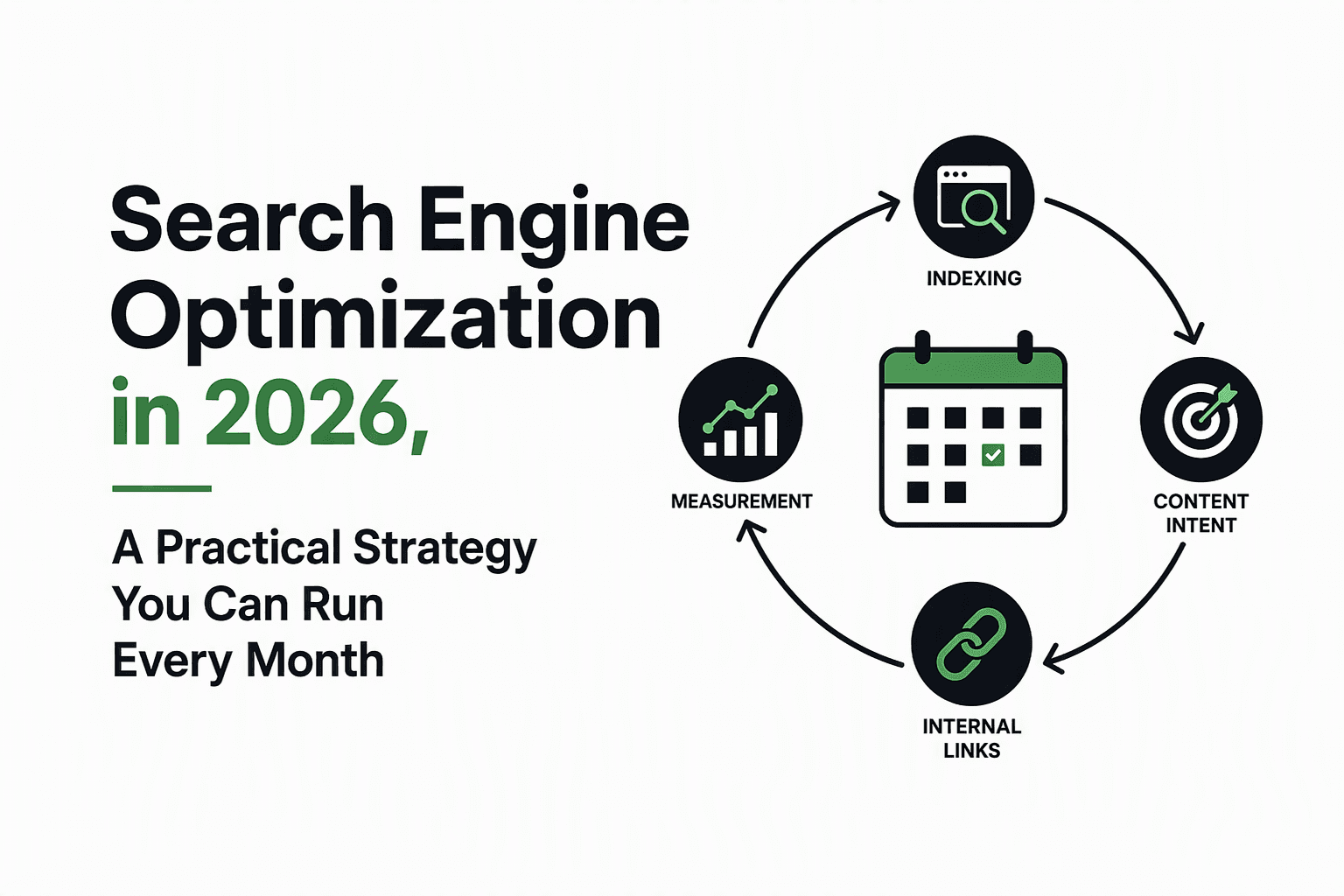
Search Engine Optimization in 2026, A Practical Strategy You Can Run Every Month
Run search engine optimization as a monthly system in 2026: fix indexability, build intent pages, strengthen links, and measure ROI in GSC.
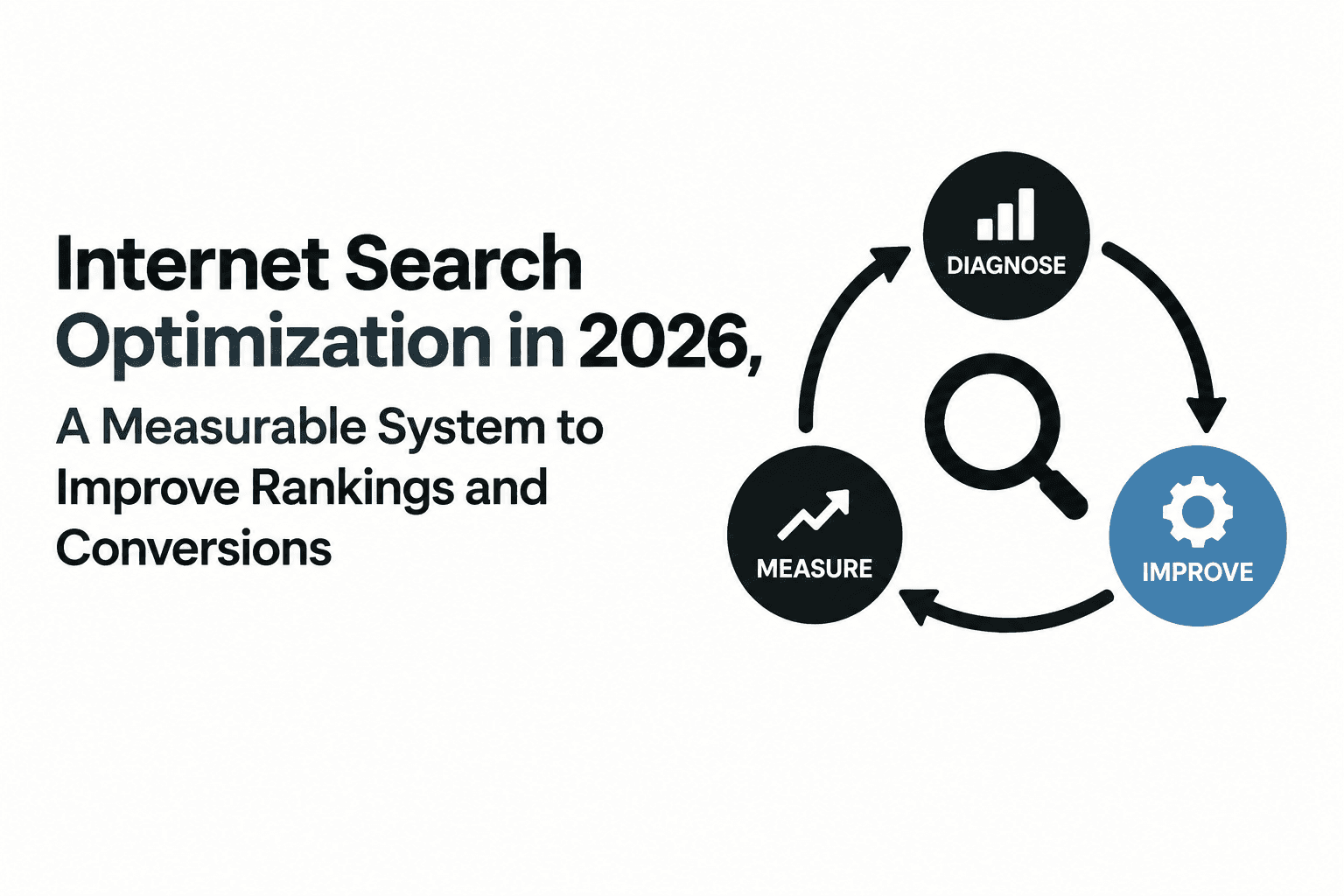
Internet Search Optimization in 2026, A Measurable System to Improve Rankings and Conversions
Run internet search optimization as a measurable loop: diagnose, prioritize, and track KPIs that improve rankings, CTR, and conversions.