
Keywords SEO Services, A Copy-Paste Keyword List and Buyer Checklist for 2026

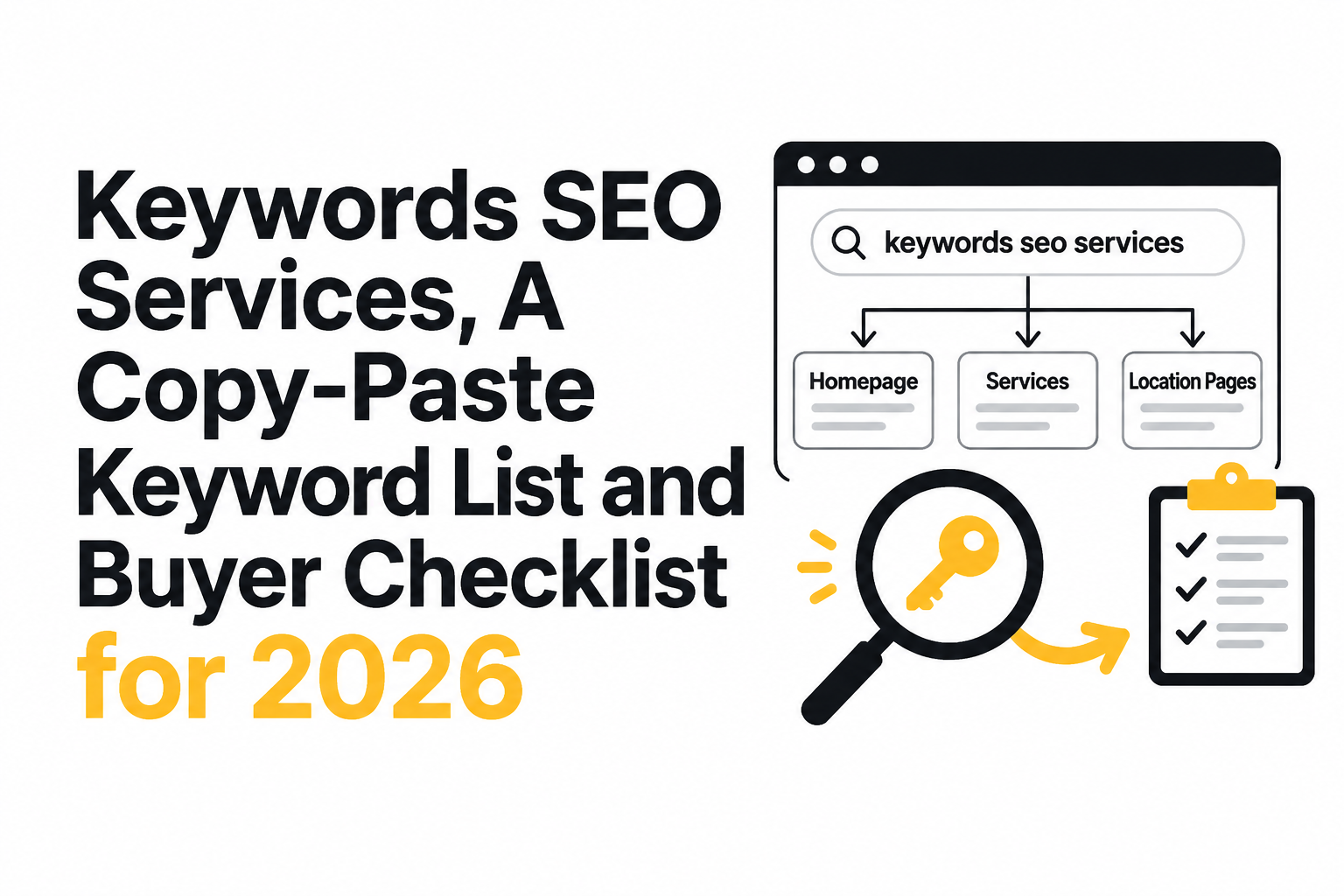
Keywords SEO services should produce a decision-ready keyword set you can map to pages, not a spreadsheet dump that dies in a folder. This guide gives you a copy-paste keyword list, a real mapping example you can adapt, 2026 pricing bands, and a checklist to approve an in-house plan or pick an agency with confidence.
- Service-grade keyword work includes intent labels, page mapping, prioritization logic, and ownership of the underlying data and assumptions.
- A usable keyword set is tied to your site structure (home, services, industries, locations, resources) with clear primary and secondary terms per page.
- Pricing varies mostly by site complexity, number of locations/services, and whether the provider includes mapping, content briefs, and tracking setup.
What Keywords SEO Services Should Include So You’re Not Just Buying a Keyword Dump
Keywords SEO services are only worth paying for when the output directly tells you which pages to build or fix, which terms to target on each page, and what to do first. If you cannot make a page-level execution plan from the deliverables, you did not buy a service, you bought a list.
Minimum deliverables you should expect in 2026
- Keyword universe: seed terms expanded with variations (plural/singular, “near me”, problem phrases), plus exclusions (irrelevant meanings, wrong geography).
- Intent label per keyword: informational, commercial, transactional, navigational, local. (A vendor can choose different labels, but every term needs one.)
- Primary term + supporting terms: a single primary target for each page, with tightly related secondary terms that belong on the same page.
- Keyword-to-page mapping: an explicit mapping to existing URLs or proposed new URLs.
- Prioritization: what gets done first and why (business value, feasibility, existing rankings, internal link leverage, content gaps).
- Assumptions and scope notes: target locations, languages, product/service lines included, and what is explicitly out of scope.
- Ownership: you own the spreadsheet, the criteria, and the working files used to create it.
Service-grade acceptance criteria (use these to approve work)
- No cannibalization by design: the mapping avoids two pages targeting the same “main” query unless there is a clear reason (for example, separate location intent).
- Every cluster has a destination: each meaningful topic cluster maps to a page type (service, location, industry, comparison, guide) or is intentionally deferred.
- Clear page intent: the proposed page satisfies the intent of the keyword set (lead-gen page for “service + city”, guide for “how to”, etc.).
- Measurable success definition: the provider specifies how keywords translate to reporting (rank tracking groups, landing page leads, conversions by page type).
What I look for when auditing keyword work from another vendor
I usually spot weak keyword deliverables in under 10 minutes by checking whether the file includes a page mapping column and whether “service + location” terms are separated from informational terms. If those are mixed together without intent labels, execution typically drifts into random blog posts instead of revenue pages.
SEO Services Keywords List You Can Copy, Categorized by Page Type and Intent
A buyer-ready keywords list starts with page types, because pages are what you ship, measure, and improve. Below is a curated starter set you can copy and adapt, grouped by homepage, service pages, location pages, industry pages, and proof pages, with intent notes so your agency or team can map quickly.
How to use this list (fast)
- Pick your page types you will actually maintain in 2026 (services, locations, industries, guides, comparisons).
- Choose one primary keyword per page, then add 3 to 10 close secondary terms.
- Reject terms that do not match your sales motion (for example, “free”, “jobs”, “template” if you do not serve that intent).
Copy-paste starter keywords by page type
Homepage / agency positioning (commercial)
- seo services
- search engine optimization services
- seo agency
- seo company
- seo marketing agency
- technical seo agency
- local seo agency
- enterprise seo agency
Service pages (transactional or commercial)
- keyword research services
- seo keyword research service
- seo content strategy services
- on-page seo services
- technical seo services
- local seo services
- seo audit services
- seo competitor analysis service
- seo consulting services
- seo reporting and analytics
Location pages (local transactional)
- seo services [city]
- seo agency [city]
- local seo services [city]
- seo consultant [city]
- search engine optimization [city]
- seo company near me
Industry pages (commercial)
- seo for saas
- seo for ecommerce
- seo for b2b
- seo for law firms
- seo for dentists
- seo for real estate
- seo for home services
Comparison and evaluation pages (commercial)
- best seo agency
- top seo companies
- seo agency pricing
- seo services cost
- hire an seo agency
- seo agency proposal checklist
Proof and trust pages (navigational/commercial)
- seo case studies
- seo agency reviews
- seo agency testimonials
- seo results examples
- seo reporting sample
CSV download format (build your own in minutes)
Create a CSV with these columns so the file becomes executable: Keyword, Intent, Page Type, Proposed URL, Primary or Secondary, Notes. If a provider delivers less than this, the work usually cannot survive handoff.
A Real Keyword Mapping Example From Homepage to Service Pages to Location Pages
A practical keyword map assigns one primary keyword to each revenue-critical page and uses secondary terms to broaden coverage without creating duplicate pages. The example below is a working template you can adapt for most SEO agencies or consultants selling services across multiple locations.
Worked mapping table you can adapt
| Page | Proposed URL | Primary keyword | Secondary keywords | Intent | Content type |
|---|---|---|---|---|---|
| Homepage | / | seo services | search engine optimization services, seo agency, seo company | Commercial | Service overview |
| Keyword research service | /services/keyword-research/ | keyword research services | seo keyword research service, keyword mapping, keyword strategy | Transactional | Service page |
| On-page SEO | /services/on-page-seo/ | on-page seo services | content optimization, title tags optimization, internal linking | Transactional | Service page |
| Technical SEO | /services/technical-seo/ | technical seo services | site audit, crawlability, indexation issues, core web vitals | Transactional | Service page |
| Local SEO | /services/local-seo/ | local seo services | google business profile optimization, local citations, local landing pages | Transactional | Service page |
| Location landing page | /seo-services-[city]/ | seo services [city] | seo agency [city], local seo services [city] | Local | Location page |
| Proof page | /results/ | seo case studies | seo results examples, seo reporting sample | Commercial | Proof page |
Three mapping rules that prevent wasted spend
- Separate “service” vs “location” intent: “local seo services” belongs on a service page; “local seo services [city]” belongs on a city page.
- Do not split close variants into multiple pages: “seo agency” and “seo company” usually support the same homepage or core service page, not separate pages.
- Let internal links reinforce the map: service pages link to location pages; location pages link back to the relevant service page and proof page.
In practice, I ask teams to pick the top 10 pages where leads must happen and map those first. Once that spine is correct, blog and guide content becomes a support system, not a distraction.
How Much SEO Services Keyword Work Costs in 2026 and What Changes the Price
SEO keyword work in 2026 typically costs more when you require page mapping, clustering, and handoff-ready briefs, and less when you only need a light refresh of an existing set. Instead of chasing a single number, evaluate pricing by which deliverables you are actually buying and how many pages and locations the work must cover.
Common pricing bands (what is usually included)
- Starter research (small sites, single location): keyword expansion + basic intent labels + quick recommendations.
- Service-grade keyword set (most lead-gen businesses): clustering + page mapping + prioritization + tracking plan.
- Complex mapping (multi-location, multi-service, or regulated): larger universe, strict exclusions, more stakeholder review cycles, template rules for location pages.
Because scope and quality vary widely, a proposal should break out line items and hours rather than hiding everything inside a single “keyword research” fee.
Scope drivers that change the quote (use as a budgeting checklist)
- Number of distinct services: each service line often needs its own cluster and page set.
- Number of locations: location pages multiply mapping and QA work quickly.
- Existing content footprint: more existing URLs means more consolidation decisions to prevent cannibalization.
- Competitor density: crowded SERPs require more nuanced intent segmentation and content type selection.
- Handoff format: mapping-only vs mapping plus briefs (headings, internal links, schema suggestions) changes effort materially.
A simple budget-to-scope decision tree
- If you have fewer than ~15 core pages, prioritize mapping + on-page fixes over massive keyword expansion.
- If you have multiple cities or service areas, require a repeatable template for “service + city” pages and explicit exclusions.
- If your sales cycle is long, include informational clusters tied to conversion paths (guides that link to service pages), not isolated blog topics.
How to Evaluate Keywords SEO Services Providers, Reviews, Scorecard, and Red Flags
The easiest way to evaluate keywords SEO services providers is to score their process outputs, not their promises, because you can audit the file quality before you commit to a long retainer. Ask to see a redacted sample deliverable that includes mapping, intent, and prioritization.
Vendor scorecard you can paste into your RFP
| Criterion | What “good” looks like | How to verify |
|---|---|---|
| Intent labeling | Consistent labels that match page types | Sample sheet shows intent column and definitions |
| Page mapping | One primary keyword per target page, minimal overlap | Mapping column includes existing/proposed URLs |
| Prioritization logic | Clear reasons tied to business outcomes | Priority column plus short rationale notes |
| Ownership and transparency | You receive editable files and assumptions | Contract states deliverables and access |
| Execution readiness | Next-step briefs or on-page plan exists | Sample includes page-level recommendations |
Questions that expose methodology fast
- How do you decide when two keywords belong on one page vs separate pages?
- What do you do when an existing URL ranks for the “wrong” intent?
- How do you handle “near me” and city modifiers, and what pages do they map to?
- Can you show a redacted keyword map that includes internal linking recommendations?
- How will you measure success beyond rankings (leads by landing page, assisted conversions)?
Red flags I would not ignore
- No mapping: they only deliver a keyword list, not a page plan.
- Volume obsession: they select terms mainly by search volume without checking intent fit.
- Unclear ownership: they will not share the working file or refuse to explain exclusions.
- Reporting without decisions: monthly rank reports with no action list tied to pages.
Why Freeways Agency for Keyword-Led SEO, What You Get in the First 30 Days
Freeways Agency delivers keyword-led SEO by turning research into a page map, an on-page execution plan, and a tracking setup that ties rankings to landing page outcomes. If you are comparing vendors, the main difference you should demand is whether the agency can translate keywords into site architecture decisions you can actually ship.
What the first 30 days should look like (a buyer-friendly timeline)
- Days 1 to 7: confirm business priorities, locations, services, and qualification criteria; collect access and baseline data.
- Days 8 to 15: produce the keyword universe, intent labels, and initial clustering; identify cannibalization risks and missing pages.
- Days 16 to 23: finalize keyword-to-page mapping, including proposed URLs and internal link targets; align with your dev and content capacity.
- Days 24 to 30: deliver a prioritized execution backlog and tracking plan so progress is visible by page type, not just by keyword.
How this reduces risk for buyers
- You can approve the map before content spend ramps up.
- You can compare proposals using the same acceptance criteria and scorecard.
- You avoid the common failure mode where content is produced but not connected to revenue pages.
| Deliverable | You should receive | Why it matters |
|---|---|---|
| Keyword set | Clustered, intent-labeled, editable file | Makes execution possible and auditable |
| Keyword map | Page-level primary and secondary targets | Prevents overlap and wasted content |
| Prioritized backlog | Sequenced tasks tied to pages | Connects spend to outcomes |
FAQ about buying keyword-focused SEO services
If you want a scoped plan you can approve quickly, book a call with Freeways Agency and we will send a tailored keyword set outline, a sample keyword-to-page mapping, and a clear quote based on your services, locations, and site structure.

Written by Joyce Ng.
Technical SEO Explained, How It Works, What to Fix First, and Why It Matters
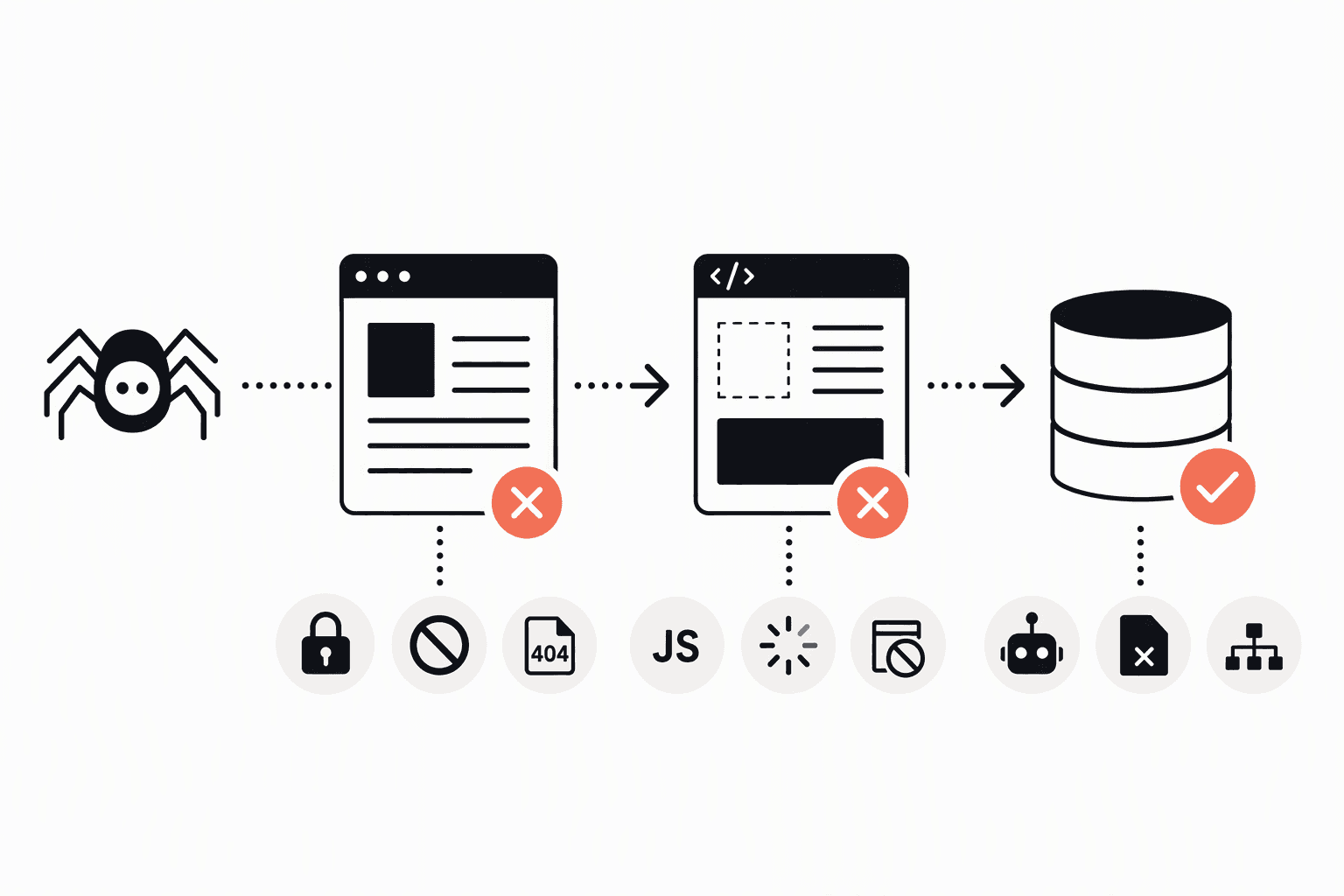
Learn technical seo basics, how crawl-render-index works, what breaks it, and a prioritized checklist to fix issues fast using GSC.
SEO For Company Website, A 90-Day Plan With Page Templates You Can Copy
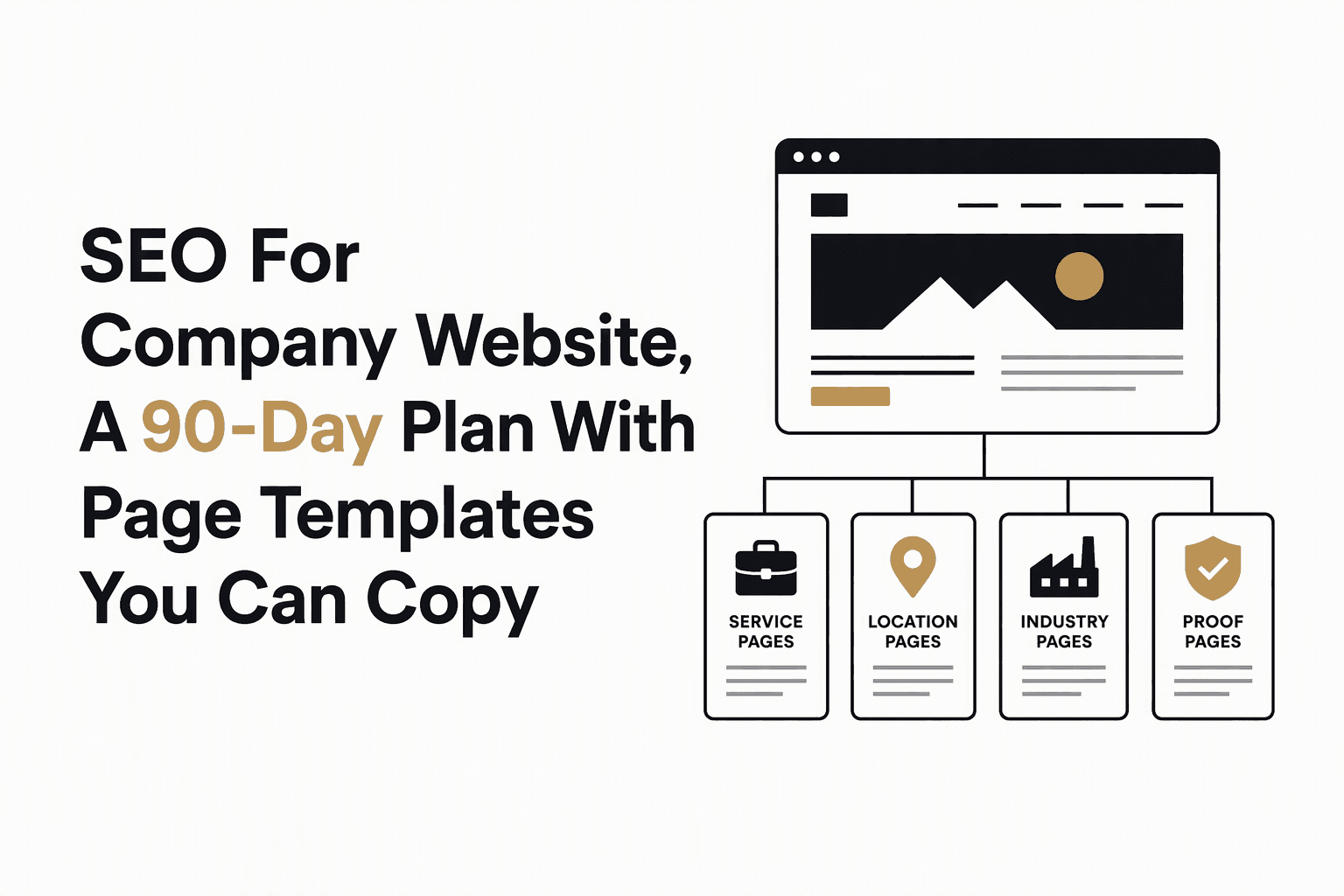
SEO for company website made actionable: architecture, 30/60/90-day SOP, page templates, free tools, and KPIs to track measurable lead growth.

SEO Marketing Explained, A Practical System to Get Indexed, Rank, and Measure Results
Learn seo marketing as a measurable system: how Google indexes pages, the 3 pillars, a 14-day plan, and DIY vs agency decisions.