
Semantic SEO Explained for 2026, The Practical Blueprint to Rank Beyond One Keyword

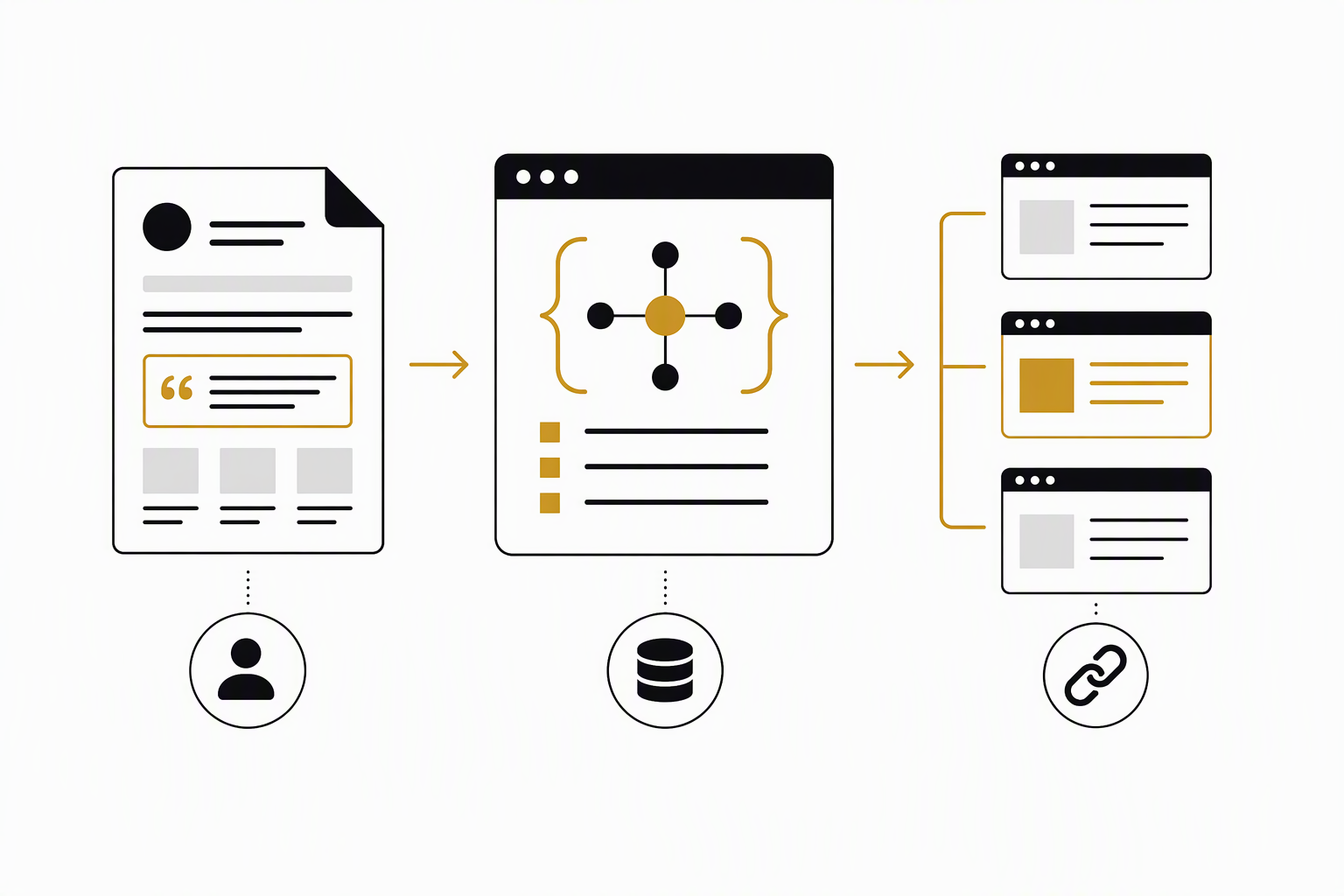
Semantic SEO is the practice of designing a page to satisfy a searcher’s intent by covering the right entities, relationships, and sub-questions, not just repeating one keyword phrase.
- Semantic SEO wins in 2026 when you map intent, entities, and evidence to specific SERP features (AI Overviews, snippets, PAA), then publish with clear structure and schema.
- Use a repeatable set of deliverables: intent brief, entity map, section plan, internal-link rules, and a pre-publish QA rubric so content is consistent across page types.
- “Beyond one keyword” does not mean “write longer”; it means covering the smallest complete set of concepts a user needs to finish the task.

What Semantic SEO Means Today and Why It Matters
Semantic SEO matters in 2026 because Google and generative engines assemble answers from passages that explicitly cover intent, entities, and supporting facts, not from pages that only match a phrase.
Plain-English definition you can operationalize
A practical definition we use: semantic SEO is “intent-first content design plus entity coverage.” Intent-first means you can state the job the searcher is trying to complete (choose, compare, fix, buy, learn, locate). Entity coverage means the page names and explains the real things involved (products, features, standards, locations, problems, people, tools) and how they relate.
Traditional keyword targeting still matters for relevance, but it is no longer the main organizing principle. Modern SERPs frequently include AI Overviews, Featured Snippets, “People also ask,” forums, video carousels, and local packs. Each of those surfaces rewards content that answers sub-questions cleanly and uses unambiguous language that can be extracted.
How search engines interpret “meaning” in practice
In practice, “meaning” is inferred through three things you can control:
- Intent alignment: the page’s structure matches the task (definition, steps, comparison, troubleshooting, pricing, etc.).
- Entity signals: you mention the right nouns and attributes (for example: “schema,” “internal linking,” “canonical,” “product category,” “service area,” “comparison criteria”).
- Relationship clarity: you connect entities with explicit statements (X causes Y, X is a type of Y, X applies when Y, X differs from Y).
What surprised our team was how often “helpful” pages underperform simply because they never state key relationships explicitly, which makes them hard for both readers and models to summarize.
What changes in 2026 compared with keyword-first SEO
In 2026, the main shift is that ranking and citations can come from passage-level usefulness. A page can be cited for one section even if the overall page is not the single “best” result. That is why semantic SEO focuses on writing extractable units: short definitions, criteria lists, step sequences, and clearly labeled sections.
Semantic SEO Vs Traditional SEO, A Side-By-Side Decision Framework
Semantic SEO and traditional keyword-first SEO are both valid, but they optimize for different failure modes: keyword-first fails when it misses the task, semantic-first fails when it loses focus.
Side-by-side comparison table
| Dimension | Traditional keyword-first SEO | Semantic SEO (intent + entities) |
|---|---|---|
| Primary goal | Match a query phrase and variations | Solve the full query task and cover required concepts |
| How you pick topics | Highest volume keywords, then cluster | Jobs-to-be-done + SERP feature analysis + entity set |
| How you outline | H2s mirror keywords | H2s mirror sub-questions and decision criteria |
| Primary on-page signal | Term placement, headings, internal anchors | Clear definitions, relationships, supporting evidence, schema |
| Best for | Simple navigational queries, branded terms, narrow pages | Complex informational queries, comparisons, pages competing for snippets/AI citations |
| Main risk | Thin content that “mentions” but does not answer | Overly broad content that loses topical focus |
Decision checklist, when to lean semantic vs keyword-first
- Use semantic SEO when:
- The query implies multiple sub-questions (how, why, vs, best, checklist, template).
- SERP shows AI Overviews, snippets, or many PAA boxes.
- Users need definitions, constraints, steps, or decision criteria to complete the task.
- Use keyword-first structure when:
- The intent is purely navigational (“login,” brand + product).
- The page is a single-purpose utility page (contact, careers, policy).
- You are building a local landing page where consistency and NAP clarity matter more than breadth.
Two practical guardrails to avoid “semantic bloat”
- Define “done” as the smallest complete answer: if a section does not reduce confusion or help a decision, cut it.
- Keep one primary intent per URL: if you need both “how to” and “pricing,” separate or strongly segment with clear headings and anchors.
How To Do Semantic SEO, An End-To-End Blueprint With Deliverables
Semantic SEO execution becomes repeatable when every page ships with the same set of research artifacts, outline rules, and QA checks, regardless of tools.
Step 1, Write an intent brief that can be QA’d
Create a one-page intent brief before you research keywords. Use this template:
- Primary query intent: (learn, compare, choose, fix, buy, locate)
- Target reader: (beginner, practitioner, buyer, local customer)
- Task completion criteria: “A reader is successful if they can ____ in under ____ minutes.”
- Primary outcome: (decision, implementation, understanding)
- Constraints: geography, budget, compliance, platform limitations
In our experience working with beginner-to-intermediate marketing teams, the “task completion criteria” line is the fastest way to stop scope creep and prevent content that reads like a glossary.
Step 2, Build an entity map (the minimum viable concept set)
Build an entity map by reading the top results and extracting nouns and attributes that appear repeatedly in headings, definition passages, and comparison sections. Then classify them:
- Core entities: must appear and be defined (example: “entities,” “intent,” “schema markup,” “internal linking”).
- Supporting entities: expand understanding (example: “People also ask,” “Featured Snippets,” “canonical tags”).
- Context entities: optional, only if relevant (example: “industry regulations,” “platform name”).
Deliverable: a table with columns: Entity, Type (core/supporting/context), Why it matters (one sentence), Where it will appear (H2/H3), Proof/evidence needed (if any).
Step 3, Convert the map into a section plan that targets SERP features
Turn entities into a section plan that is easy to cite. Use these structural rules:
- Each H2 answers one sub-question in the simplest possible sentence, then expands.
- Each H3 produces an “extractable unit”: a definition, criteria list, steps, or a short table.
- Include at least one “comparison” or “decision” element if the SERP includes “vs,” “best,” or PAA variations.
Deliverable: outline with one-sentence “answer-first” opener per H2 and a note for the snippet target (AI Overview passage, PAA, featured snippet, how-to steps).
Step 4, Add internal linking rules (so clusters behave like a knowledge graph)
Internal links support semantic SEO when they are assigned by role, not sprinkled randomly:
- Up-link: from the page to a broader explainer (category or pillar).
- Side-link: to a sibling page that solves a related task (technical fixes, definitions, comparisons).
- Down-link: to a narrower implementation guide, checklist, or template.
As you draft, place the first internal link where the reader would naturally ask “how do I do that?” For example, if you are about to discuss crawlability, link to website technical SEO. If you need to clarify ecosystem terms, link to organic search and search engine optimization.
Step 5, Implement “evidence blocks” and schema only where it clarifies meaning
Do not add schema because a plugin offers it. Add schema when it reduces ambiguity about page type and key entities. Common choices:
- Article schema: for editorial pages (author, date, headline).
- FAQ schema: only when the questions are truly representative and not spammy.
- Product and ItemList: for ecommerce category and product pages.
- LocalBusiness and Service: for local service pages with clear areas served.
Deliverable: a short schema plan: schema types to use, which properties you will populate, and where the values come from (on-page text, business profile, product database).
Worked Semantic SEO Examples Across 3 Page Types
Semantic SEO becomes easier when you translate one seed topic into three concrete outputs: an outline that matches intent, an entity list, and the right schema for the page type.
Example 1, Local service page (intent: hire, evaluate, contact)
Seed topic: “SEO agency in [city]”
- Primary intent: choose a provider and qualify fit quickly.
- Core entities: services offered (technical, content, local), industries, service area, process, reporting, timelines, pricing model (range or model, not invented numbers), proofs (case studies if you have them), contact method.
Outline snapshot:
- H2: What the agency actually does for your site (deliverables, not promises)
- H2: How to evaluate fit (criteria list: strategy, technical ability, content ops, reporting)
- H2: Service area and onboarding steps (clear steps and expectations)
Schema: LocalBusiness + Service; include areaServed, serviceType, and sameAs where applicable.
Example 2, Ecommerce category page (intent: browse, compare, narrow down)
Seed topic: “running shoes” (category)
- Primary intent: narrow choices based on use case and constraints.
- Core entities: surface (road/trail), pronation/support, cushioning, size/fit, price bands (without inventing exact prices), brands, return policy, shipping.
On-page semantic pattern that works: add a short “How to choose” module above the grid that maps 3 to 6 decision criteria to filters. This is semantic SEO because it connects the entity attributes to user actions, not because it adds more text.
Schema: ItemList for the category; Product for each item (usually on product pages), and BreadcrumbList.
Example 3, B2B SaaS feature page (intent: validate capability, reduce risk)
Seed topic: “log monitoring dashboard” (feature page)
- Primary intent: confirm the feature solves a real workflow and integrates with existing stack.
- Core entities: integrations, data sources, alerting, retention, access control, compliance, pricing model (how it scales), implementation steps.
Outline snapshot:
- H2: What the dashboard shows (inputs, outputs, limitations)
- H2: How teams use it (3 workflows with steps)
- H2: Security and governance (roles, audit logs, retention)
Schema: SoftwareApplication where appropriate, plus FAQ only if the questions are stable and genuinely common.
Where Semantic SEO Fits in the Four Types of SEO
Semantic SEO primarily lives in on-page SEO, but it depends on technical SEO for crawlable structure and it benefits from off-page signals that confirm entity credibility.
On-page SEO, where semantic work is created
This is where you do the intent brief, entity coverage, headings, definitions, comparison criteria, and internal linking. If your page answers the query in a single clean paragraph and then supports it with structured sections, you are doing the core of semantic SEO.
Technical SEO, where semantic work becomes accessible
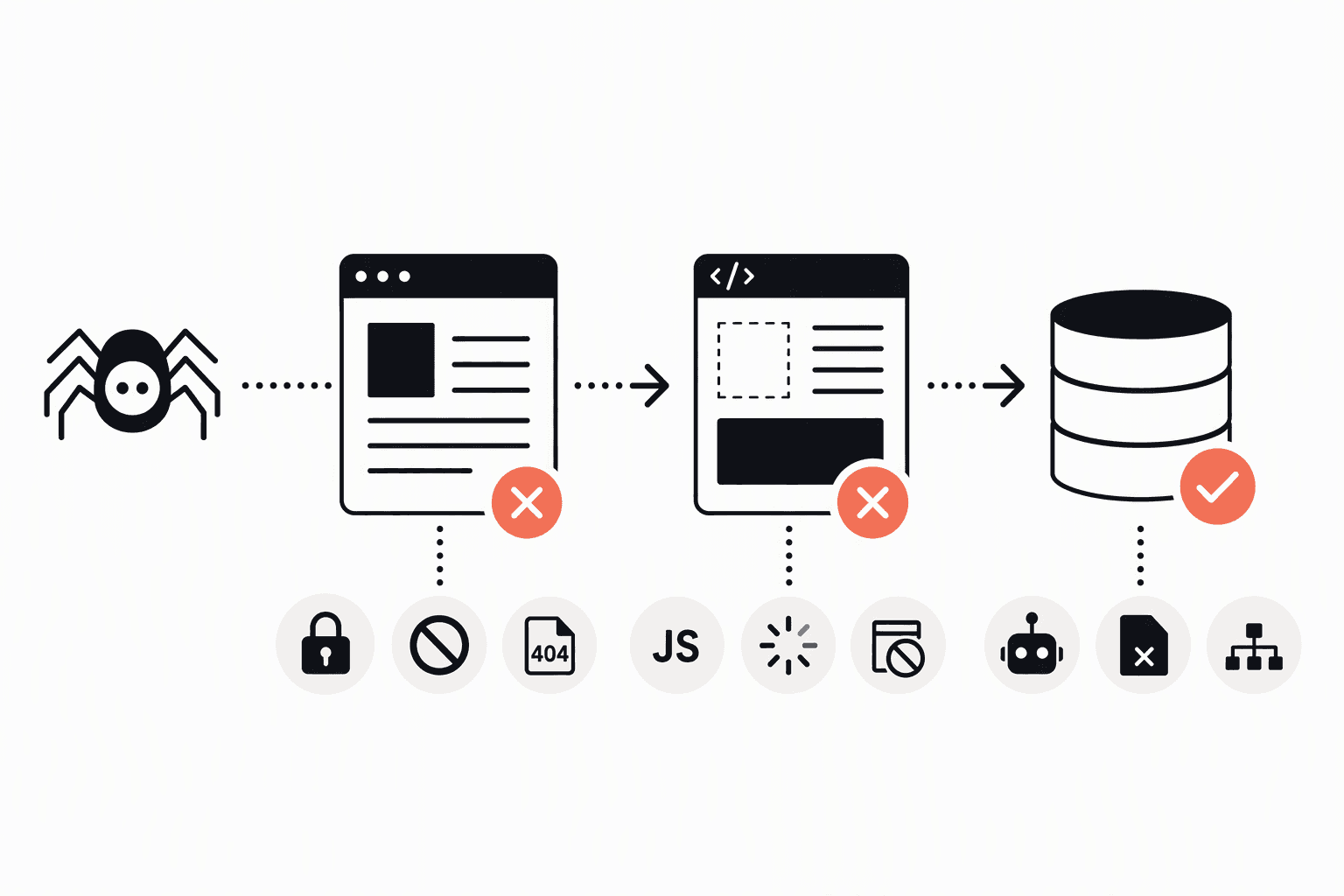
Technical issues can block semantic signals from being discovered or trusted. The basics still apply: indexability, correct canonicals, consistent URL structure, fast rendering, and clean internal linking. If you want a practical way to audit these dependencies, see website technical SEO.
Off-page SEO, where entity trust is reinforced
Mentions, citations, and links help establish that your brand and authors are real entities worth referencing. In semantic terms, off-page signals help disambiguate “who” is providing the information and why it should be trusted.
Local SEO, where entity consistency is mandatory
Local SEO is an entity consistency game: name, address, phone, categories, service areas, and reviews. Semantic SEO helps you write service pages that match local intent (availability, areas served, scope), but local pack performance still depends heavily on profiles and citations.
Semantic SEO in the AI Era, Rankings, AI Overviews, and Citations
Semantic SEO increases the likelihood of being cited by AI answers because it produces passages that are direct, specific, and easy to attribute to a clear entity and page type.
What improves citation likelihood (practical levers)
- Answer-first passages: one sentence that can stand alone, followed by 2 to 5 supporting sentences.
- Named criteria: lists with labels (for example: “Decision criteria: data source coverage, latency, retention, access control”).
- Disambiguation: define the term in your context (what you mean by “semantic SEO,” what you do not mean).
- Entity completeness: cover the minimum set of concepts the query implies, not every adjacent topic.
- Consistent authorship and page type: clear bylines, dates, and schema where appropriate.
What does not help (common myths)
- Stuffing synonyms: repeating variations rarely makes content more citable.
- Over-optimizing for one SERP feature: pages that chase snippets but fail to satisfy the whole task tend to bounce.
- Adding schema to empty content: schema does not replace explanations, criteria, or evidence.
After running multiple content audits focused on semantic SEO, the pattern was clear: the pages most likely to earn snippet-like visibility were the ones with explicit criteria and steps, even when they were shorter than competitors.
How to write passages AI systems can quote without distortion
Use “bounded claims”: define what is true, under what conditions. For example, instead of “Semantic SEO is better,” write “Semantic SEO is better for complex queries where the user needs definitions, criteria, or steps to complete a task.” This kind of constraint reduces misquoting and increases trust.
Semantic SEO QA Checklist, What To Verify Before You Hit Publish
Semantic SEO quality assurance is successful when a reviewer can confirm intent match, entity coverage, and extractable structure in under 15 minutes without using paid tools.
Intent and task completion
- Primary intent is stated in the first paragraph of the main body and matches the SERP.
- The page has one clear “job to be done” and does not mix incompatible intents.
- A reader could complete the task using only this page (or obvious linked next steps).
Entity coverage and relationships
- All core entities are present and defined in plain language.
- Important relationships are explicit (X vs Y, X causes Y, X is required for Y).
- No critical sub-question from PAA is missing (include only the ones relevant to intent).
Structure and extractability
- Each H2 opens with a self-contained answer sentence.
- At least 2 sections contain criteria lists or step sequences that could stand alone.
- Tables are used only when they reduce cognitive load (comparison, mapping, checklists).
Internal links and cannibalization checks
- Links follow a role: up-link, side-link, down-link.
- The anchor text is descriptive and not repeated mechanically.
- No other URL on your site targets the exact same intent with near-identical entities.
Schema and technical sanity
- Schema matches page type and does not contradict visible content.
- Title tag and headings match intent (no bait-and-switch).
- Page is indexable, canonical is correct, and it renders key content without blockers.
| Pre-publish check | Pass criteria | Common fail |
|---|---|---|
| Intent match | Opening + headings map to the same task as the SERP | Page tries to educate and sell and compare at once |
| Entity minimum set | Core entities defined and used consistently | Mentions terms without explaining relationships |
| Extractable units | At least 2 passages that can be quoted cleanly | Long paragraphs with no labeled criteria or steps |
| Internal linking | Up/side/down links included where the reader needs them | Links stuffed in a footer list or repeated anchors |
| Schema alignment | Schema supports and matches visible content | FAQ schema used for questions not answered on-page |
FAQ
If you want a second set of eyes on your semantic SEO plan, Freeways can review one priority page using the checklist above and return a practical content brief (intent, entity map, outline, and internal link targets) you can execute with your team.

Written by Joyce Ng.
Technical SEO Explained, How It Works, What to Fix First, and Why It Matters
Learn technical seo basics, how crawl-render-index works, what breaks it, and a prioritized checklist to fix issues fast using GSC.

Search Visibility Explained, How It Works and How to Measure It in Google Search Console
Learn what search visibility means, how tools calculate it, and how to measure search visibility in Google Search Console with a simple spreadsheet.

Website Technical SEO, A Practical Framework Plus Real Fix Examples
Learn website technical seo with an Impact–Effort–Risk framework, a starter audit workflow, and 5 real fix examples with validation steps.