
SEO And SEM In Digital Marketing, What They Are And How To Use Both Together

SEO and sem in digital marketing work best as a coordinated system: SEO builds durable organic visibility and trust, while SEM buys immediate, controllable demand from search results.
- Use SEO for compounding results (content, technical fixes, local signals) and SEM for fast testing, fast leads, and predictable volume.
- Separate the terms cleanly: SEO = organic listings, PPC = the pricing model, SEM = paid search execution (often PPC via Google Ads).
- Plan the mix in 90 days by matching intent, landing pages, and KPIs, then shifting budget as SEO pages start earning impressions and clicks.
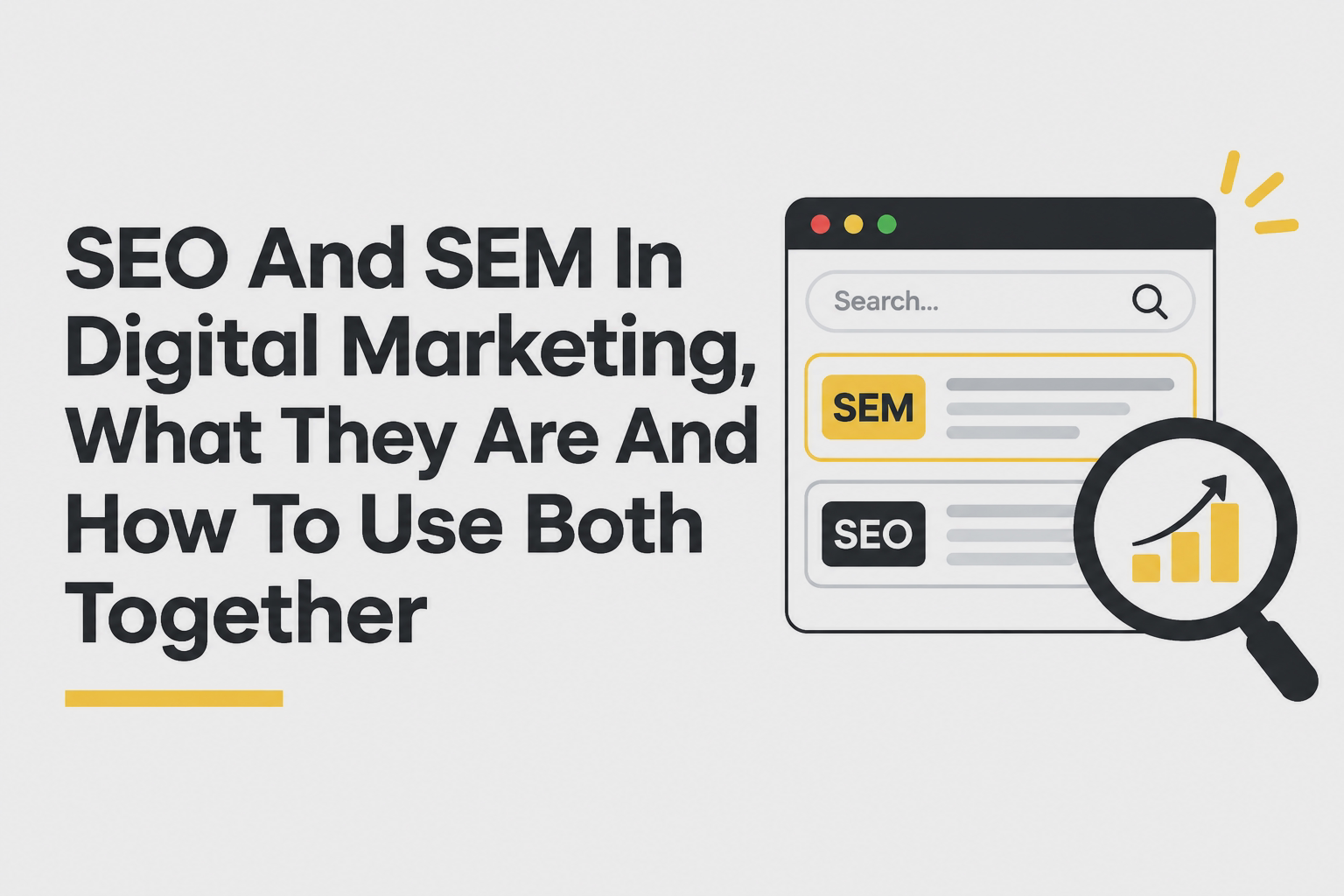
Where SEO And SEM Fit In Digital Marketing
SEO and SEM fit into digital marketing by capturing existing demand at the moment someone searches, then guiding that demand toward a lead, signup, or purchase with the right landing page and offer.
The confusion I see most often is treating search like a single channel, then expecting one tactic to do everything: instant leads, brand lift, and long-term cost reduction. In practice, search is a relay race. SEM can start the race tomorrow; SEO keeps you running after the ad budget pauses.
A simple map: what search is responsible for
- Discovery searches (problem-aware): “why does my AC smell musty”, “best CRM for small team”. Useful for education pages and light retargeting.
- Comparison searches (solution-aware): “AC duct cleaning cost”, “HubSpot vs Pipedrive”. Great for SEO comparison content and for SEM campaigns with tight intent filters.
- Action searches (ready-to-buy): “duct cleaning near me”, “buy running shoes size 10”. Best for SEM and for SEO pages that match location and service/product intent.
Framework: assign a job to each tactic
- Choose the conversion you can measure this month (calls, form submits, purchases). If you cannot measure it, you cannot optimize it.
- Pick the highest-intent search themes that clearly indicate a need. These become SEM ad groups and SEO page targets.
- Match intent to landing pages: educational queries go to guides; action queries go to service pages, product pages, or a quote page.
- Use SEM to validate which themes and offers convert, then use SEO to lower acquisition cost over time by earning free clicks for those same themes.
Starter KPI set that keeps both honest
- SEM: click-through rate (CTR), cost per click (CPC), conversion rate, cost per lead or acquisition (CPL/CPA).
- SEO: impressions, clicks, average position (directional), conversions from organic traffic, and landing page engagement.
When I build a first search plan, I keep the KPIs intentionally boring and measurable. If a team starts with 12 metrics, they usually end up optimizing none of them.
SEO vs SEM vs PPC, A Clean Taxonomy With SERP Placement
SEO vs SEM vs PPC becomes simple when you separate placement from payment model: SEO is unpaid organic placement, SEM is paid search placement, and PPC is one common way SEM is priced.
Definitions you can use in a meeting
- SEO: improving pages and site signals so your listings appear in organic results without paying per click.
- SEM: running paid search ads that appear in the search engine results page for chosen keywords and audiences.
- PPC: “pay per click”, a pricing model where you pay when someone clicks your ad. Many search ads are PPC, but not all marketing is PPC.
What a results page usually looks like
- Top of page: sponsored listings (SEM, typically through Google Ads).
- Middle of page: organic listings (SEO).
- Local pack (for local intent): map results and business profiles, influenced by local SEO and sometimes local service ad formats depending on market and category.
Decision rule: when SEM is the right first move
- You need demand now (new launch, seasonality, pipeline gap).
- You do not yet know which keyword themes convert, so you want fast validation.
- Your site has thin content, weak authority, or technical issues that will take weeks to fix before SEO can compete.
Decision rule: when SEO should lead the plan
- You sell something people research for weeks (B2B services, higher-ticket purchases).
- Your cost per click is high enough that paid-only economics are unstable.
- You have expertise and can publish credible content or location pages consistently.
In most beginner setups, seo and sem in digital marketing are not rivals. They are a timing strategy: buy certainty short-term, build equity long-term.
The Four Types Of SEO With Mini Examples
Four SEO types cover what actually moves rankings and traffic: on-page, technical, off-page, and local signals, and each one has a specific job you can audit in an hour.
1) On-page SEO (content and intent match)
Job: make the page the best match for a specific search intent.
- Checklist: one primary topic per page, clear headings, descriptive title tag, internal links to related pages, and a direct answer near the top.
- Mini example: a “duct cleaning cost” page that includes a price range explanation, what changes the price (home size, vents, region), and a quote form.
If you want a practical system for publishing and measuring pages, see SEO marketing.
2) Technical SEO (crawl, index, and performance)
Job: remove friction so search engines can access, understand, and trust your pages.
- Checklist: indexability (robots, noindex), sitemap health, canonical tags, mobile usability, page speed basics, and clean URL structure.
- Mini example: fixing a misconfigured “noindex” tag on service pages so they can appear in organic results.
For an always-on cadence, this monthly planning approach is a strong baseline: search engine optimization.
3) Off-page SEO (authority and references)
Job: earn signals that other sites and people trust you.
- Checklist: relevant mentions, quality backlinks, digital PR opportunities, partner pages, and citations where appropriate.
- Mini example: a local trade association directory listing that links to your service page and confirms your business details.
4) Local SEO (near-me visibility)
Job: help you show up for location-based searches and map results.
- Checklist: consistent business name/address/phone, service area clarity, reviews, location landing pages, and category alignment.
- Mini example: creating a “Plumber in [Neighborhood]” page that includes real service coverage, FAQs, and clear contact options.
When teams ask me where to start, I usually begin with technical and on-page fixes because they improve both SEO and SEM performance. A slow, confusing landing page makes paid clicks expensive and organic clicks unproductive.
How SEO And SEM Work Together, Three Realistic 90-Day Scenarios
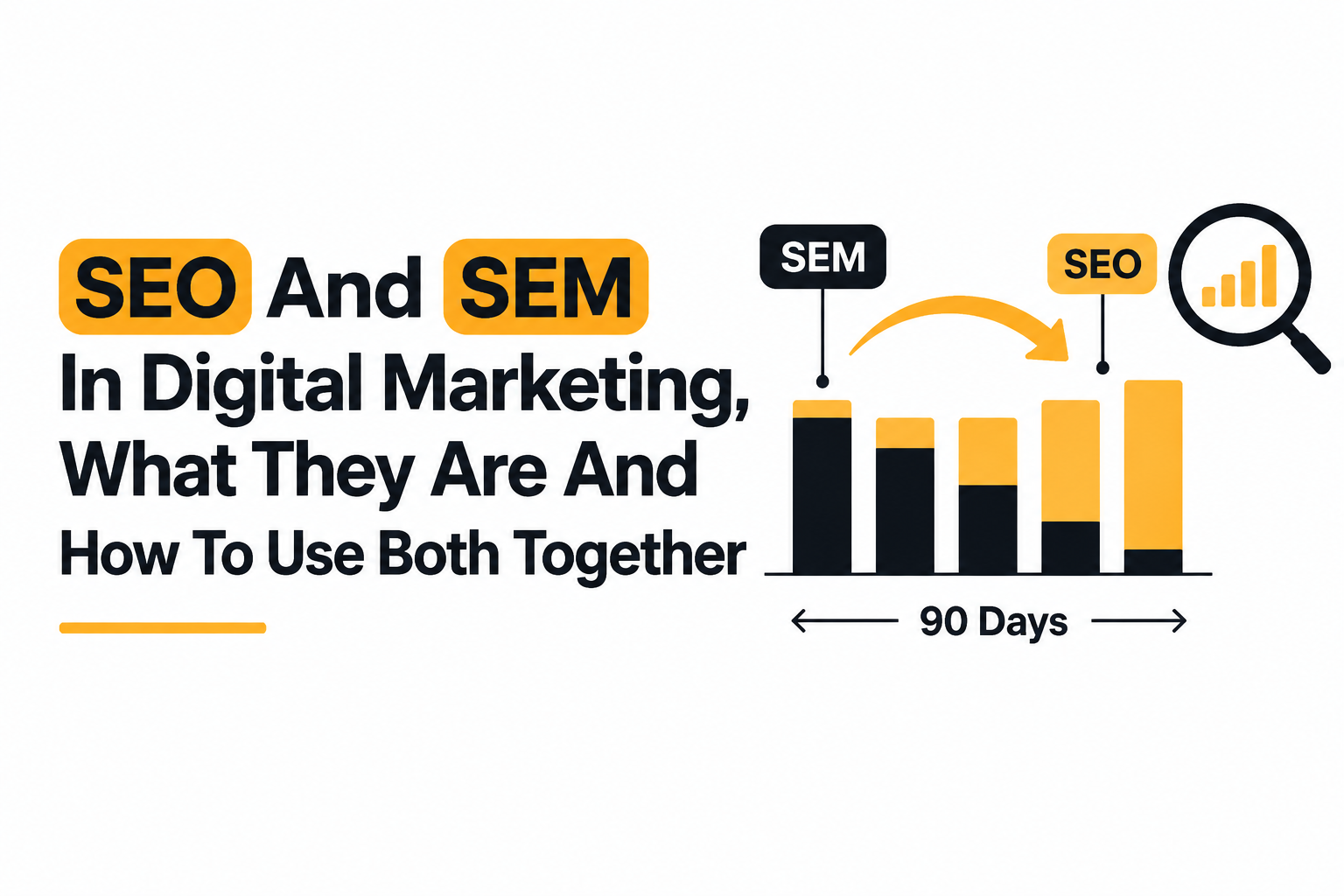
SEO and SEM work together over 90 days when you use SEM to learn what converts, then turn the winners into SEO targets and landing pages so results keep coming even as paid budgets fluctuate.
Scenario A: Local service business (calls and quote forms)
- Days 1 to 30: run SEM on “near me” and emergency terms to generate calls; fix local SEO basics and create one high-intent service page per core service.
- Days 31 to 60: expand SEO with location pages and FAQs; use SEM search term reports to identify converting phrases to build content around.
- Days 61 to 90: shift SEM spend toward best-converting zip codes, hours, and services; keep SEO publishing steady.
KPIs: calls, form submits, cost per lead, and organic conversions from service pages.
Budget split idea: start 70% SEM / 30% SEO effort, then move toward 50/50 as organic pages begin earning impressions.
Scenario B: Ecommerce (product revenue and profit)
- Days 1 to 30: SEM on best-selling categories and branded terms; fix technical issues that block indexing; ensure category pages have clear copy and filters that work on mobile.
- Days 31 to 60: build SEO around category pages (not just blog posts); add buying guides that answer comparison searches.
- Days 61 to 90: use SEM to test new categories and promotions; use SEO to defend margin with “free” traffic on repeatable category intent.
KPIs: revenue, conversion rate, return on ad spend (ROAS) for SEM, and organic revenue by landing page.
Budget split idea: 80% SEM / 20% SEO at start if you need revenue immediately, moving toward 60/40 as technical and category SEO improves.
Scenario C: B2B services (lead quality and sales pipeline)
- Days 1 to 30: SEM on high-intent “service + city” and “agency + niche” terms; publish one authoritative service page and one comparison page.
- Days 31 to 60: SEO content that answers evaluation questions (process, timeline, pricing drivers); improve internal linking from guides to service pages.
- Days 61 to 90: tighten SEM negatives to avoid low-intent clicks; scale SEO topics that show early impressions and engagement.
KPIs: qualified leads (however you define them), meeting booked rate, and cost per qualified lead.
Budget split idea: 60% SEM / 40% SEO initially, then 40% SEM / 60% SEO once the site has multiple pages that match bottom-of-page intent.
In my own planning workflow, the fastest win is using SEM search term data to stop guessing. Even a small campaign can reveal the exact wording prospects use, and that language becomes your SEO headings and FAQs.
| Goal | Use SEM when | Use SEO when | What to measure first |
|---|---|---|---|
| Get leads this month | You need predictable volume and can afford test spend | You already have pages close to ranking and can improve them quickly | CPL, conversion rate, landing page engagement |
| Lower acquisition cost over time | You want quick learning to find profitable themes | You can publish and improve content consistently | Organic conversions, impressions trend, assisted conversions |
| Expand into new markets | You need fast validation by city, category, or audience | You want durable visibility for location and comparison searches | New lead sources, query themes, page-level conversion rate |
FAQ
If you want a second set of eyes on your seo and sem in digital marketing mix, Freeways Agency can share a lightweight baseline checklist and help you sanity-check your first 90-day plan, including which pages to prioritize and what to measure weekly.

Written by Joyce Ng.

Local Search Engine Optimization Explained, What It Is, Benefits, and a Simple Starter Plan
Learn local search engine optimization, why it differs from SEO, and follow a simple starter plan to win Google Maps and the Local Pack.
Find SEO Agency Near You - A 7-Day Workflow to Shortlist and Choose Confidently
Need to find seo agency fast? Use this 7-day shortlist workflow, scorecard, proof checks, pricing matrix, and interview script to choose confidently.
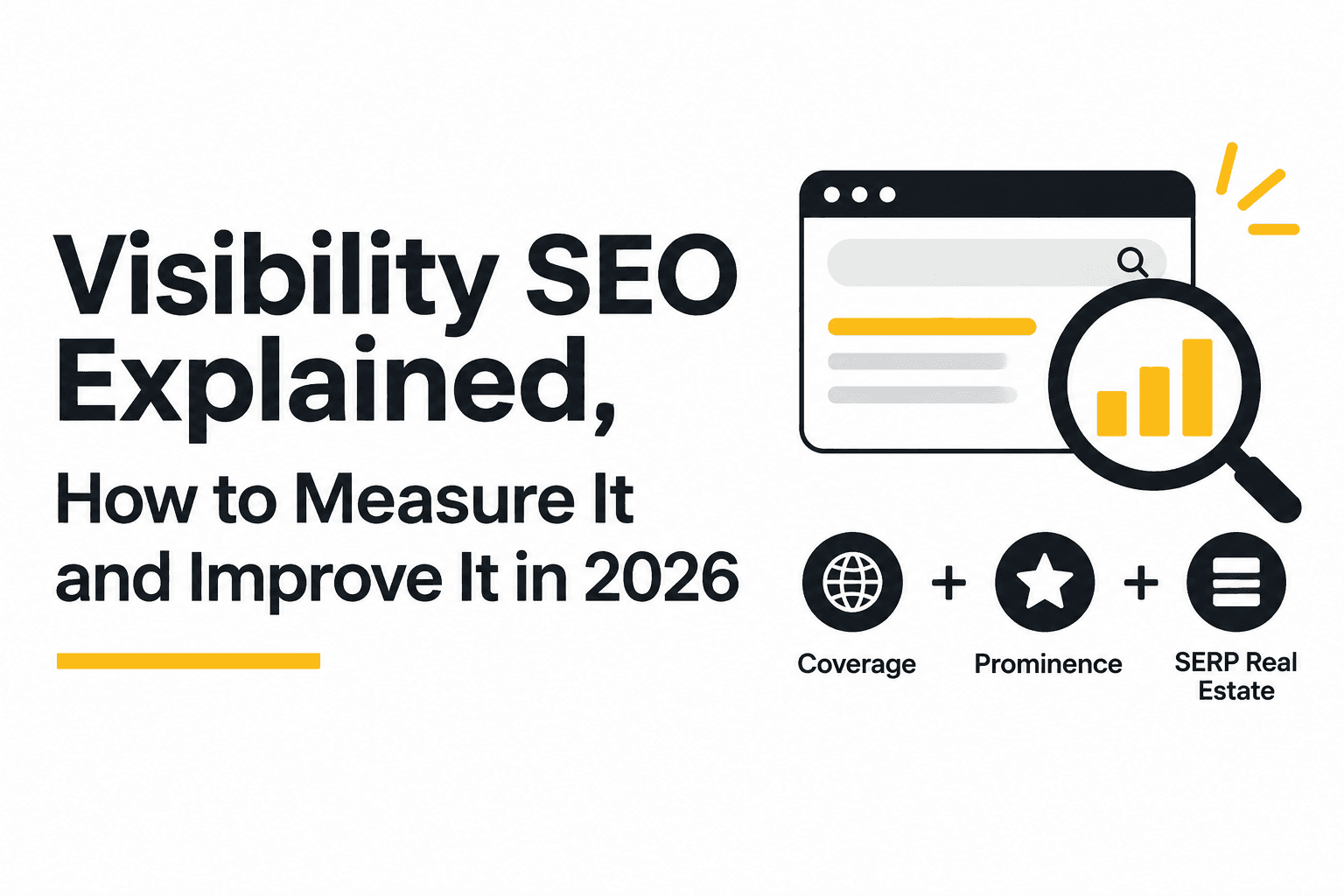
Visibility SEO Explained, How to Measure It and Improve It in 2026
Learn visibility seo in 2026: what it means, how to measure coverage and prominence, and a 7-day loop to improve rankings and SERP real estate.