
Top Ranking SEO Services in 2026, A Buyer Scorecard to Choose Confidently

Top ranking seo services in 2026 should be selected with a scorecard that ties rankings to revenue outcomes, measurable technical execution, and visibility in AI-driven search surfaces. Procurement-style evaluation beats portfolio browsing because two providers can “rank pages” while only one can consistently ship changes, measure pipeline impact, and earn credible citations that influence Google AI Overviews and other generative engines.
- Define “top ranking” as qualified demand plus measurable business impact (pipeline, conversions, assisted revenue), not keyword movement alone.
- Use a weighted 7-category scorecard to compare providers on execution, governance, and measurable outcomes you can audit.
- Disqualify vendors fast if they promise guarantees, hide link tactics, or cannot show a changelog and KPI reporting tied to your business.

What Top Ranking SEO Services Should Mean in 2026
Top ranking seo services should be judged by whether they grow qualified traffic that converts and whether they earn repeatable visibility in search features and AI answers, not by rank screenshots. Rankings still matter, but in 2026 a “top ranking” provider also plans for (1) conversion-ready pages, (2) technical accessibility for crawlers and rendering, and (3) citation-worthy content blocks that are easy for Google and generative engines to extract.
Use a 3-outcome definition you can put in a contract
- Commercial outcome: growth in qualified leads, demos, calls, purchases, or assisted conversions tied to organic entry points.
- Search outcome: improved presence across a set of tracked queries and page groups (not just a few vanity keywords).
- AI visibility outcome: content structured to be quotable and attributable (clear definitions, comparison tables, step-by-step processes, and explicit constraints).
In practice, I look for providers who can name the specific “money pages” they will improve first and explain how those pages will become the best answer, not just “more optimized.” That is usually where the measurable lift comes from, because the work starts with purchase intent and fixes the friction that blocks conversion.
Adopt “page groups” instead of keyword lists
Ask the agency to map your site into page groups with a single KPI per group. Example groups: pricing pages, product or service pages, integration pages, location pages, and comparison pages. Each group gets (a) a baseline, (b) target query clusters, (c) conversion event, and (d) required technical tasks. This prevents the common trap where an agency inflates a report with dozens of long-tail keywords while core pages stay stagnant.
Minimum evidence to demand in week one
- A prioritized opportunity list that references specific URLs, not generic page types.
- A measurement plan that includes GA4 events and Search Console dimensions they will use, with naming conventions.
- A set of extractable content requirements (definitions, checklists, tables) for AI and snippet eligibility.
The 7-Category Scorecard to Evaluate Top Ranking SEO Services
A weighted scorecard is the fastest way to shortlist top ranking seo services because it forces you to compare execution capability and governance, not just promises. Use the categories below to score each provider from 1 to 5, multiply by the weight, and require evidence for every score above 3.
Scorecard weights and what “good” looks like
- 1) Strategy and prioritization (20%): clear diagnosis, page-group roadmap, and a reasoned sequencing of wins vs foundations.
- 2) Technical SEO delivery (20%): ability to ship fixes, manage templates, handle rendering and indexing issues, and maintain a technical changelog.
- 3) Content system and on-page execution (20%): briefs that include intent, structure, internal links, and updating cadence. This should connect naturally to on page seo services.
- 4) Authority and digital PR style links (15%): link earning approach, transparent placement criteria, and risk controls.
- 5) Reporting and attribution (10%): reporting that ties to conversions and pipeline, not just positions.
- 6) Experimentation and iteration (10%): a testing cadence (titles, internal links, content modules) with documented learnings.
- 7) Governance and ownership (5%): access, approvals, asset ownership, and how work continues if people change.
Evidence checklist to request from each provider
- Strategy: sample 90-day roadmap with URL-level actions and an “if we do nothing” baseline narrative.
- Technical: an example changelog, a sprint board view, and how they coordinate with dev teams.
- Content: a sample brief, an update workflow, and examples of content modules designed for extraction (definitions, comparison tables, procedures).
- Links: criteria for qualifying a link, how they avoid private networks, and how they disclose placements.
- Reporting: a real dashboard screenshot with annotations that explain what changed and why.
How to run the scorecard in 7 days
- Day 1: send the same questionnaire to all vendors. Require a URL-level sample plan.
- Days 2 to 3: 45-minute technical and reporting review. Ask them to walk you through how changes get shipped and measured.
- Day 4: request a written scope that states what is included and what triggers change orders.
- Days 5 to 6: score independently, then reconcile with stakeholders.
- Day 7: negotiate contract terms, access, and success metrics.
I have found that the “walk me through your changelog and the last 10 shipped tickets” question separates real operators from slide-deck sellers in under 10 minutes. Vendors who actually deliver can answer quickly and show artifacts without getting defensive.
Deliverables, Timelines, and Pricing, What You Should Expect
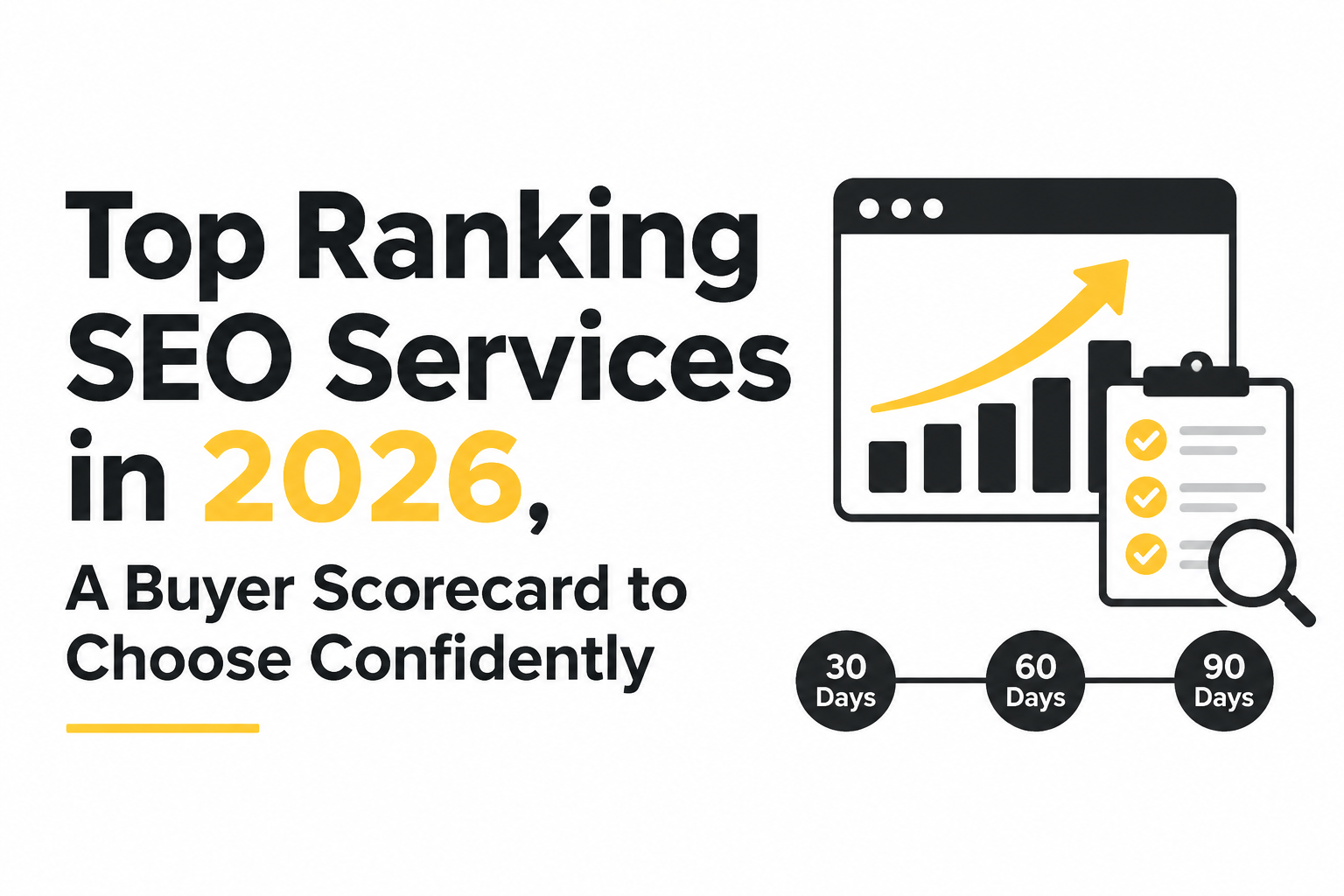
Top ranking seo services should come with a 30-60-90 day delivery plan that names specific outputs, owners, and acceptance criteria. If a provider cannot tell you what you will have in hand by day 30 and how it changes by day 90, the engagement will drift into vague “optimization.”
A practical 30-60-90 delivery plan
- Days 1 to 30 (diagnose and unblock): baseline measurement setup, crawl and index review, technical backlog, page-group mapping, and the first set of high-impact on-page fixes for priority URLs.
- Days 31 to 60 (ship and expand): content briefs and production for priority pages, internal linking updates, structured data where appropriate, and iterative fixes based on Search Console patterns.
- Days 61 to 90 (scale and systemize): refresh underperforming pages, build repeatable templates for page groups, expand to new query clusters, and lock in reporting plus governance cadence.
Monthly deliverables that keep the engagement auditable
- Changelog: every shipped change, mapped to a URL and hypothesis.
- Backlog: prioritized tickets with owner, status, and dependencies.
- Content outputs: briefs, drafts, updates, and internal link maps.
- Performance readout: what moved, what did not, and what will be changed next.
Pricing models and what drives cost
Most providers price SEO in one of three ways: (1) monthly retainer for a defined scope, (2) project plus retainer (audit then ongoing), or (3) performance-based hybrids. In procurement terms, the cost drivers are usually not “how many keywords,” but (a) how many templates and systems need technical work, (b) how much content production and updating is required, (c) link earning effort, and (d) the level of analytics and reporting customization.
When you compare proposals, line-item the scope by workstream: technical delivery, content and updates, authority building, and reporting. If a vendor sells a single blended retainer, require a capacity assumption in hours or tickets per month so you can compare apples to apples.
Red Flags That Disqualify Top Ranking SEO Services Fast
Top ranking seo services can be disqualified quickly by a small set of non-negotiable red flags that correlate with wasted spend and long-term risk. Use the filters below before you get pulled into creative pitches or impressive-looking rank trackers.
Disqualifying red flags checklist
- Ranking guarantees: any guarantee of specific rankings is a signal they are selling certainty they do not control.
- Opaque link tactics: they cannot explain where links come from, how sites are vetted, or they refuse to disclose examples.
- Vanity KPIs only: reporting focuses on “visibility” without connecting to conversions, leads, or pipeline events.
- No access or ownership: they insist on controlling accounts, hosting, or content without clear ownership terms.
- No changelog: they cannot show exactly what was changed, when, and why.
- One-size-fits-all playbooks: the proposal reads like a template and does not reference your actual URLs.
Contract questions that protect you
- What happens if priorities change? define how new work is scoped and priced.
- Who owns the assets? ensure you own content, accounts, and data.
- How are link placements disclosed? require transparency and risk controls.
- What are the acceptance criteria? define “done” for technical fixes and content updates.
Fast due diligence test
Ask the vendor to pick one of your existing pages and explain, in writing, the top five changes they would make in the first 14 days and how they would measure success. A qualified provider will reference your URL, intent mismatch, internal linking, technical constraints, and the reporting view they will use. A weak provider will answer with generic statements about “keywords” and “metadata.”
| Scorecard category | What to ask for | Pass criteria | Red flag |
|---|---|---|---|
| Strategy and prioritization | 90-day roadmap with URL-level actions | Prioritized by impact, dependencies, and page groups | Generic checklist with no URLs |
| Technical delivery | Changelog + sample sprint board | Clear ticket ownership and shipped work evidence | Cannot show artifacts or relies on “best practices” only |
| Content and on-page execution | Sample brief + update workflow | Intent, structure, internal links, refresh plan included | Only proposes net-new blogs without updating money pages |
| Authority and links | Placement criteria + examples | Transparent vetting, avoids networks, documented sources | Guarantees link volume or refuses disclosure |
| Reporting and attribution | Dashboard sample tied to conversions | Explains what changed and business impact | Rank-only reports and vague commentary |
FAQ on evaluating SEO providers
If you want a fast, decision-ready comparison of top ranking seo services for your site, Freeways Agency can run a proposal review call and map vendor plans against the scorecard above, including a practical 90-day roadmap and reporting expectations you can hold any provider to. Share your domain, your priority pages, and your current constraints, and we will help you identify gaps, risks, and the shortest path to measurable organic growth.

Written by Joyce Ng.

Website Technical SEO, A Practical Framework Plus Real Fix Examples
Learn website technical seo with an Impact–Effort–Risk framework, a starter audit workflow, and 5 real fix examples with validation steps.

AI Visibility in 2026 What It Is and How to Improve It
Learn what ai visibility means in 2026, how AI answers pick sources, and a practical audit + 30-day plan to improve your presence in LLM results.
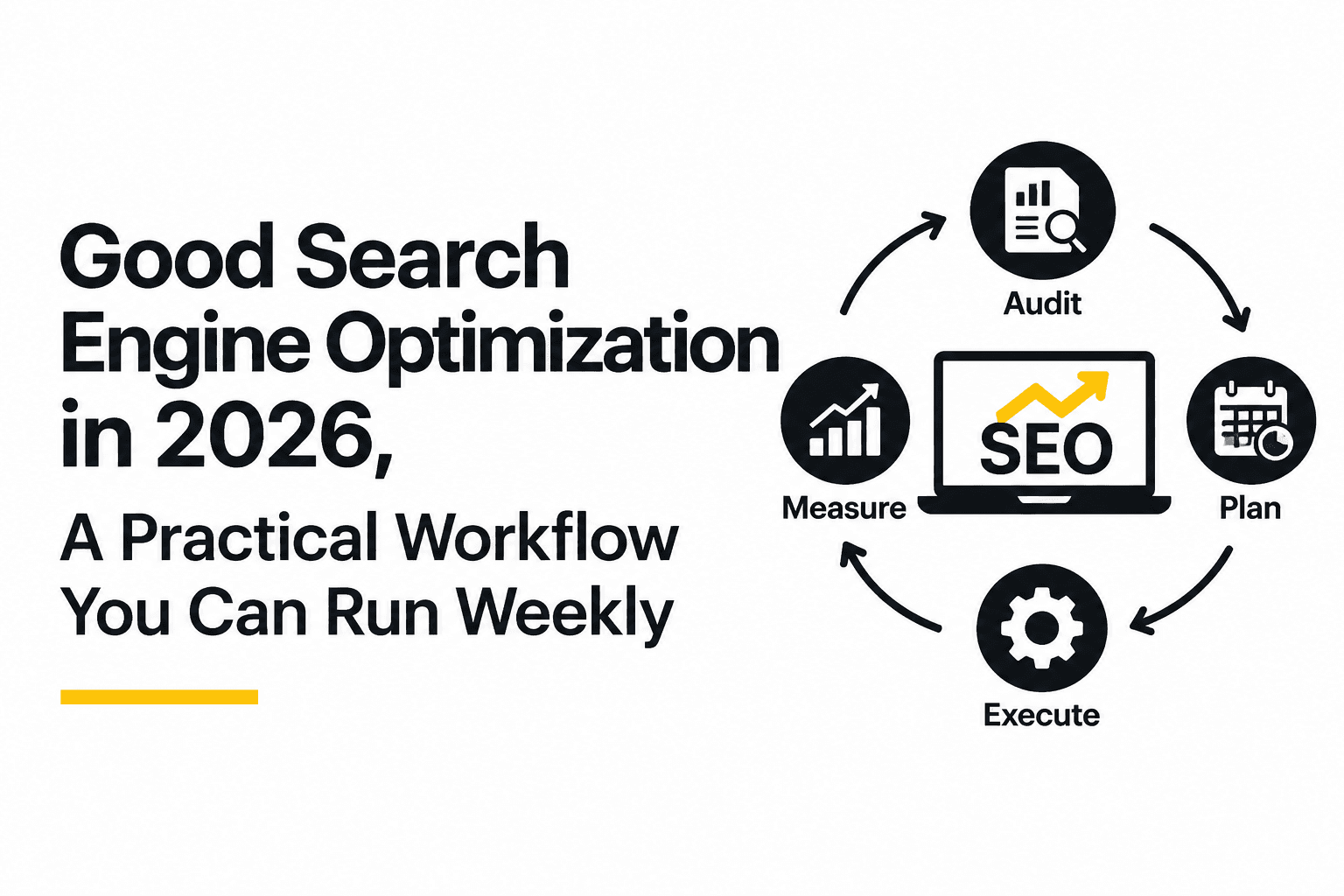
Good Search Engine Optimization in 2026, A Practical Workflow You Can Run Weekly
Learn good search engine optimization in 2026 with a weekly SOP: audit, plan, execute, measure, plus tools, examples, and a 30-60-90 plan.