
Search Engine Optimization Service Guide For 2026, Pricing, Deliverables, And What To Expect In 90 Days

A search engine optimization service in 2026 should give you measurable proof of work in the first 90 days, not vague promises about rankings. Buyers usually get stuck because “SEO” can mean anything from a one-time audit to an ongoing technical, content, and authority program, plus newer requirements for GEO and LLM visibility (AI Overviews and answer engines) that change what “good” content and structure looks like.
- Demand scoped artifacts: an audit you can verify, a prioritized roadmap, and shipped fixes and pages inside 30 to 90 days.
- Use a pricing-to-deliverables matrix (not hourly rates) so budget maps to outputs, timelines, and acceptance criteria.
- Vet fast with a scorecard: technical depth, content system, authority plan, reporting quality, and GEO readiness.
What a Search Engine Optimization Service Should Include in 2026
A complete search engine optimization service in 2026 includes technical remediation, on-page and content production, authority building, and evidence-based GEO for LLM visibility, each with specific artifacts you can accept or reject. If your provider cannot name the outputs and owners for each component, you are buying hope.
Non-negotiable components and the artifacts you should receive
- Technical foundation: crawl and index diagnostics, prioritized fix list, and implemented changes (not just recommendations). Expect evidence such as before/after screenshots, commit logs, or ticket closures. For a deeper breakdown, see technical SEO.
- Information architecture: a map of category and topic clusters, internal linking rules, and navigation improvements tied to priority pages.
- On-page optimization: page briefs, query intent alignment, and structured data recommendations (where valid) with a clear definition of “done” per page.
- Content system: a publish plan, editorial guidelines, and a repeatable workflow that ships pages. Reference: SEO marketing.
- Authority and trust: a documented link acquisition plan (digital PR, partnerships, resource outreach, reclaim) plus brand signals (profiles, citations where relevant, entity consistency).
- Measurement: GA4 and Search Console baselines, annotations, and a dashboard that separates leading indicators (coverage, crawl, impressions) from lagging ones (qualified leads, revenue).
GEO and LLM visibility essentials you can actually verify
GEO readiness is visible in the page itself: direct answers, extractable passages, clear entities, and citations that make your content quotable by AI systems. In practice, the pages that get summarized well share three traits you can audit without any proprietary tools: (1) a direct answer near the top of the relevant section, (2) structured headings that match real questions, and (3) supporting evidence such as standards, definitions, or process steps that can be lifted cleanly into an answer.
In our experience working with B2B service sites, the fastest “GEO win” is rewriting key pages so each H2 opens with a one-sentence answer and then expands with a checklist, which makes passages easier to cite in AI Overviews and answer engines.
Quick “scope smell test” before you sign
- If the scope is only “audit + recommendations”, you are not buying an SEO service, you are buying a document.
- If content is “optional”, ask how the provider expects to expand topical coverage.
- If reporting is only rankings, you will struggle to connect work to revenue and to modern search visibility. This guide on search visibility shows what to track instead.
SEO Pricing That Actually Maps to Scope, Deliverables, and Timelines
SEO pricing becomes predictable when you price the number of pages and fixes you will ship per month, plus the level of authority work and analytics rigor. The mistake buyers make is treating SEO like a retainer for “effort” rather than a program that produces artifacts you can inspect.
A practical pricing-to-scope matrix (what your budget usually buys)
Because rates vary by market and site complexity, use this matrix as a scoping framework rather than a universal price list. Your vendor should translate your budget into quantities such as: pages optimized, new pages published, technical items shipped, and links or PR placements pursued.
- Starter scope (often used by local services and small B2B): 1 site audit, 1 prioritized roadmap, 5 to 10 pages optimized, 2 to 4 new pages per month, and monthly reporting. Timeline expectation: meaningful lift in impressions and indexed coverage in 30 to 90 days if technical blockers are cleared.
- Growth scope (common for SaaS, multi-service firms, and ecommerce with categories): deeper technical sprint, internal linking project, 6 to 12 new pages per month, ongoing refreshes, and an authority plan with outreach. Timeline expectation: clearer wins on non-brand queries within 90 to 180 days depending on competition and content velocity.
- Scale scope (competitive categories or multi-region brands): ongoing technical maintenance, large content operations, digital PR, and experimentation. Timeline expectation: compounding growth over 6 to 12 months, with early proof coming from more pages ranking and improved conversion rates on organic landing pages.
Milestones you should tie to 30-90-180 day windows
- By day 30: baseline measurement, top issues identified, first fixes shipped, and first set of pages optimized.
- By day 90: a measurable increase in the number of queries generating impressions, more stable indexing, and a consistent publishing cadence.
- By day 180: a library of pages that covers priority intents, a refined internal linking structure, and clearer lead or revenue attribution from organic.
How to avoid paying for the wrong kind of work
- Pay for shipping, not meetings: require a monthly list of shipped URLs and shipped fixes.
- Separate “one-time” from “ongoing”: migrations, IA rebuilds, and schema overhauls should be scoped as projects, not hidden inside a generic retainer.
- Make content quantity explicit: the contract should state how many new pages and refreshes are included.
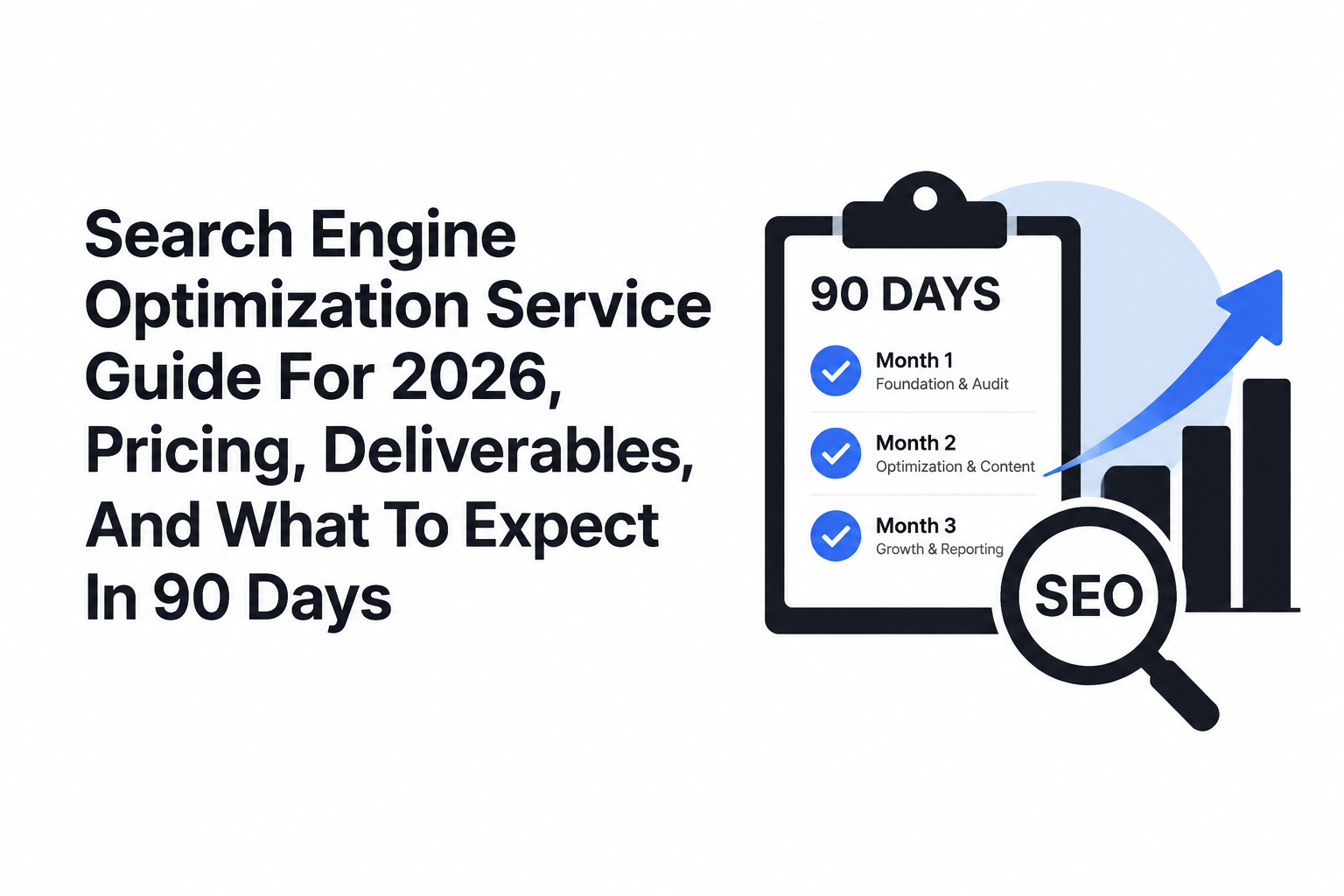
The 90-Day Deliverables Checklist, What You Should Receive Month by Month
A 90-day SEO plan is only useful if it specifies the artifacts you will receive each month and the acceptance criteria for each artifact. Use the checklist below to turn any provider’s proposal into a yes or no decision.
Month 1 (Days 1 to 30) acceptance criteria
- Tracking and baselines: GA4 and Search Console access validated, conversion events reviewed, and a documented baseline for impressions, clicks, top landing pages, and coverage.
- Technical audit with prioritization: a list of issues grouped by impact and effort, plus the “first 10 fixes” with clear owners (agency vs dev team). The audit is incomplete if it does not include indexing and crawl diagnostics.
- Keyword and intent map: a mapping of priority intents to existing URLs or new pages, including “do we have the right page type” decisions (service page vs guide vs comparison).
- First implementation sprint: at least a handful of fixes shipped, such as title and H1 cleanup, internal linking improvements, and indexation controls where needed.
Month 2 (Days 31 to 60) acceptance criteria
- Content briefs you can review: briefs that specify target intent, outline, entities to cover, and internal links to add.
- Pages published or refreshed: a visible set of updated and new URLs, each tied to a mapped intent.
- GEO upgrades on priority pages: direct-answer passages added, headings aligned to real questions, and supporting evidence (steps, definitions, comparisons) added where appropriate.
- Authority groundwork: a list of outreach targets, reclaim opportunities, and brand profile consistency tasks (when relevant).
Month 3 (Days 61 to 90) acceptance criteria
- Second technical sprint: remaining high-impact fixes shipped, plus ongoing monitoring for crawl anomalies and coverage issues.
- Internal link system: rules for how new pages link to money pages, plus updates on older pages to push authority through the site.
- Performance review that leads to decisions: which page types are winning, which intents are under-covered, and what changes the next 90 days will focus on.
What surprised our team was how often “SEO deliverables” look complete on paper but fail the shipped-work test; requiring a monthly shipped-URLs list eliminates most underperforming providers within one billing cycle.
How to Vet an SEO Provider Fast, Reviews, Red Flags, and a Simple Scorecard
A fast vendor evaluation works when you score the provider on verifiable behaviors: how they scope work, how they prove shipping, and how they explain tradeoffs. Reviews help, but only if you know what to look for.
Red flags you can spot in one call
- Ranking guarantees: any guarantee of specific positions is a risk signal because search systems change and competitors react.
- No access requirements: if they do not ask for Search Console, GA4, CMS access, and a dev process, the plan is likely generic.
- “We’ll build links” without method: you should hear a channel strategy (PR, partnerships, reclaim, resource outreach) and quality controls.
- Reporting as screenshots: dashboards should be explainable and tied to decisions, not vanity graphs.
How to interpret SEO service reviews without getting misled
- Look for mentions of artifacts: roadmap quality, content briefs, technical fixes shipped, and clarity of communication.
- Watch for timeline mismatch: if reviews celebrate results in “two weeks,” verify whether it was paid media, brand traffic, or a site relaunch effect.
- Prefer reviews that name KPIs: leads, qualified demos, revenue attribution, or conversion rate lifts from organic landing pages.
A simple scorecard you can reuse
- Scope clarity (0 to 5): deliverables quantified per month, acceptance criteria defined.
- Technical depth (0 to 5): can explain crawl/index diagnostics, prioritization, and implementation path.
- Content system (0 to 5): briefs, workflow, publishing cadence, refresh strategy.
- Authority plan (0 to 5): channels, quality bar, risk controls, and realistic expectations.
- Measurement (0 to 5): baselines, dashboard, and decision-driven reporting.
- GEO readiness (0 to 5): ability to structure content for direct answers, entity clarity, and extractable passages.
To compare vendors at the shortlisting stage, pairing this scorecard with a broader market view can help; this roundup of top search engine optimization companies is useful when you need a transparent comparison frame.
Reporting and KPIs, Sample Targets and What a Good Dashboard Looks Like
Good SEO reporting proves three things: work shipped, visibility gained, and business impact, in that order. If your dashboard cannot connect shipped work to leading indicators and then to conversions, it will not support budget decisions.
The KPI stack that avoids vanity metrics
- Inputs (weekly): shipped fixes, shipped URLs, content published, content refreshed, outreach actions completed.
- Leading indicators (weekly to monthly): index coverage health, impressions by query group, number of pages earning impressions, and changes in average position for priority clusters (used cautiously, not chased).
- Lagging indicators (monthly): organic conversions, assisted conversions, pipeline influenced, and revenue where attribution is reliable.
What a decision-grade monthly report should contain
- Executive summary: what changed, why it changed, and what we are doing next.
- Shipped work ledger: a table of URLs updated or published and technical tickets closed.
- Search Console views: query groups by intent, landing pages by impressions and clicks, and pages newly earning impressions.
- Conversion view: organic landing page conversion rate and top converting pages, with notes on tracking limitations if any.
- Next 30-day plan: the next set of fixes and content, tied back to the roadmap.
Minimum bar for transparency
A provider should share access to the live dashboard and annotate major changes like migrations, tracking updates, and content releases. In our experience, teams move faster when reporting includes a “what we learned” line item, because it forces the agency to state the hypothesis and the next test rather than hiding behind activity.
Why Freeways Agency for SEO and GEO, Engagement Model and Next Steps
Freeways Agency is a good fit when you want a search engine optimization service that is scoped to shipped deliverables and a 90-day proof-of-work plan, including GEO upgrades that make pages easier to cite in AI-driven answers. The goal is not to sell you “SEO,” but to map your budget to a concrete sequence of work you can verify.
How engagement typically starts
- Step 1: access and baseline setup (Search Console, GA4, CMS, call tracking if applicable).
- Step 2: audit and roadmap with prioritization by impact and effort, plus a first implementation sprint.
- Step 3: content and GEO execution using page briefs and a publishing cadence tied to your revenue intents.
- Step 4: monthly reporting with a shipped-work ledger and next-30-day plan.
What you will have by day 90 if the scope is right
- A prioritized technical backlog with multiple high-impact fixes shipped.
- A visible set of optimized and newly published pages mapped to buyer intents.
- A reporting system that connects shipped work to visibility and conversions.
| Decision question | What to ask any provider | Acceptable evidence |
|---|---|---|
| Will work ship every month? | How many URLs and technical fixes will you deliver in month 1 to 3? | Shipped-URLs log, tickets closed, published pages list |
| Is the scope tied to outcomes? | Which intents are we targeting first and why? | Intent-to-URL map and prioritized roadmap |
| How will you handle GEO? | How do you structure answers so AI systems can cite them? | Direct-answer passages, clear headings, entity coverage in the copy |
| Will reporting support decisions? | Show a sample monthly report and the dashboard structure. | Inputs + leading indicators + conversions, with annotations |
FAQ about choosing an SEO service in 2026
If you want a decision-ready proposal, Freeways Agency can scope a search engine optimization service plan that maps your budget to deliverables and a 90-day checklist you can hold us to. Request a scoped proposal and we will return a clear roadmap, monthly outputs, and reporting structure so you can commit with confidence.

Written by Joyce Ng.

AI Search Statistics 2026: Clicks, Conversions & Brand Visibility
AI Overviews hit 2.5B users, but top-ranking CTR fell 58%. Explore 2026 AI search statistics plus Freeways’ test of 216 brands across 5 AI platforms.
Hiring an SEO Company? Here’s What to Check Before You Sign
Compare an SEO marketing company by deliverables, pricing, proof, timelines, and red flags before signing a contract.
Top SEO Companies In 2026, A Global Shortlist By Specialty, Budget, And Business Type
Compare seo top companies by specialty, budget, proof, deliverables, and business fit before choosing an agency for 2026.