
Top SEO in 2026, The Best Tools, Companies, and Resources Worth Knowing

The best top SEO options in 2026 depend on whether your priority is improving website performance, hiring professional specialists, or developing in-house expertise. For most businesses, the strongest approach combines reliable SEO software, a clearly defined implementation strategy, and trusted educational resources. This guide compares practical options across all three categories, including seven free tools, established US agencies, ten learning websites, and examples of effective optimization. It also examines how Google AI Overviews and generative search are changing organic visibility, helping you choose an investment that supports measurable business outcomes rather than chasing rankings alone.
- Choose SEO tools for independent research and monitoring, professional agencies for strategic execution, and educational resources for developing internal capabilities.
- Evaluate providers using verified client reviews, transparent pricing, relevant experience, documented deliverables, and business-focused KPIs.
- SEO remains commercially relevant in 2026, but measurement should include qualified traffic, conversions, revenue, and visibility across emerging AI search experiences.
What Does Top SEO Mean in 2026, Tools, Companies, or Resources?
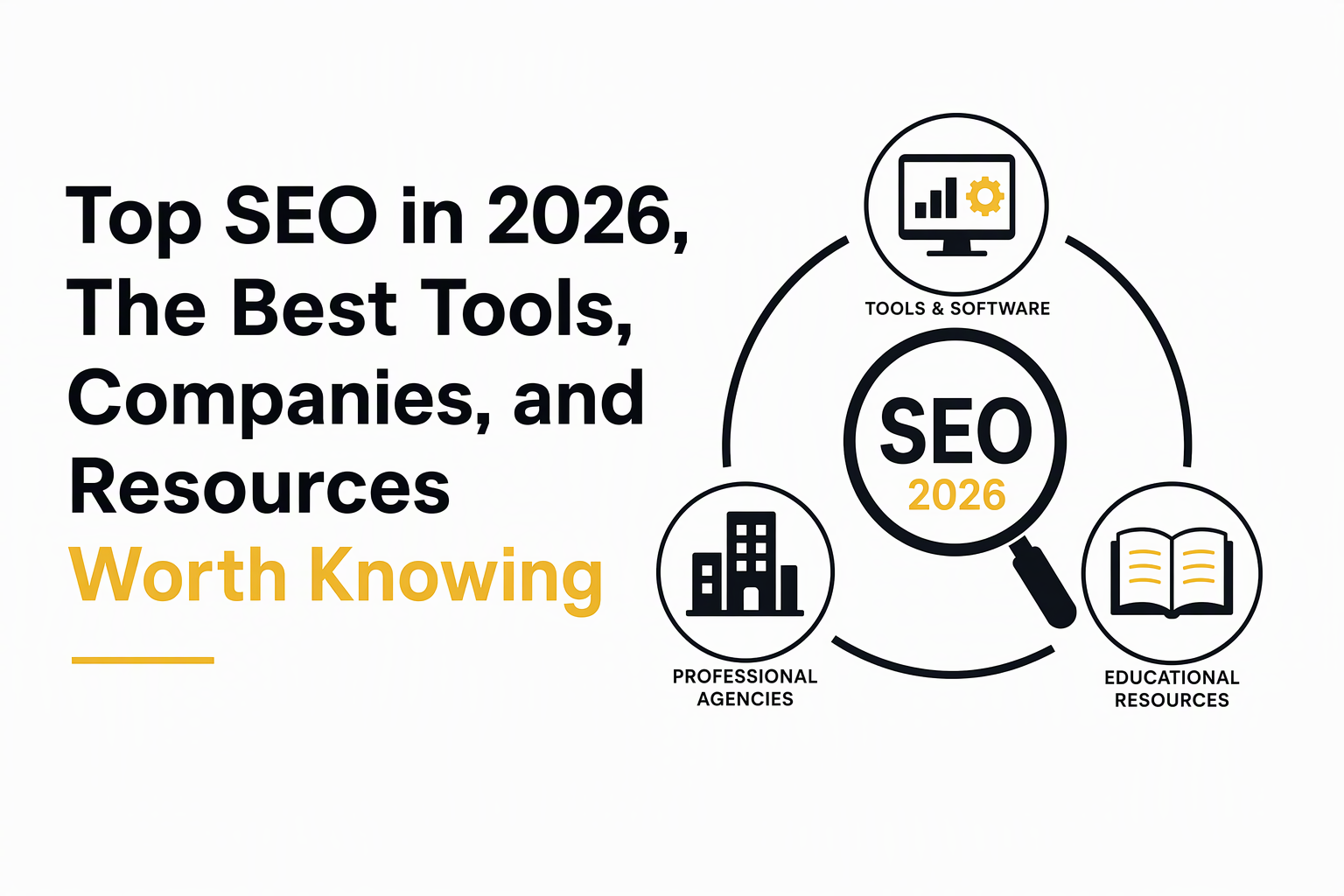
Top SEO in 2026 describes three different types of solutions: software for improving organic search performance, companies that implement SEO strategies, and educational resources that help professionals develop their knowledge. Identifying the correct category before comparing providers prevents businesses from spending money on solutions that do not address their actual requirements.
Consider the distinction between three common objectives:
- SEO tools: Suitable for researching keywords, monitoring competitors, auditing websites, identifying technical problems, and tracking rankings. These products provide data and recommendations, but implementation remains your responsibility.
- SEO companies: Appropriate when a business needs strategic planning, technical implementation, content development, link acquisition, or ongoing performance management. An agency supplies expertise and execution capacity.
- SEO learning resources: Best for marketers, business owners, developers, and specialists who want to understand search engine behavior, improve internal processes, or evaluate external recommendations.
A practical decision framework
Match your immediate business constraint to the appropriate investment:
| Business situation | Recommended solution | Primary evaluation criterion |
|---|---|---|
| Insufficient keyword and competitor data | SEO software | Data coverage and usability |
| Technical problems without internal development capacity | SEO agency | Technical implementation experience |
| Limited internal SEO knowledge | Learning resources | Credibility and practical instruction |
| Traffic is increasing without generating leads | SEO strategy and specialist support | Conversion quality and revenue contribution |
A useful distinction is the difference between discovering an opportunity and implementing it. A keyword research platform might identify valuable commercial search terms, but it cannot independently redesign a website's information architecture, resolve indexing problems, or ensure that published content meets customer expectations.
For businesses comparing external providers, reviewing top search engine optimization companies provides another way to understand how agency capabilities and evaluation criteria differ.
Top SEO Tools for Keyword Research, Technical Audits, and Content Optimization
The strongest SEO software choices in 2026 are Google Search Console, Google Analytics 4, Google Keyword Planner, PageSpeed Insights, Screaming Frog, Ahrefs, and Semrush. Each platform addresses a different stage of optimization, so selecting software based on workflow requirements is more useful than purchasing the largest available subscription.
Seven useful SEO tools, including free options
1. Google Search Console. This free platform provides first-party information about Google Search performance, indexing, impressions, clicks, and search queries. It should be the starting point for diagnosing organic visibility because the information comes directly from Google's search systems.
2. Google Analytics 4. GA4 measures website engagement and conversions. It helps connect organic acquisition with business outcomes, including lead submissions, purchases, and other configured events. Its usefulness depends on accurate conversion tracking.
3. Google Keyword Planner. Primarily designed for advertising research, this tool provides keyword ideas and search volume estimates. It is useful for developing an initial keyword list, although the displayed ranges and estimates should not be interpreted as guaranteed organic traffic.
4. Google PageSpeed Insights. This free diagnostic platform evaluates page performance using laboratory and available field data. It reports Core Web Vitals, including Largest Contentful Paint, Interaction to Next Paint, and Cumulative Layout Shift.
5. Screaming Frog SEO Spider. The free version crawls up to 500 URLs per website. It identifies broken links, redirects, missing metadata, duplicate pages, and other technical issues. Paid licensing removes the crawl limit and unlocks additional functionality.
6. Ahrefs. Ahrefs supports backlink analysis, competitor research, keyword discovery, and website auditing. Its free offering provides selected information about verified websites, while paid plans expand research and monitoring capabilities. Published paid plans include Lite at $129 per month and Standard at $249 per month, subject to billing terms and current pricing.
7. Semrush. Semrush combines keyword research, competitor analysis, position tracking, site auditing, and AI visibility capabilities. Its SEO Classic plans start at $139.95 monthly, while Semrush One starts at $199.95 monthly according to its published pricing information.
How to choose between SEO platforms
Compare software using five criteria: keyword database coverage, crawl capacity, competitor research, reporting flexibility, and total subscription cost. A freelancer managing one website may not need the same functionality as an agency monitoring dozens of domains.
I would start with first-party Google data, use a crawler to identify technical problems, and introduce a paid research platform only when competitor intelligence or larger-scale keyword analysis justifies the expense. This sequence avoids paying for overlapping functionality before the underlying workflow is established.
A minimal SEO workflow for beginners
- Verify the website in Google Search Console and check indexing coverage.
- Export existing queries and landing-page performance.
- Use Keyword Planner to identify relevant search opportunities.
- Crawl important URLs with Screaming Frog.
- Review page performance with PageSpeed Insights.
- Configure GA4 conversions and connect organic visits to business results.
This combination provides a practical foundation without requiring an expensive software stack.
Top SEO Companies in the USA and How to Compare Their Services
The best SEO companies for a US business should demonstrate relevant industry experience, independently verifiable client feedback, transparent commercial terms, and the ability to implement measurable improvements. A provider's reputation matters, but its suitability depends on whether its delivery model matches the company's actual requirements.
Five established SEO providers to evaluate
1. WebFX. A broad digital marketing provider offering SEO, paid advertising, content marketing, and related services. Its wider service mix makes it worth evaluating for businesses that want several acquisition channels coordinated by one provider. Its Clutch profile reports a 4.9 rating from more than 450 reviews and a minimum project size of $1,000.
2. Victorious. A specialist SEO agency based in San Francisco. Its services include technical optimization, content development, link acquisition, and generative engine optimization. Clutch reports a 4.8 overall rating from 119 reviews, a minimum project size of $50,000, and an indicated SEO package starting price of $5,999 monthly.
3. Ignite Visibility. A San Diego-based digital marketing provider offering SEO alongside paid media and other marketing services. Its broad service portfolio makes it relevant to businesses requiring coordinated acquisition campaigns. Its Clutch profile lists an hourly range of $100 to $149, although project requirements determine the actual engagement cost.
4. SmartSites. A digital marketing agency offering SEO, PPC, web design, and development. It is worth considering for small and midsized companies that need support across website and acquisition activities. Clutch reports a 4.9 rating from approximately 370 reviews, a $1,000 minimum project size, and SEO packages starting at $2,600 monthly.
5. Siege Media. A content-focused search marketing provider working across SEO, digital PR, and generative engine optimization. Its offering is particularly relevant to companies investing in editorial content and authority development. Clutch reports a 4.9 rating from 44 verified reviews, a $5,000 minimum project size, and an hourly range of $100 to $149.
These figures are published directory snapshots, not guarantees of service quality or current quotations. Review counts, ratings, and package prices can change. Check the individual provider profiles and obtain written proposals before making a purchasing decision.
Five criteria for comparing agency proposals
Industry fit: Ask for examples involving similar customers, competitive conditions, and website structures. Experience in ecommerce does not automatically translate into expertise in professional services or local businesses.
Deliverables: A proposal should specify technical audits, keyword mapping, content recommendations, implementation responsibilities, internal linking, and reporting frequency. Distinguish recommendations from work the agency will actually complete.
Contract transparency: Confirm minimum engagement periods, renewal conditions, ownership of content, access to accounts, cancellation terms, and additional fees.
Reporting quality: Request examples showing organic landing-page performance, qualified leads, conversions, and completed work rather than keyword positions alone.
Measurable KPIs: Establish baseline performance before setting targets. A realistic engagement should identify what will be measured, how attribution works, and which dependencies could affect results.
For a broader comparison of seo top companies, compare specialist capabilities and commercial fit rather than assuming that the largest provider is automatically the best choice.
What Are the Top 10 SEO Sites for Learning and Industry Updates?
The ten most useful SEO learning resources combine official search documentation, industry reporting, research, practical training, and professional communities. The strongest resource depends on whether readers need authoritative technical guidance, current industry developments, or practical implementation instruction.
Ten resources worth bookmarking
1. Google Search Central. The primary reference for Google Search documentation, crawling, indexing, structured data, and Search Essentials. It is essential for technical specialists and anyone validating SEO recommendations against official guidance.
2. Google Search Central Blog. Publishes official updates, explanations of search features, and announcements affecting website owners. It is particularly useful when investigating changes to Google's documentation or search systems.
3. Search Engine Land. Covers search marketing developments, industry analysis, advertising, and SEO news. Experienced marketers can use it to follow developments beyond official announcements.
4. Search Engine Journal. Offers practical articles, interviews, and educational coverage of organic search, content marketing, and digital advertising. Its accessible reporting suits working marketers and business owners.
5. Ahrefs Blog. Provides research-led tutorials on keyword research, backlinks, technical SEO, and competitor analysis. It is useful for practitioners who want examples of research workflows.
6. Moz Blog. Covers search strategy, link building, keyword research, and marketing measurement. Its educational approach is useful for developing a consistent understanding of optimization principles.
7. Semrush Blog. Offers tutorials and industry analysis covering SEO, content strategy, competitor research, and marketing analytics. Readers can connect educational material with practical software workflows.
8. LearningSEO.io. A curated learning roadmap that organizes resources by subject and experience level. It is particularly useful for beginners and marketers developing a structured study plan.
9. Search Engine Roundtable. Tracks search industry discussions, reported changes, and observations from the SEO community. It helps experienced practitioners identify emerging issues worth investigating.
10. Reddit's Tech SEO community. Provides discussions about crawling, JavaScript rendering, indexing, migrations, and technical troubleshooting. Community answers are useful starting points, but recommendations should be independently tested.
How to use learning resources efficiently
Organize research into three levels. First, consult official documentation when a technical or policy question arises. Second, use established industry publications to understand developments and competing interpretations. Third, test practical recommendations against website data before implementing changes.
For example, a reported indexing issue should be investigated through Search Console and official documentation before applying advice from a discussion thread. This approach separates confirmed technical requirements from individual opinions.
Top SEO Examples That Show What Effective Optimization Looks Like
Effective SEO improvements can be demonstrated through specific changes to page relevance, technical accessibility, local business information, and website architecture. The most useful examples connect an identified problem to a documented implementation and a measurable validation method.
Example 1: Improving an underperforming title tag
Before: Services | Company Name.
After: Commercial HVAC Maintenance Services in Dallas | Company Name.
The revised title identifies the service and geographic relevance instead of relying on a generic navigation label. The implementation should reflect the actual page content and search intent. Evaluate the change through Search Console impressions, clicks, click-through rate, and relevant query performance over a suitable comparison period.
Example 2: Resolving a technical indexing problem
Problem: Important service pages return valid HTTP responses but contain unintended noindex directives.
Implementation: Inspect page-level robots directives, HTTP headers, canonical tags, and sitemap entries. Remove unintended indexing restrictions, confirm that canonical URLs are correct, and request recrawling where appropriate.
Validation: Use URL Inspection in Search Console to check the affected pages. Confirm that Google can access and index the intended URLs. A successful request does not guarantee immediate indexing.
Example 3: Improving local SEO relevance
Before: A company operates several service locations but uses one generic location page for all cities.
After: Each legitimate business location receives accurate contact details, relevant service information, consistent business information, and useful location-specific content.
Maintain an accurate Google Business Profile for each eligible location. Ensure that published addresses and operating information match real business details. Avoid creating duplicate or misleading location pages solely to target additional geographic keywords.
Example 4: Building a content cluster
Primary page: A comprehensive guide to commercial property management.
Supporting pages: Property maintenance costs, tenant screening, building inspections, lease administration, and property compliance.
Implementation: Assign each page a distinct search intent, connect supporting articles to the main resource using descriptive internal links, and prevent overlapping pages from competing for identical queries.
A practical content brief should include the target audience, primary query, secondary topics, search intent, evidence requirements, internal links, conversion objective, and subject-matter reviewer. These deliverables make the strategy repeatable and easier to assess.
I would prioritize technical accessibility before expanding a content cluster. Publishing additional pages cannot compensate for important URLs that search engines cannot discover or index properly.
Is SEO Dead With AI, and Is SEO Still Worth It in 2026?
SEO remains a relevant acquisition channel in 2026 because generative search experiences still rely on discoverable, relevant information from the web, although the way users encounter and select sources is changing. Businesses should adapt their visibility strategy without abandoning established search fundamentals.
How AI Overviews and generative search affect organic visibility
Google AI Overviews and AI Mode provide synthesized answers that can change the relationship between search impressions, website clicks, and customer discovery. A user may encounter a brand in an AI-generated answer before visiting its website, making traditional organic click reporting an incomplete picture of visibility.
Google's official guidance explains that its AI search experiences use existing Search systems and that established SEO best practices remain relevant. Pages must meet ordinary technical eligibility requirements, while helpful, reliable content remains important. Google does not require a separate technical optimization system specifically for AI Overviews.
In June 2026, Google announced dedicated generative AI performance reporting in Search Console. The company subsequently announced that these insights had rolled out worldwide by August 31, 2026. This development gives website owners another way to assess visibility within Google's generative experiences.
SEO fundamentals versus emerging GEO requirements
Traditional SEO focuses on crawling, indexing, relevance, content quality, authority, and user experience. Generative engine optimization, commonly called GEO, focuses on making useful information discoverable, understandable, and suitable for retrieval and citation in AI-generated responses.
In practical terms, both approaches benefit from the same underlying improvements:
- Publish original information supported by credible evidence.
- Use descriptive headings and answer specific questions clearly.
- Maintain technically accessible pages and logical internal links.
- Provide accurate business, product, and author information.
- Support important claims with appropriate sources and documentation.
- Measure visibility across conventional search and available AI reporting systems.
One important distinction is that being mentioned in an AI response is not the same as receiving qualified website traffic. Businesses should distinguish brand exposure, referral visits, conversions, and attributable revenue rather than treating all AI mentions as commercial success.
Is SEO worth the investment?
SEO is worth considering when a business can identify relevant search demand, provide a useful solution, and convert organic visitors into commercially valuable outcomes. Its economics depend on implementation costs, competition, conversion rates, customer value, and the time required to establish visibility.
A simple investment model is:
Organic acquisition value = Qualified organic visits × Conversion rate × Average value per conversion.
For example, a business can compare the value of qualified organic leads with monthly agency fees, software costs, content production, and internal implementation expenses. Use actual business data rather than assumed industry averages.
Google also warns against scaled content production that creates large quantities of pages without meaningful user value. AI can assist with research and organization, but factual verification, original insight, and editorial accountability remain necessary.
For a business evaluating a seo digital marketing company, these considerations should form part of the agency selection process. A provider promising guaranteed AI citations or permanent ranking positions should be treated cautiously.
How to Choose the Right SEO Solution and Measure Its Results
The right SEO solution is the one that addresses a measurable business constraint while providing enough expertise, resources, and accountability to execute the required work. Businesses should select between software, agency support, and internal implementation according to their operational capacity and growth objectives.
Match the solution to your business requirements
Choose software-led execution when your team already understands SEO and has sufficient development, content, and analytical resources. This model offers greater control over implementation, although it requires consistent internal ownership.
Choose professional agency support when your organization needs specialist knowledge, additional implementation capacity, or an independent strategic perspective. Assess the provider's ability to execute technical recommendations, coordinate content production, and report on business performance.
Choose an internal learning and development approach when building long-term organizational capability is more important than immediate outsourcing. Use documented processes, training resources, and regular performance reviews to develop consistent expertise.
A five-stage evaluation framework
- Define the commercial objective. Identify whether the priority is qualified leads, ecommerce revenue, local enquiries, product discovery, or stronger brand visibility.
- Establish the baseline. Record organic clicks, impressions, conversions, landing-page performance, and existing technical issues.
- Choose the required capabilities. Determine whether keyword research, technical development, content production, authority building, or strategic management represents the main constraint.
- Agree on implementation responsibilities. Document who completes audits, approves content, deploys website changes, monitors performance, and manages reporting.
- Review outcomes regularly. Compare actual performance against the baseline and adjust investment according to qualified acquisition and commercial results.
SEO performance metrics that matter
| Metric | What it measures | Where to evaluate it |
|---|---|---|
| Organic impressions | Search visibility and query exposure | Google Search Console |
| Organic clicks | Visits generated through search results | Google Search Console |
| Qualified organic traffic | Visits from relevant potential customers | GA4 and CRM |
| Conversion rate | Percentage of visitors completing defined actions | GA4 and conversion systems |
| Revenue attribution | Commercial value associated with organic acquisition | CRM and financial reporting |
| Technical health | Accessibility, indexing, and crawl issues | Search Console and crawling tools |
| AI search visibility | Exposure within available generative search reporting | Google Search Console and referral analysis |
Businesses should also distinguish leading indicators from commercial outcomes. Improvements in indexing, content coverage, and relevant rankings can indicate progress, but they do not automatically establish profitability. Revenue and qualified conversions provide stronger evidence of business value.
Companies looking for professional implementation can consider Freeways Agency, a marketing agency focused on SEO services for businesses seeking stronger organic search visibility. Its suitability should be assessed using the same criteria applied to other providers: strategy quality, implementation scope, reporting transparency, and alignment with commercial objectives.
For a clearer understanding of deliverables, costs, and expected engagement milestones, review this search engine optimization service guide or explore the practical considerations in a search optimisation agency evaluation.
| Decision | Best starting point | Success indicator |
|---|---|---|
| Need better research capabilities | SEO software | More reliable research and reporting |
| Need specialist execution | SEO company | Completed improvements and qualified acquisition |
| Need internal expertise | Learning resources | Consistent independent execution |
| Need sustainable organic growth | Integrated SEO strategy | Conversions and attributable revenue |
Frequently Asked Questions About Top SEO
Choosing the right SEO investment starts with understanding whether your business needs better tools, specialist knowledge, or hands-on implementation. If professional execution is the priority, explore Freeways Agency and discuss your organic visibility objectives, website requirements, and commercial goals. A clear scope, measurable KPIs, and transparent implementation plan provide a stronger foundation for sustainable search growth.

Written by Joyce Ng.

AI Search Statistics 2026: Clicks, Conversions & Brand Visibility
AI Overviews hit 2.5B users, but top-ranking CTR fell 58%. Explore 2026 AI search statistics plus Freeways’ test of 216 brands across 5 AI platforms.
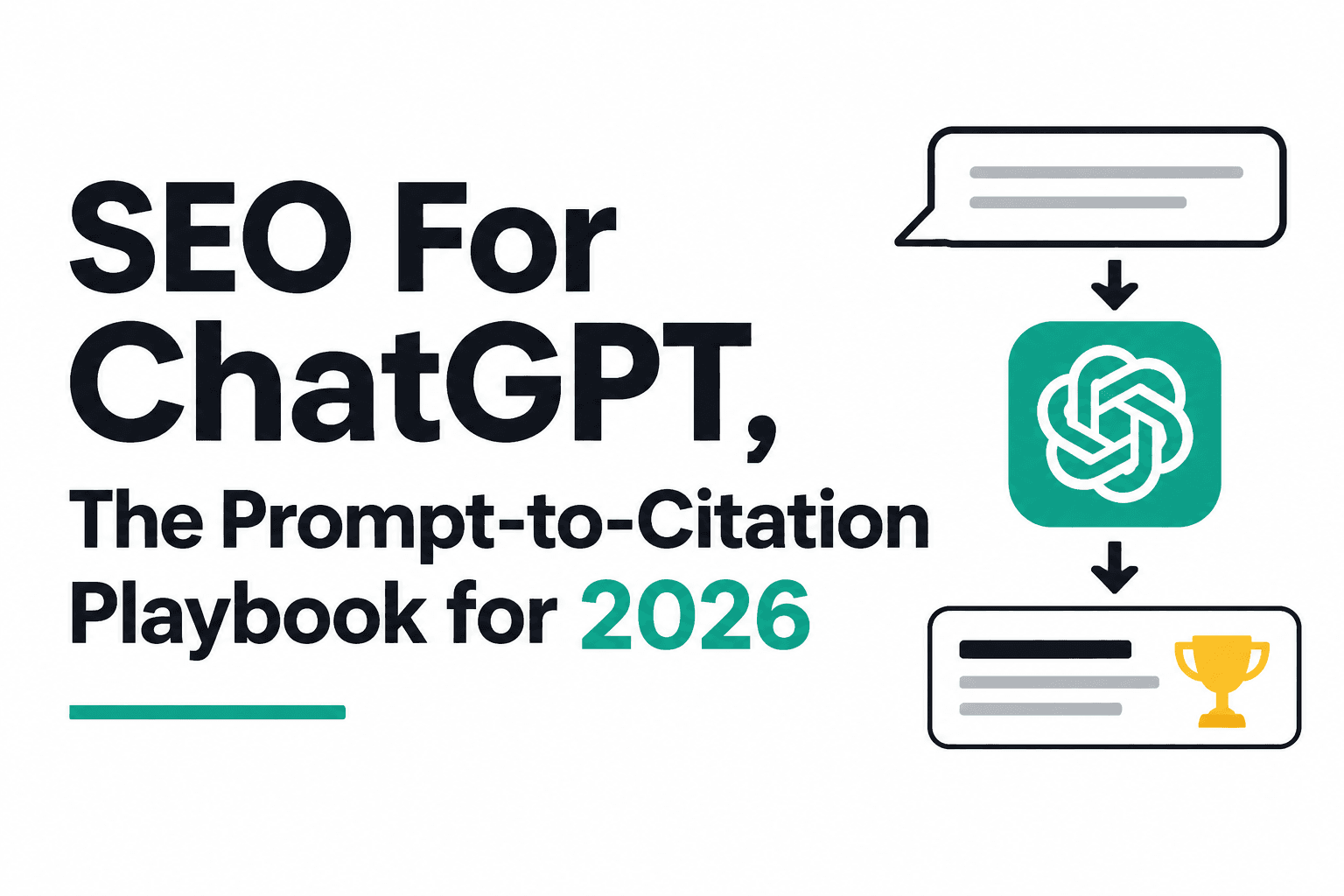
SEO For ChatGPT, The Prompt-to-Citation Playbook for 2026
Learn seo for chatgpt in 2026 with a prompt-to-citation workflow, technical indexing checklist, schema patterns, and KPIs to measure visibility.

Is Your Website an Open Book or a Black Box to AI?
Learn optimization artificial intelligence with a clear taxonomy, a weight-update example, a method selection matrix, and a measurable project workflow.