
Online Marketing SEO: Revenue Engine or Expensive Busywork?

Online marketing search engine optimization in 2026 works best when it is run as an integrated system across content, website UX, paid campaigns, and reporting, with one 90-day execution cadence that makes results measurable.
- Map SEO deliverables to customer intent and your channel mix, then publish in a repeatable 90-day cadence so improvements compound.
- Use a single workflow from research to publishing that outputs: a keyword-to-page map, a brief template, and a measurable “definition of done.”
- Prove impact with a lightweight dashboard that separates leading indicators (indexing, rankings) from business outcomes (leads, revenue, assisted conversions).
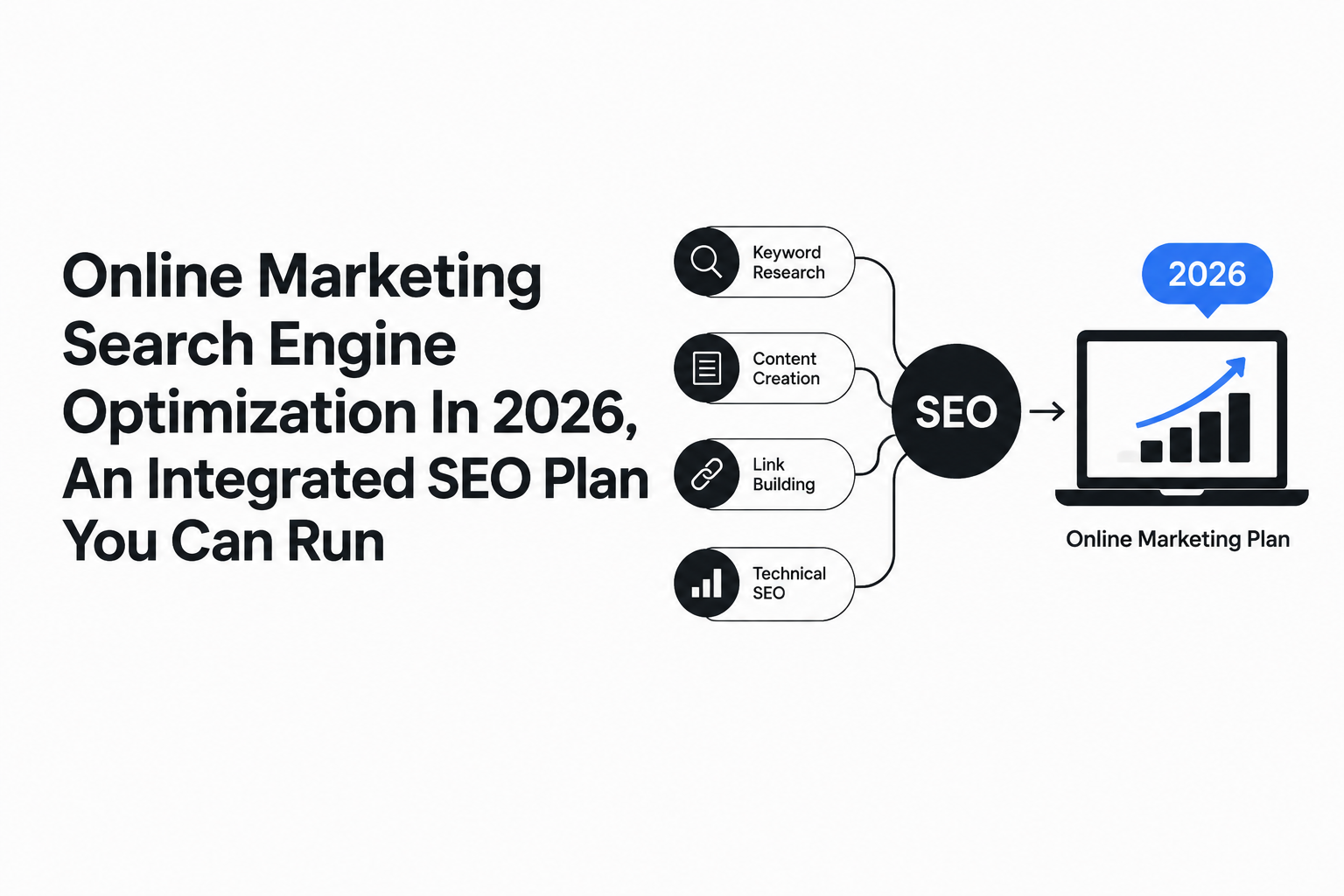
Where SEO Fits In Online Marketing In 2026
Online marketing search engine optimization belongs in the center of your growth system because it turns demand (search intent) into durable landing pages and content that other channels can amplify.
What changes in 2026 and what stays the same
- What stays the same: indexability, relevance, and useful pages still win; a page that does not get crawled, indexed, and understood cannot earn consistent traffic.
- What changes: AI-generated result experiences (including Google AI Overviews) can satisfy simple queries without a click, so you have to optimize for being cited and for converting the clicks you do earn.
In practice, I treat “AI visibility” like a stricter version of snippet optimization: each important page needs a short, copyable answer block, clear entity language, and scannable structure that a generative engine can quote without misrepresenting you.
A simple channel map that prevents SEO from operating in a silo
| Channel | What it is best at | How SEO supports it | What to measure |
|---|---|---|---|
| Paid search | Immediate demand capture | Turns winning ad queries into long-term pages; improves Quality Score via relevance and UX | Search term overlap, landing page CVR, assisted conversions |
| Social and community | Demand creation and distribution | Provides linkable assets, FAQs, and “explainers” that are easy to share | Referral traffic, branded queries trend |
| Nurture and activation | Uses SEO content as nurture sequences and onboarding resources | Return visits, content-assisted lead progression | |
| Sales enablement | Shortens evaluation cycles | Creates comparison, pricing, implementation pages that answer objections | Time to close, demo-to-close rate (if tracked) |
How to align pages to intent without using internal jargon
- Problem-aware searches (example: “why is my site not indexed”): publish diagnostic posts, checklists, and glossary pages.
- Solution-aware searches (example: “technical SEO checklist”): publish playbooks and templates, plus tool-guided walkthroughs.
- Provider-aware searches (example: “seo marketing company”): publish service pages, process pages, and evaluation criteria pages.
The biggest integration mistake I see is treating blog content as “traffic” and service pages as “conversion.” In 2026, both need to educate and convert: blog posts should route to a relevant next step, and service pages should answer the same questions prospects ask in search.
The Integrated SEO Workflow From Research To Publishing
A reliable online marketing search engine optimization workflow is a sequence of outputs you can audit: keyword-to-page map, brief, draft, on-page QA, publish, and measurement notes.
Step 1: Build a keyword-to-page map with one rule
Assign one primary intent per page and avoid making two URLs compete for the same query family. The output is a simple spreadsheet with columns: URL, primary query, supporting queries, searcher intent, internal links to add, and conversion goal.
- Decision rule: if two pages would have the same “best answer,” consolidate or differentiate by intent (how-to vs service vs location).
- 2026 note: include a column for “copyable answer block” so every priority URL has a short passage that can be cited by AI results.
Step 2: Turn the map into briefs that writers and SEOs both like
A brief should reduce back-and-forth by specifying the page job, not just a keyword list. I use a consistent template:
- Audience and intent: what the reader is trying to accomplish in one sentence.
- Page promise: the direct answer the page will deliver in the first screen.
- Outline: H2s and H3s designed for skimmability and extractable answers.
- Proof requirements: which claims must be backed by screenshots, standards, or tool outputs (no invented numbers).
- Conversion path: what the next step is (download, contact, pricing page, request a quote).
For on-page mechanics, I usually link the brief to a checklist derived from on page seo so production stays consistent even when multiple people publish.
Step 3: Publishing QA that prevents “invisible” SEO failures
Before you hit publish, run a 10-minute QA that catches the issues that block growth even if the copy is good:
- Indexability: page is not blocked by robots.txt or noindex, and canonical is correct.
- Internal linking: at least 3 relevant internal links in, and 3 out, from/to related pages.
- Snippets and AI-citation readiness: one short definition/answer paragraph, one list, and one table (when relevant).
- Speed and UX: avoid heavy embeds; compress images; verify mobile layout.
- Conversion instrumentation: the form or CTA click is tracked (even basic event tracking beats nothing).
Step 4: A 90-day cadence that connects execution to outcomes
A practical cadence is 2 weeks for research and backlog, 6 weeks for production and updates, and the final 2 weeks for consolidation and measurement notes that inform the next cycle.
- Weeks 1-2: refresh the map, pick priority URLs, write briefs.
- Weeks 3-8: publish net-new pages and update existing pages with clear change logs.
- Weeks 9-10: improve internal linking, prune thin pages, resolve crawl issues found in Search Console.
- Weeks 11-12: report, annotate what changed, and decide what to scale next.
If you want a deeper monthly operating rhythm, the playbook in search engine optimization is a good reference for how to keep the cadence from slipping as other marketing priorities show up.
3 Realistic Optimization Examples You Can Copy
Online marketing search engine optimization improves faster when you reuse proven page patterns, so the examples below focus on repeatable “before and after” transformations rather than theory.
Example 1: Service page that ranks but does not convert
Before: the page leads with agency branding, lists features, and buries pricing expectations and timeline; the CTA is generic (“Contact us”).
Fix (pattern): move the decision content above the fold and add an evaluation section that matches how people search.
- Add a first-screen block: “Who this service is for, what happens in the first 30 days, and what inputs we need.”
- Add a “What you get in 90 days” section with deliverables expressed as outputs (audit findings, roadmap, optimized pages, reporting cadence).
- Add an FAQ section that mirrors provider-intent queries (pricing, timeline, what access you need).
- Strengthen internal links from related blog posts to the service page with context, not just a nav link.
I have found that this change often increases lead quality even before rankings move, because the page filters out bad-fit prospects and answers objections early.
Example 2: Blog post that gets impressions but few clicks
Before: a long intro, vague headings, and no short answer block that matches the query phrasing.
Fix (pattern): rewrite the first 120 to 180 words as a direct answer, then add scannable structures.
- Put the “one-paragraph answer” first, written so it can stand alone when quoted.
- Add a checklist and a small table for quick extraction.
- Add 2-3 internal links to the next logical step, such as SEO marketing guidance or a service page.
- Update the title tag to match the dominant wording in Search Console queries (do not guess, use real query data).
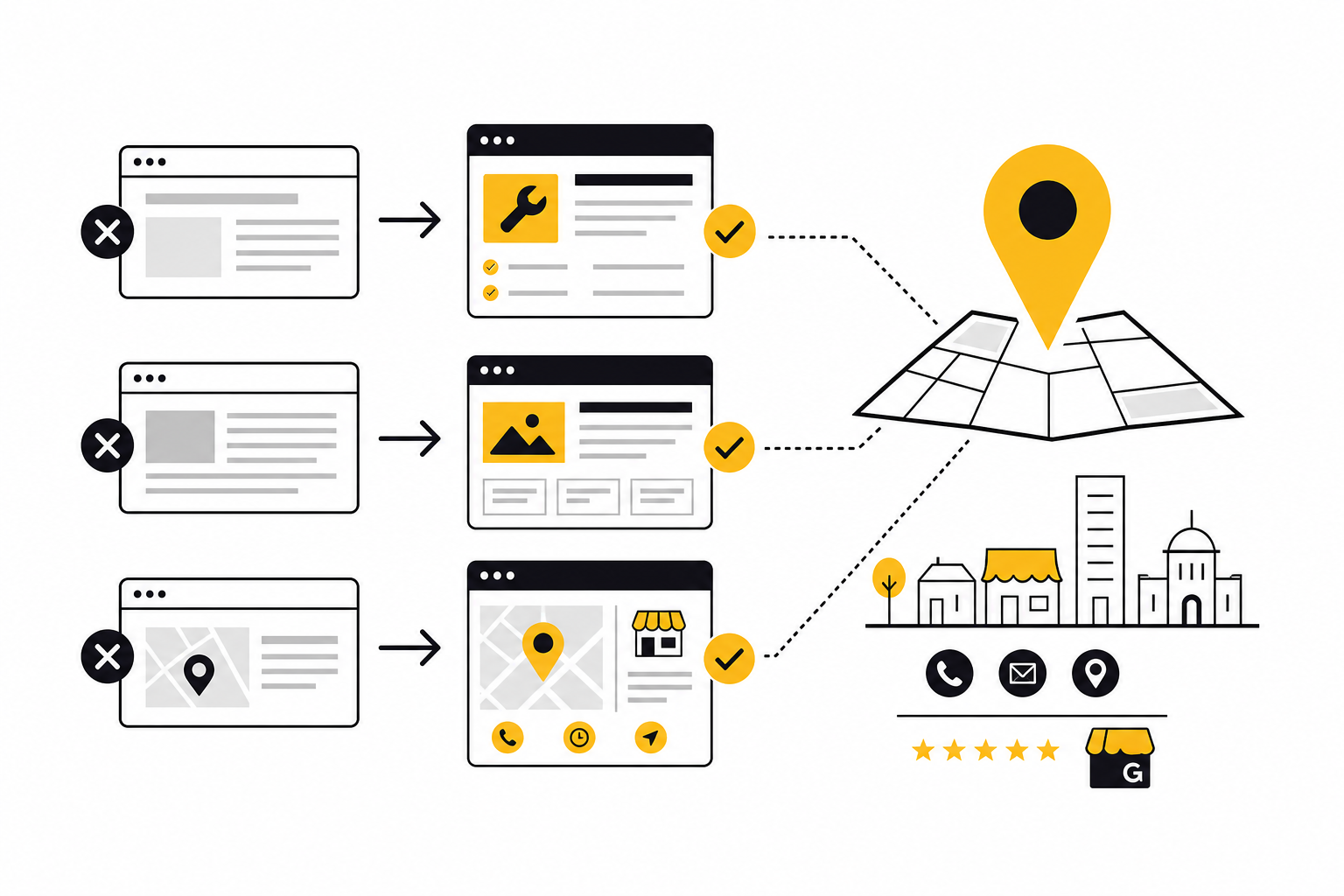
Example 3: Local landing page that is not visible for location terms
Before: the page swaps the city name in one paragraph but keeps identical content across locations, and it lacks proof of being active in that area.
Fix (pattern): add unique local signals and clarify the service area in ways engines can parse.
- Include a service-area list (neighborhoods, nearby cities) that matches how people actually search.
- Add a “How we deliver in [City]” section with logistics, availability, and constraints that are genuinely location-specific.
- Add internal links from local-relevant blog content and from the main service page.
- Ensure NAP consistency on-site, and connect the page to your Google Business Profile (when applicable).
Measurement That Proves SEO’s Role In Revenue
SEO measurement becomes revenue-relevant when you track leading indicators, business outcomes, and assisted conversions in one weekly and monthly rhythm.
A lightweight KPI dashboard you can build in a spreadsheet
- Technical health (weekly): indexed pages trend, crawl errors, Core Web Vitals flags (as surfaced in Search Console).
- Demand capture (weekly): clicks, impressions, and query groups for priority pages.
- Engagement quality (weekly): landing page engagement (or time on page), scroll depth if available, return visits.
- Pipeline impact (monthly): organic leads, qualified lead rate (if you tag in CRM), and organic-assisted conversions.
Attribution-friendly metrics by intent
Instead of arguing whether “SEO got the sale,” separate what SEO is responsible for at each step:
| Page type | Primary SEO job | Best metric | Common misread |
|---|---|---|---|
| Problem/How-to content | Earn trust and qualify the problem | Assisted conversions, email signups | Judging it only by last-click leads |
| Comparison/implementation content | Move evaluation forward | Clicks to pricing/contact, demo starts | Optimizing only for traffic volume |
| Service pages | Convert high-intent searches | Lead rate and lead quality | Celebrating rankings without conversion tracking |
Reporting cadence that prevents “activity without learning”
- Weekly: 15-minute check on indexing, top query movements, and any tracking breaks.
- Monthly: annotate what you changed (titles, sections, internal links, new pages) and correlate with Search Console trends.
- Quarterly (every 90 days): re-prioritize the page backlog using a simple score: (business value) x (ranking feasibility) x (conversion readiness).
When I audit SEO programs that “feel busy,” the missing piece is almost always the annotations: if you cannot name the top 5 page changes you shipped last month, you cannot learn what is working.
DIY SEO In A Weekend For Small Sites
A weekend DIY plan for online marketing search engine optimization should focus on indexability, top pages, and internal links, because those are the fastest fixes that compound.
Day 1 morning: verify indexing and submit the basics
- Set up Google Search Console: Google Search Console.
- Submit your sitemap (usually /sitemap.xml) and check the “Pages” report for not indexed reasons.
- Inspect your top 5 URLs (homepage, key service, key category, top blog, contact) and request indexing if needed.
Day 1 afternoon: fix the 5 most common “silent” blockers
- Accidental noindex on key templates
- Wrong canonical tags pointing to other URLs
- Broken internal links to money pages
- Duplicate pages caused by parameters or http/https mismatches
- Thin pages with no unique purpose (merge or expand)
Day 2 morning: upgrade priority pages with a repeatable checklist
Pick 3 pages that matter most to the business and apply the same edits:
- Rewrite the first paragraph as a direct answer and add a short list of outcomes.
- Add one section that addresses pricing, timeline, or constraints (what people actually want to know).
- Add 5 internal links: 2 pointing in from related pages, 3 pointing out to next steps.
- Check titles and H1s for clear intent language (avoid cute headlines).
Day 2 afternoon: publish one new “bridge” page
Create one page that connects demand to conversion, for example: “How [Service] works in 30 days” or “What to expect when hiring a provider.” If you need a reference for what buyers evaluate, the guide on seo marketing company selection criteria can be adapted into your own industry’s checklist.
Quick Answers On Certifications, Tools, And Common Pitfalls
Online marketing search engine optimization execution improves when you choose tools and credentials based on outputs, not badges, and avoid a short list of recurring 2026 pitfalls.
Certifications: what is worth it and what is not
- Worth it: platform certifications that improve implementation accuracy (analytics, tag managers, ads platforms) because they reduce measurement errors.
- Nice to have: SEO course certificates as onboarding, if they lead to consistent briefs and QA.
- Not sufficient alone: any certificate that does not require shipping changes on a real site.
Minimal tool stack that covers 80% of needs
- Google Search Console for indexing, queries, and technical alerts.
- Analytics for engagement and conversions.
- A crawler (optional) for audits; if you skip this, at least use GSC and a browser-based spot check.
- A content editor template (Docs or your CMS) that standardizes briefs, headings, and QA.
2026-ready do and don’t list
- Do: write copyable answer blocks and keep claims verifiable.
- Do: annotate every meaningful change so you can connect action to outcome.
- Do: maintain one canonical “best answer” per intent to avoid internal competition.
- Don’t: chase keyword repetition; clarity beats density for AI citations and snippets.
- Don’t: publish without internal links and conversion tracking; that is traffic without leverage.
- Don’t: overproduce new content while technical indexing issues remain unresolved.
If you are evaluating help, a good search engine optimization service should be able to show you the workflow artifacts: the map, the briefs, the QA checklist, and the reporting cadence, not just “we will build links” or “we will write blogs.”
| 90-day integrated SEO deliverable | What you should be able to verify | Why it matters |
|---|---|---|
| Keyword-to-page map | Every priority query family has one target URL | Prevents cannibalization and clarifies what to update |
| Content briefs | Intent, outline, proof requirements, and conversion path are explicit | Increases publishing consistency and reduces rewrites |
| Technical fixes log | List of indexability/crawl changes with dates | Makes growth explainable and repeatable |
| Internal linking plan | Specific source pages and target pages (not vague advice) | Improves discovery and distributes authority |
| KPI dashboard | Leading indicators plus business outcomes, reviewed weekly/monthly | Connects SEO work to revenue signals |
FAQ
If you want a second set of eyes on your 90-day integrated plan, Freeways Agency can review your current site setup, Search Console signals, and content backlog, then share a practical roadmap plus a downloadable checklist bundle you can run in-house or hand to a team.

Written by Joyce Ng.

Stop Playing SEO Roulette: Your First 30 Days, Mapped Out
Learn marketing online seo in 2026 with a beginner framework, free tools, a 30-day plan, and simple KPIs to track organic progress.

High-Volume SEO Keywords: A Gold Mine or a Money Pit?
Learn keywords and SEO with a practical keyword research workflow, search intent examples, prioritization criteria, and a content mapping template.
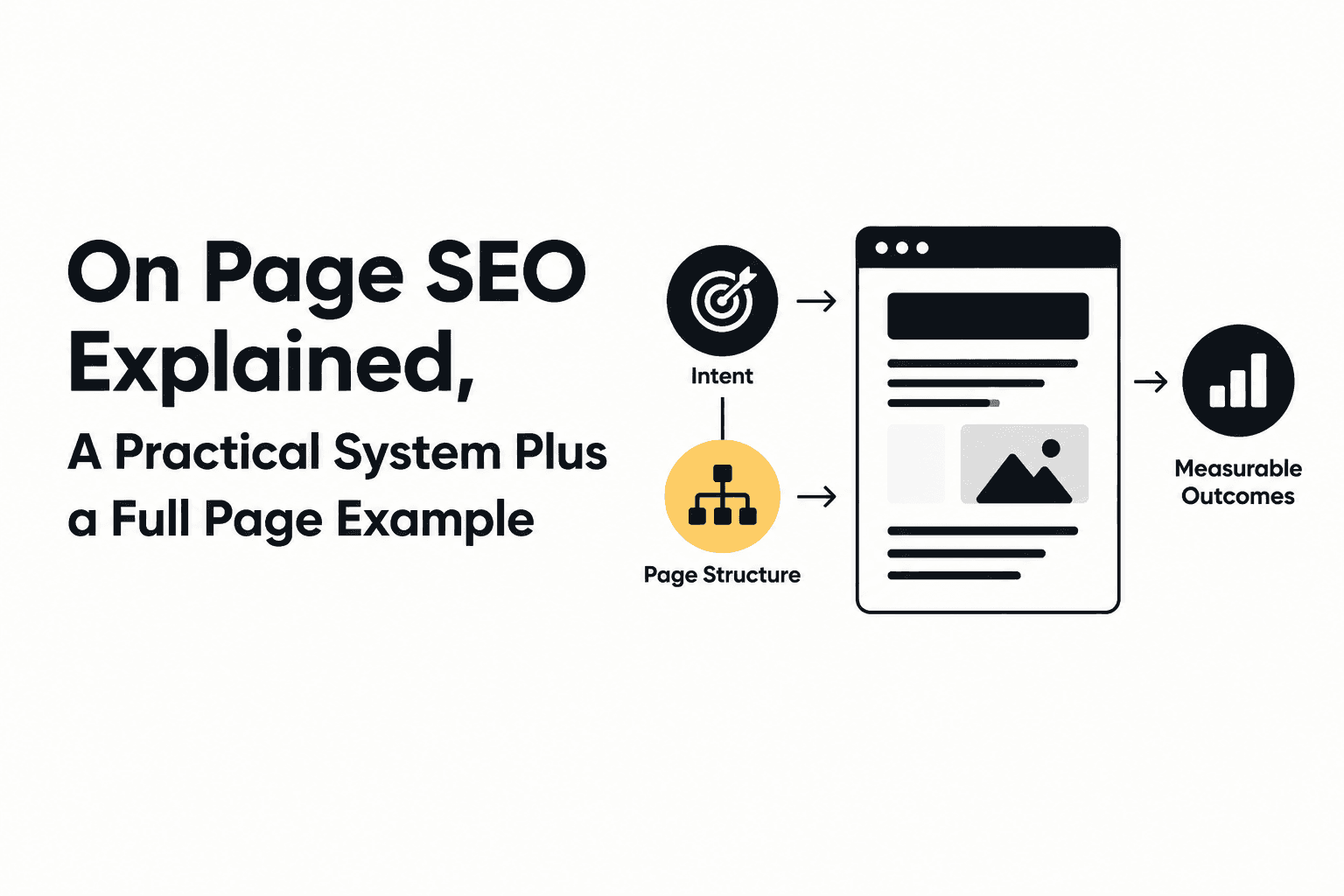
On Page SEO Explained, A Practical System Plus a Full Page Example
Learn on page seo with a simple 4-part system, a before/after page example, and a copy/paste checklist you can use on any URL.