
High-Volume SEO Keywords: A Gold Mine or a Money Pit?

Keywords and SEO work together to help search engines understand your website and connect its pages with people looking for relevant information, products, or services. The right keywords reflect what your audience actually searches for, match the purpose of each page, and support a clear business goal. For beginners, the challenge is not collecting hundreds of search terms. It is identifying the most relevant opportunities, grouping similar searches by intent, and assigning each group to a page that can satisfy the searcher.
- Choose SEO keywords based on relevance, search intent, competition, search demand, and business value rather than search volume alone.
- Group related queries by intent and map one primary keyword theme plus relevant secondary terms to each page.
- Use Google Keyword Planner and Search Console to discover opportunities, publish useful content, and refine your keyword priorities over time.

What SEO Keywords Are and Why They Matter for Search Visibility
SEO keywords are the words and phrases people enter into search engines when looking for answers, businesses, products, or services. A query such as “how to clean leather shoes” signals an informational need, while “leather shoe cleaning service near me” suggests that the searcher may want to hire a provider.
Match the query to the searcher's goal
Search visibility depends partly on whether a page is relevant to a query and provides a useful response. A page targeting a tutorial should explain the process, while a service page should make the offering, location, and next step clear. Strong relevance does not guarantee a ranking, because competition, technical accessibility, authority, and other factors also matter.
Understand head terms and long-tail keywords
Head terms are broad phrases such as “running shoes.” Long-tail keywords are more specific, such as “wide waterproof running shoes for beginners.” Broad phrases can attract varied audiences, whereas specific phrases often reveal a clearer need. Neither category is automatically better; the right choice depends on the page and the audience.
When planning keywords and SEO together, start by asking what a visitor expects to find after clicking a result. A page that fulfills that expectation has a clearer purpose than one written simply to repeat a popular phrase. This is also a useful foundation for search visibility measurement.
How to Find and Evaluate Good SEO Keywords
Good SEO keywords combine audience relevance, a clear search intent, realistic competition, evidence of demand, and a meaningful connection to your business. Use a repeatable discovery process rather than choosing phrases based on intuition alone.
Step 1: Collect real customer language
Write down the questions customers ask before buying, during evaluation, and after using a product or service. Include problems, prices, comparisons, locations, and common objections. For a plumbing company, seed topics might include “leaking tap,” “emergency plumber,” and “water heater replacement cost.” These initial ideas become the starting points for research.
Step 2: Expand your keyword ideas
Use Google autocomplete to discover common query variations, People Also Ask to identify related questions, and Related Searches to find adjacent topics. Google Keyword Planner can provide keyword ideas and estimated search demand. If your website already receives organic traffic, Google Search Console can show the queries for which your pages appear and receive clicks.
Each source answers a different question. Search suggestions reveal how people phrase searches, planning tools estimate demand, and Search Console reports actual impressions and clicks for your existing site. None provides a complete picture by itself.
Step 3: Score each candidate
Evaluate candidates against five criteria before deciding what to target.
| Criterion | What to check | Practical decision |
|---|---|---|
| Relevance | Does the query relate directly to your offer or expertise? | Reject unrelated traffic opportunities. |
| Intent | Does the searcher want information, comparison, or a purchase? | Choose a matching page type. |
| Search volume | How much estimated demand does the phrase have? | Compare demand with the site's goals. |
| Keyword difficulty | How competitive do available research tools estimate the query to be? | Inspect competing pages and your site's capabilities. |
| Business value | Could the search lead to a useful inquiry, sale, or relevant audience relationship? | Prioritize realistic commercial opportunities. |
Search volume estimates demand, keyword difficulty estimates competition according to a tool's methodology, and cost per click (CPC) reflects advertising-market costs. CPC can provide context about commercial intent, but it does not directly measure organic ranking potential. No single metric guarantees rankings or conversions.
My preferred planning approach is to record the reason for each priority, not just its score. A specific service query with modest demand may deserve attention before a broad, competitive phrase if the service closely matches the business's offer.
Types of SEO Keywords With Examples and the Right Page for Each
Different keyword types call for different page formats because searchers have different goals. Classify a query by its dominant intent first, then use its wording and specificity to refine the content plan.
| Keyword type | Example | Best page type |
|---|---|---|
| Informational | how to fix a dripping tap | Step-by-step guide |
| Navigational | Acme Plumbing contact | Contact or brand page |
| Commercial | best tankless water heaters | Comparison or buying guide |
| Transactional | book emergency plumber | Service or booking page |
| Branded | Acme Plumbing reviews | Reviews or reputation page |
| Local | plumber in Austin | Location or local service page |
| Question-based | how much does a plumber cost | Pricing guide or FAQ |
| Head term | plumbing services | Main service overview |
| Long-tail | same-day water heater repair in Austin | Specific service page, if justified |
Use intent to choose the format
Consider a query such as “water heater repair cost.” The searcher probably wants pricing context before contacting a provider. A detailed pricing guide can answer common cost questions, explain relevant variables, and link to the repair service page. A booking page alone may not answer the researcher's immediate need.
Keyword types can overlap. “Acme plumber near me” is branded and local, while “best emergency plumbers in Austin” is local and commercial. Categorization should support page decisions rather than become a rigid labeling exercise.
How to Build a Keyword List and Map Keywords to Content
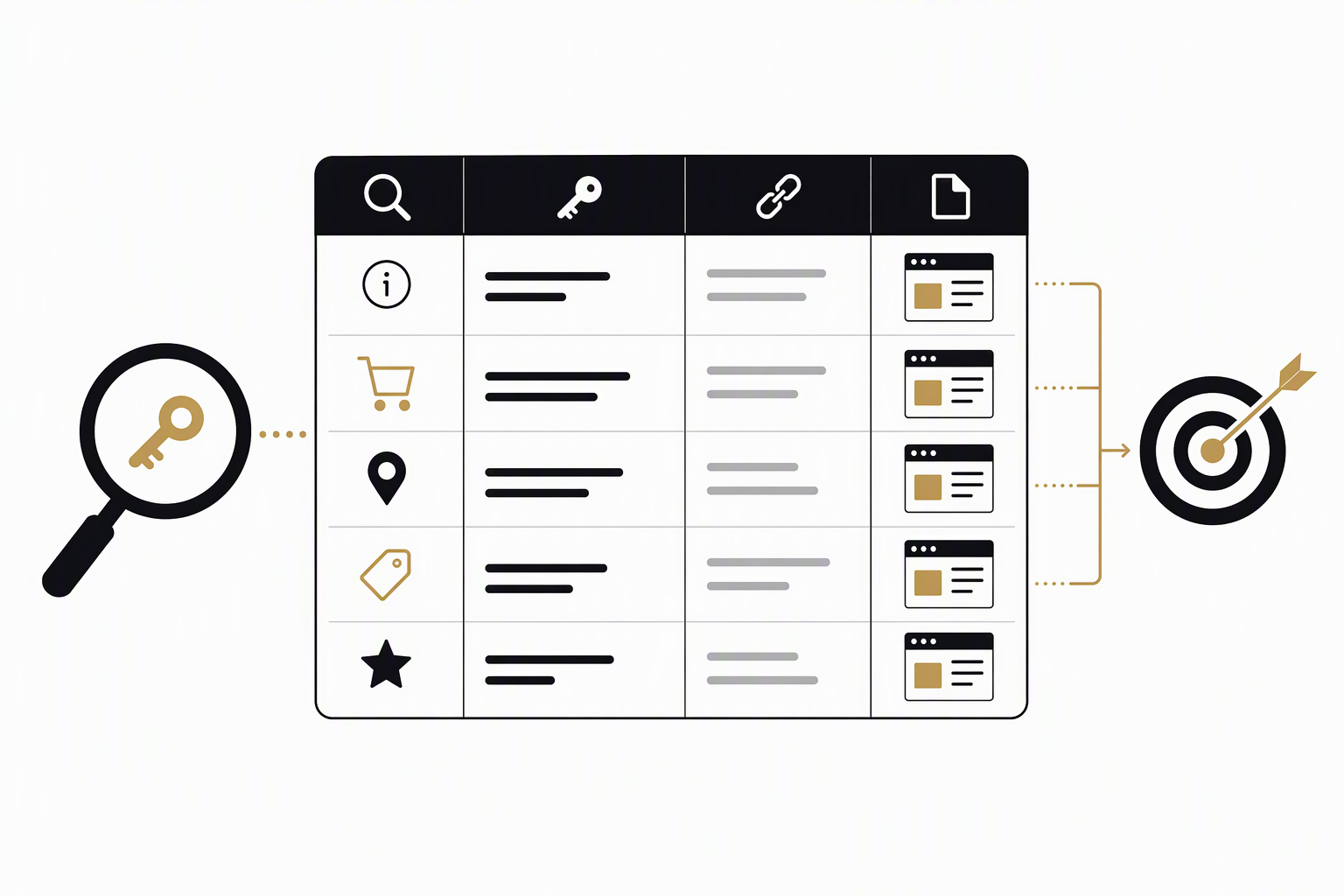
A keyword map connects each priority keyword theme to a specific page, its search intent, and its role in the customer journey. The map prevents scattered research from becoming an unorganized list of phrases without a publishing plan.
Step 1: Expand seed keywords into clusters
Start with a seed topic such as “plumber.” Expand it into related phrases including “emergency plumber,” “drain cleaning service,” “water heater repair,” and “plumbing maintenance tips.” Group terms that share the same underlying need, not merely terms that contain the same word.
Step 2: Assign one primary theme to each page
Choose the clearest representative phrase as the primary keyword theme. Add secondary keywords when they can be answered naturally on the same page. If two groups have meaningfully different intent, consider separate pages; if their intent and expected answers substantially overlap, one comprehensive page may be more appropriate.
Step 3: Create a working content map
The following example shows how a local plumbing business could turn seed ideas into a practical plan. The assignments are illustrative and should be validated against actual search results, business services, and local demand.
| Keyword cluster | Intent | Primary keyword | Secondary terms | Assigned page |
|---|---|---|---|---|
| Emergency service | Transactional, local | emergency plumber in Austin | 24 hour plumber Austin, urgent plumbing repair | Emergency plumbing service page |
| Water heater repair | Transactional | water heater repair Austin | water heater troubleshooting, water heater service | Water heater repair page |
| Repair pricing | Informational, commercial | plumber cost in Austin | plumbing service prices, emergency plumber cost | Pricing guide |
| Drain maintenance | Informational | how to unclog a drain | slow drain causes, safe drain cleaning methods | Drain troubleshooting article |
| Local company selection | Commercial, local | plumbers in Austin | local plumbing company, licensed plumber Austin | Main local service page |
Step 4: Keep a reusable keyword worksheet
Use spreadsheet columns for keyword, cluster, intent, estimated volume, difficulty, business relevance, primary or secondary status, target URL, current performance, and next action. Add a status such as “planned,” “drafting,” “published,” or “review.” This turns the map into an operational document that can be updated as pages are published and performance data accumulates.
For a broader semantic SEO approach, include genuinely related concepts, entities, and questions that help a page answer the topic comprehensively. The goal is not to force every variation onto the page; it is to cover the needs associated with its assigned theme.
How to Use SEO Keywords Without Keyword Stuffing
Effective keyword placement makes a page's topic clear while keeping the writing natural and useful. Include the primary theme where it helps readers understand the page, rather than repeating an exact phrase to reach an arbitrary density.
Follow a practical on-page checklist
- Title tag: Describe the page accurately and incorporate the primary topic when natural.
- URL: Use a short, readable path that reflects the page's subject.
- Main heading: Set a clear expectation for the information that follows.
- Body copy: Answer the main query early, then cover related questions and relevant details.
- Image alt text: Describe the image's meaningful content for accessibility. Include a keyword only when it accurately describes the image.
- Internal links: Use descriptive anchor text when linking to relevant supporting pages.
A useful review method is to read the page aloud and remove repeated phrases that add no meaning. Check that the page satisfies the intended query and that its title, headings, and body copy communicate the same subject. A practical on page SEO checklist can help standardize these checks.
Prevent competing pages and measure outcomes
When several pages target nearly identical intent, visitors and search engines may have difficulty identifying the best destination. Review existing URLs before creating another page, and consolidate overlapping content when appropriate. After publishing, use Google Search Console to compare queries, impressions, clicks, click-through rate, and average position over a consistent period. Interpret changes alongside seasonality, page updates, and other relevant factors instead of assuming that keyword placement alone caused the outcome.
For a repeatable search engine optimization process, schedule regular reviews of keyword priorities, page performance, and emerging customer questions. Update the map when evidence shows that a page attracts a different intent or a new opportunity deserves its own content.
How Beginners Can Learn SEO in 30 Days
A beginner can establish a practical keyword research routine in 30 days by completing four manageable stages: measurement, discovery, mapping, and publishing. The goal is to create a useful first version of the process, not to master every SEO technique in a month.
Week 1: Establish a baseline
Verify the website in Google Search Console if you have access, inspect indexed pages, and record existing queries and performance. List the main products or services, the audiences they serve, and the questions customers commonly ask.
Week 2: Research and prioritize
Collect suggestions and customer questions, expand seed terms with Keyword Planner, and score candidates using relevance, intent, volume, difficulty, and business value. Select a manageable group of high-priority topics rather than attempting to target every discovered phrase.
Week 3: Map and publish
Assign the selected keyword themes to existing or planned URLs. Choose one useful page to improve or create, confirm its intent, and review its title, headings, internal links, and content before publishing.
Week 4: Review and refine
Check whether the page is indexed and monitor impressions, clicks, queries, and position when enough data becomes available. A newly published page may need more time to produce meaningful trends. Record what you learn and use it to decide whether to improve the page, build a related resource, or research another keyword cluster.
The central lesson of keywords and SEO is that research becomes valuable when it informs specific page decisions. A maintained keyword map gives each page a purpose, helps reduce duplication, and creates a practical basis for future improvements.
Frequently Asked Questions About Keywords and SEO
Start with the keyword evaluation checklist and content mapping framework in this guide, then refine them as you learn from your own website data. If your business would benefit from professional SEO support, Freeways Agency is an optional resource to consider when planning your next steps.

Written by Joyce Ng.

Online Marketing SEO: Revenue Engine or Expensive Busywork?
Run online marketing search engine optimization in 2026 with a practical workflow, examples, and a 90-day KPI cadence that ties SEO to revenue.

Stop Playing SEO Roulette: Your First 30 Days, Mapped Out
Learn marketing online seo in 2026 with a beginner framework, free tools, a 30-day plan, and simple KPIs to track organic progress.
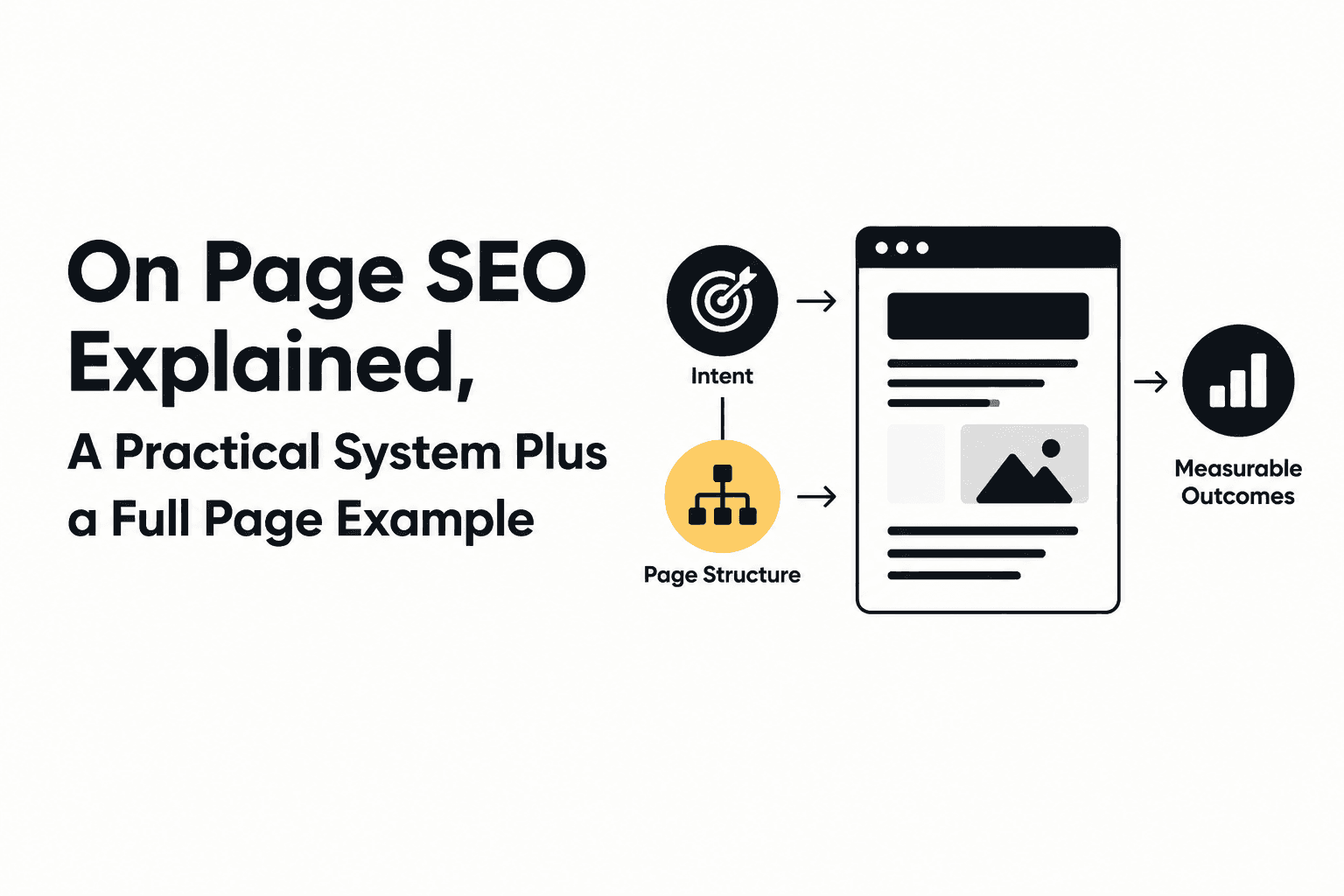
On Page SEO Explained, A Practical System Plus a Full Page Example
Learn on page seo with a simple 4-part system, a before/after page example, and a copy/paste checklist you can use on any URL.