
AI Tool For SEO In 2026 A Free Stack And Workflow That Actually Ships Results

An ai tool for seo stack works best in 2026 when it is built around a repeatable workflow (research → brief → draft → optimize → technical checks → reporting) instead of one “magic” app.
- Use a 3-bucket decision tree to avoid buying the wrong category: AI writing, SEO suites, and GEO/AEO visibility tracking solve different problems.
- A free stack can ship real work if you standardize inputs and verification checks, especially for keyword intent, facts, and internal linking.
- Measure impact with a minimum reporting setup that joins GSC with GA4 outcomes, so AI-assisted output is tied to leads not just traffic.
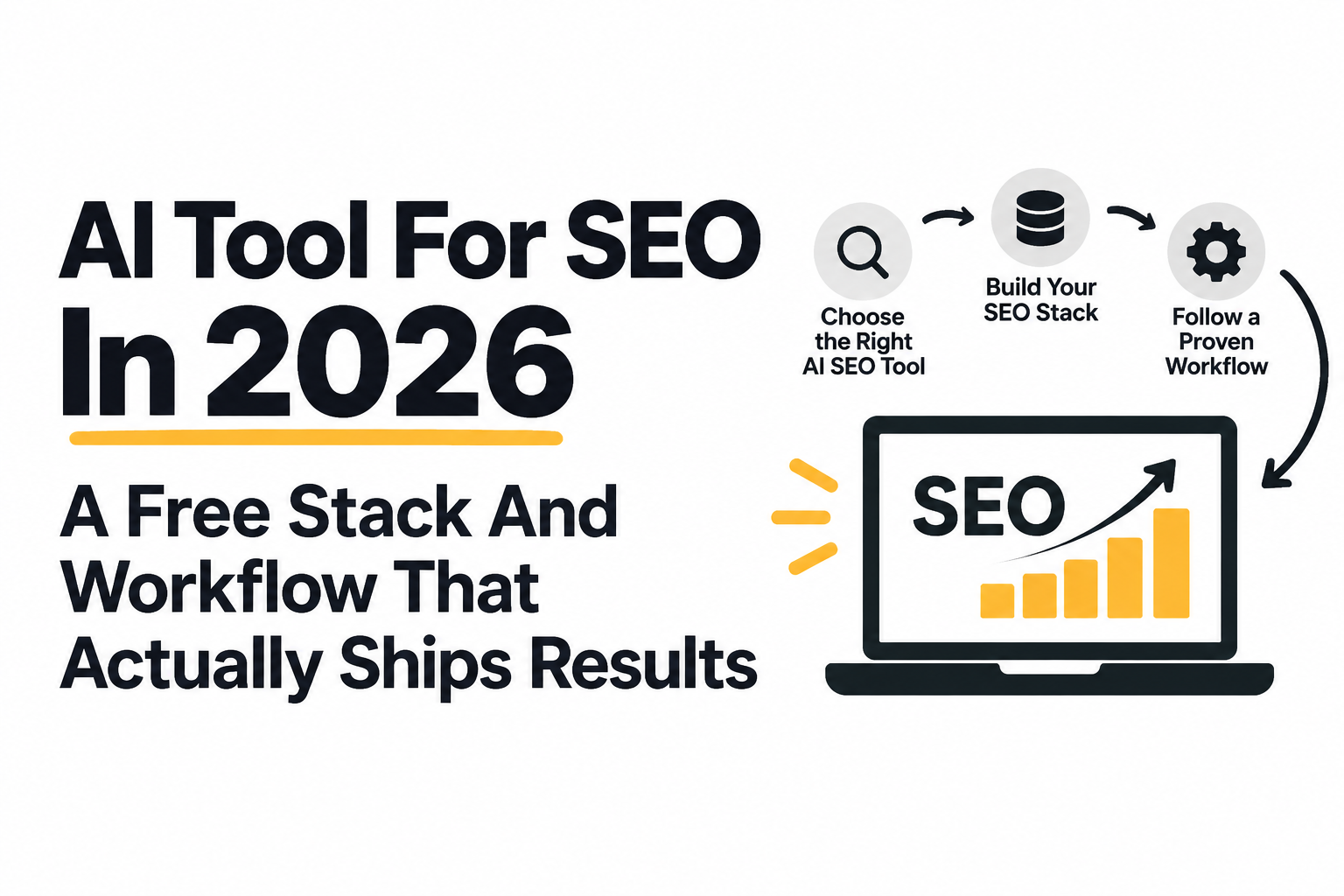
Choose the right AI tool for SEO with a 3-bucket decision tree
A reliable ai tool for seo decision comes from separating tools into three buckets and buying only the bucket that removes your current constraint.
Bucket 1: AI writing and analysis tools (speed and consistency)
- Best for: turning a defined topic and sources into briefs, outlines, drafts, rewrites, FAQs, and schema drafts.
- Outputs you should demand: a structured brief (headings + intent + entities + internal links), an editable draft, and a change log.
- Failure mode: “confident nonsense.” You must add verification steps (sources, GSC queries, product docs).
Bucket 2: SEO suites (site-level decisions and guardrails)
- Best for: crawling, indexation checks, internal linking opportunities, rank and SERP monitoring, and competitive gap views.
- Outputs you should demand: crawl issues with exportable lists, page-level opportunities, and trend views over time.
- Failure mode: teams treat suite scores as goals; you still need business KPIs and query intent fit.
Bucket 3: GEO/AEO tracking (visibility inside answers, not just blue links)
- Best for: understanding whether your pages are being used as cited sources or synthesized answers in AI interfaces.
- Outputs you should demand: query sets, citation/source tracking where available, and change detection (what pages start or stop being referenced).
- Failure mode: focusing on “mentions” without connecting to conversions or qualified sessions.
A simple decision tree you can apply in 5 minutes
- If the bottleneck is producing drafts and briefs: start with an AI writing tool plus strict verification.
- If the bottleneck is knowing what to fix on the site: start with a crawler and GSC-driven prioritization.
- If the bottleneck is answer visibility: add GEO/AEO tracking only after your on-page content is structured for extractability (clear sections, lists, FAQs, citations where appropriate).
In my own audits, the most common waste is buying a full suite to solve a writing bottleneck, then still not shipping because nobody standardized inputs like target query, audience, and “what must be true” facts.
The free AI tool for SEO stack in 2026 a complete workflow you can run this week
A free ai tool for seo stack can ship publishable pages if you constrain the workflow to a 7-step SOP and accept that free tiers break at scale (volume, collaboration, and automation).
A practical free-stack map (what each tool does and where it breaks)
- Google Search Console: query demand, pages winning and losing clicks, indexation signals. Breaks for content ops because it is not a workflow tool.
- Google Sheets: your lightweight “content system of record” for briefs, status, and QA. Breaks when you need permissions, automation, and review workflows.
- LLM chat tool (free tier if available): briefs, outlines, rewrites, clustering suggestions. Breaks at token limits, file handling, and consistency.
- Browser-based SERP sampling: manual review of top results for intent and formatting. Breaks when you need scale and repeatability.
- Lighthouse (Chrome) and PageSpeed Insights: basic performance checks. Breaks for deep technical SEO like log analysis or large-site crawl prioritization.
The 7-step SOP from GSC export to publish
- Export opportunities from GSC (weekly): In Performance, export queries and pages for the last 28 days and the previous 28 days. In Sheets, flag: (a) queries with impressions but low CTR, (b) pages with falling clicks, (c) pages ranking but mismatched intent.
- Pick one primary query per page: Choose the query that best matches the page’s purpose. Add 3 to 6 supporting queries (variations, subtopics). Avoid combining two different intents in one page.
- Do a 10-minute SERP format check: For the primary query, note what Google is rewarding: definition blocks, lists, comparison tables, tool roundups, or step-by-step guides. Capture 5 formatting observations, not “competitor word counts.”
- Create a one-page brief in Sheets: Include: audience, intent, “what must be true” facts, headings, internal links to add, and 3 to 5 external references if the topic requires standards or documentation.
- Draft with AI under constraints: Generate section-by-section, not one long paste. Require bullet lists, checklists, and decision criteria where relevant. Keep every section tied to the brief.
- Verification pass (non-negotiable): Confirm every specific claim against sources you control (your docs, pricing pages, product UI) or reliable public docs. If you cannot verify, rewrite as a criterion or mechanism instead of a “fact.”
- On-page optimization and publish: Add internal links, descriptive headings, a short intro that answers the query directly, and an FAQ based on real sub-questions in GSC and SERP “People also ask.” Then submit for indexing in GSC.
Where free tiers usually break first
- Consistency: different writers prompt differently, so outputs drift. Fix with prompt templates and a brief template.
- Collaboration: approvals and QA get messy in chat tools. Fix with a doc workflow and tracked changes.
- Scale: once you need 20 to 50 pages per month, manual SERP checks and copy-paste prompting become the bottleneck.
If you want a deeper tool-by-budget breakdown, the SEO AI tool shortlist is a helpful companion to this workflow-first approach.
ChatGPT for SEO without the fluff 6 repeatable workflows plus verification steps
ChatGPT-style prompting becomes an ai tool for seo advantage only when every prompt includes required inputs and ends with explicit checks for intent, accuracy, and on-page structure.
Workflow 1: GSC query clustering into page opportunities
Required inputs: a pasted table of queries with clicks, impressions, CTR, position; your site’s key offers; your target country and language.
Prompt:
“You are my SEO analyst. Cluster the queries below into groups that should map to one page each. For each cluster, provide: primary query, 3-6 secondary queries, inferred intent (one label), recommended page type (guide/tool/comparison), and the single best existing URL to target (if any). Output as a table. Queries: [paste]. Existing URLs: [paste list].”
Verification: spot-check 5 clusters manually in SERP to confirm intent. If clusters mix “how to” and “buy” intents, split them.
Workflow 2: Brief generation that forces specificity
Required inputs: primary query, audience, product/service context, and any must-include points.
Prompt:
“Create a one-page SEO content brief for the query: [query]. Audience: [audience]. Business context: [context]. Constraints: do not invent stats, do not mention competitors, do not use fluff. Include: (1) 1-sentence direct answer opening, (2) H2/H3 outline, (3) key entities/terms to cover, (4) internal link suggestions (placeholders), (5) 5 questions to answer in FAQ, (6) quality checklist.”
Verification: compare the outline to the top 5 ranking pages for format only (do we need a table, steps, definitions). Do not chase their headings verbatim.
Workflow 3: Drafting section-by-section with “quotable units”
Prompt:
“Write H2 section: [paste H2 + bullet notes]. Requirements: first sentence must be self-contained and directly answer the section question; include a checklist or table-ready bullets; avoid unverified numbers; end with a ‘Common failure modes’ list.”
Verification: ensure each section can be excerpted on its own. If the first sentence depends on earlier context, rewrite it.
Workflow 4: Rewrite for extractability (snippets and AI answers)
Prompt:
“Rewrite the following section to be easier to cite: add short paragraphs, numbered steps, and clear criteria. Keep meaning identical and do not add facts. Text: [paste].”
Verification: check the rewrite did not introduce new claims. I usually do this by scanning for new numbers, new brand names, or “studies show” language.
Workflow 5: Internal linking suggestions without making things up
Required inputs: your sitemap export or a list of relevant URLs and their page purpose.
Prompt:
“Given this draft and this list of existing URLs, suggest 5 internal links with exact anchor text options and where to place them. Only use URLs from the list. Draft: [paste]. URL list: [paste].”
Verification: click each suggested URL to confirm topical fit and avoid cannibalization.
Workflow 6: Technical and on-page QA checklist generation
Prompt:
“Create a pre-publish QA checklist for this page targeting [query]. Include: title tag pattern, H1/H2 validation, internal links, image alt text, schema candidates, and GSC submission steps. Keep it tool-agnostic and actionable.”
Verification: run Lighthouse and manually confirm indexability (canonical, noindex, robots) in your CMS settings.
If you want an end-to-end prompting workflow with QA gates, see use ChatGPT for SEO for a longer prompt library and review pattern.
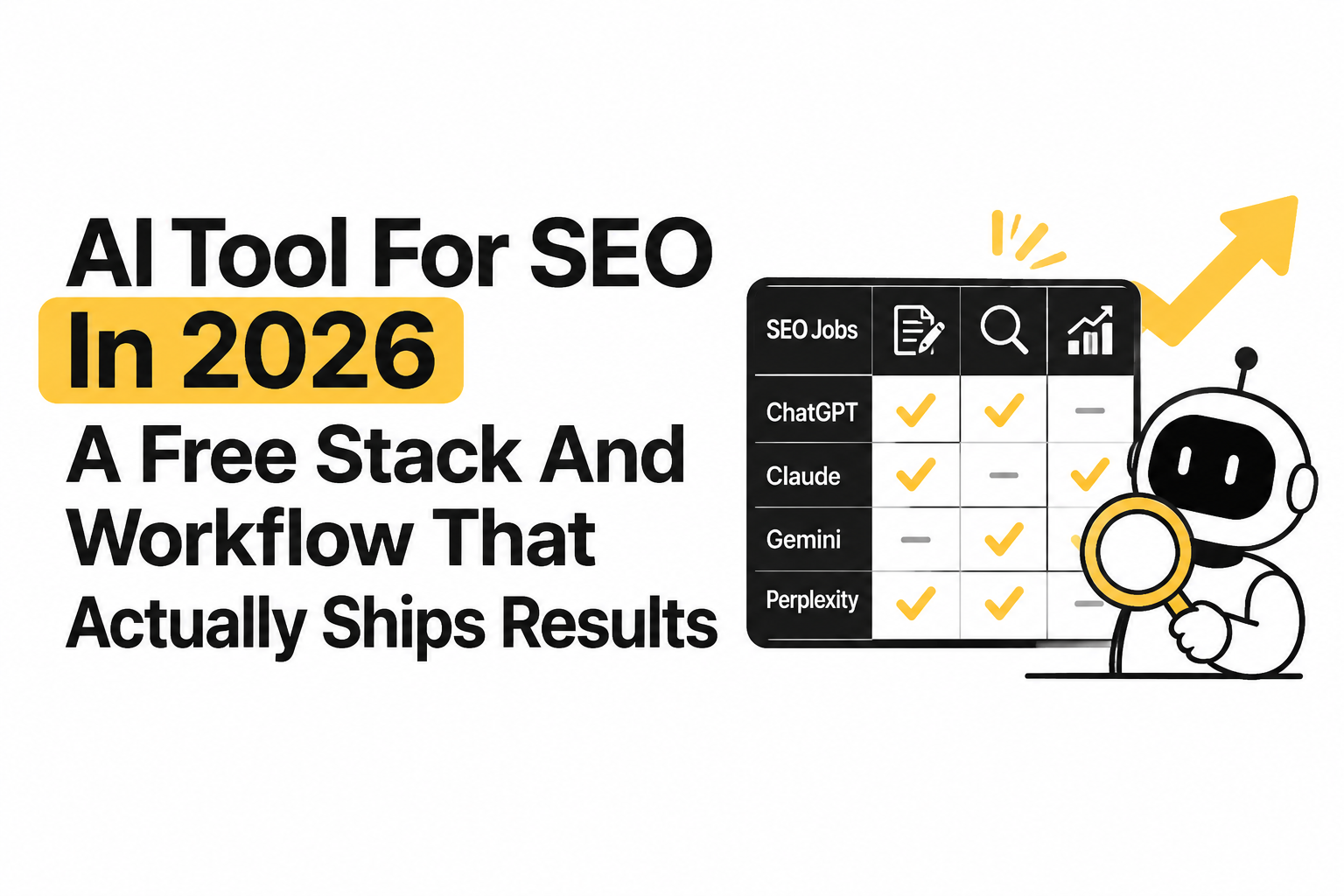
Which AI model is best for SEO a task-based decision matrix
The best ai tool for seo model choice is task-dependent because research, writing, code, and analysis fail in different ways.
Model selection criteria that actually matter for SEO work
- Context window and file handling: matters for long briefs, exports, and multi-page audits.
- Reasoning consistency: matters for clustering, prioritization, and avoiding contradictory recommendations.
- Writing control: matters for matching your brand voice and formatting for extractability.
- Code capability: matters for regex, schema drafts, and lightweight scripts.
- Cost per output: matters when you scale from a few pages to dozens per month.
Task-based matrix (use this instead of “best overall” debates)
- Keyword clustering and intent labeling: choose a model that is stable and can follow tabular instructions. Common failure: over-merging different intents.
- Content brief generation: choose a model that follows structure precisely. Common failure: adding “nice-to-have” sections that dilute intent.
- Drafting and rewriting: choose a model with strong style control. Common failure: generic filler if you do not supply constraints and examples.
- Schema and lightweight technical help: choose a model that can output valid JSON-LD and explain assumptions. Common failure: invalid properties or mismatched schema type.
- Data analysis (exports from GSC/GA4): choose a model that can interpret CSVs or at least reason cleanly from pasted samples. Common failure: incorrect aggregation logic.
I have found that teams get better results by standardizing “model roles” (one for drafting, one for analysis) rather than chasing a single model for everything, because it keeps prompts and expectations stable.
For a broader view of how AI fits into modern visibility work beyond drafts, the AI for SEO framework and this overview of AI powered SEO help you map tasks to outcomes.
| SEO job-to-be-done | Minimum free setup | When it breaks | First upgrade to consider |
|---|---|---|---|
| Find query opportunities | GSC export + Sheets | Need automated segmentation and alerts | Reporting automation or lightweight BI connector |
| Create briefs fast | LLM + brief template | Inconsistent briefs across writers | Shared prompt library + doc workflow |
| Draft and optimize content | LLM + manual SERP review | Volume scales, QA time explodes | Editor workflow + structured QA checklist |
| Technical checks | Lighthouse + manual checks | Large site, crawl prioritization needed | Crawler + issue management process |
| Measure impact | GA4 + GSC + UTM conventions | Attribution and segmentation become unclear | GA4-GSC joining, dashboards, lead-quality tagging |
How to measure business impact from AI SEO and GEO the minimum reporting setup
Business impact from an ai tool for seo workflow is measurable when every content update is tagged, every page has a target query, and GSC visibility is joined to GA4 outcomes.
The minimum KPI set (keep it boring and comparable)
- Visibility: GSC clicks, impressions, and average position for the target query set.
- Engagement proxy: GA4 engaged sessions and scroll or key event completion (choose one and keep it consistent).
- Business outcome: leads, trials, demo requests, purchases, or the closest measurable conversion event you have.
- GEO/AEO proxy: snippet wins, brand query lift, or referral sessions from AI assistants where detectable. Treat this as directional unless your tracking is mature.
Tagging that makes SEO work auditable
- Content change log: in Sheets, record date, URL, what changed (brief rewrite, new sections, internal links, technical fix), and target query.
- Annotations: keep a simple timeline so you can explain movement when clicks change.
- UTM discipline for supporting distribution: if you share updated pages in email or social, tag them so conversions are not misattributed to “direct.”
Joining GA4 and GSC (practical approach)
- Page-level join: use landing page URL as the common key; compare GSC clicks to GA4 sessions per page monthly.
- Query-to-page mapping: keep a sheet that maps each page to 1 primary query and a small query set, so reporting stays stable.
- Monthly report structure: (1) what shipped, (2) which pages gained visibility, (3) which conversions moved, (4) what you will ship next month based on constraints.
One lesson I keep coming back to: if the report cannot answer “what changed and why,” teams stop trusting the data and the workflow falls apart, no matter how good the AI drafts are.
When to upgrade from free and what to buy next a scaling path by constraint
The right time to upgrade your ai tool for seo stack is when a specific constraint repeatedly blocks shipping or measurement, not when you feel you “should be more advanced.”
Common constraints and the next purchase that removes them
- Constraint: you cannot keep briefs consistent across people.
Next step: shared templates, a prompt library, and a review checklist inside your doc process before buying more tools. - Constraint: technical issues keep resurfacing.
Next step: add a crawler and create an issue backlog with owners and due dates. Tools do not fix prioritization by themselves. - Constraint: reporting takes too long and nobody believes it.
Next step: automate the GA4 and GSC join and standardize page-to-query mapping. Even a simple dashboard beats ad hoc screenshots. - Constraint: you publish volume but performance is flat.
Next step: reallocate effort from net-new content to updating pages with impressions and low CTR, and improve internal links. This is usually a workflow issue, not a model issue.
Upgrade paths by team size (keep the workflow, add guardrails)
- Solo operator: keep free research and tracking, pay for the AI writing tier that supports longer context and file handling.
- 2 to 5 people: invest in collaboration and QA: shared docs, editorial workflow, and a crawler if you manage more than a handful of pages.
- 5+ people: invest in reporting automation and role clarity (who owns brief, QA, publish, and measurement). This is where tools become leverage instead of noise.
One body mention of a service option (when you want it implemented end-to-end)
If you want the workflow set up and run with technical checks and reporting tied to leads, Freeways Agency typically implements the SOP above as part of an ongoing search engine optimization service approach, using AI to speed up research and content production without skipping verification.
FAQ about using AI tools for SEO
If you want a practical next step, Freeways Agency can run an AI SEO workflow audit of your current process and deliver a 30-day implementation plan tied to your KPIs so you know exactly what to change, what to keep, and what to measure.

Written by Joyce Ng.

Top Search Engine Optimization Companies in 2026 Ranked With a Transparent Scorecard
Compare top search engine optimization companies in 2026 using a transparent scorecard, pricing ranges, red flags, and an RFP template.
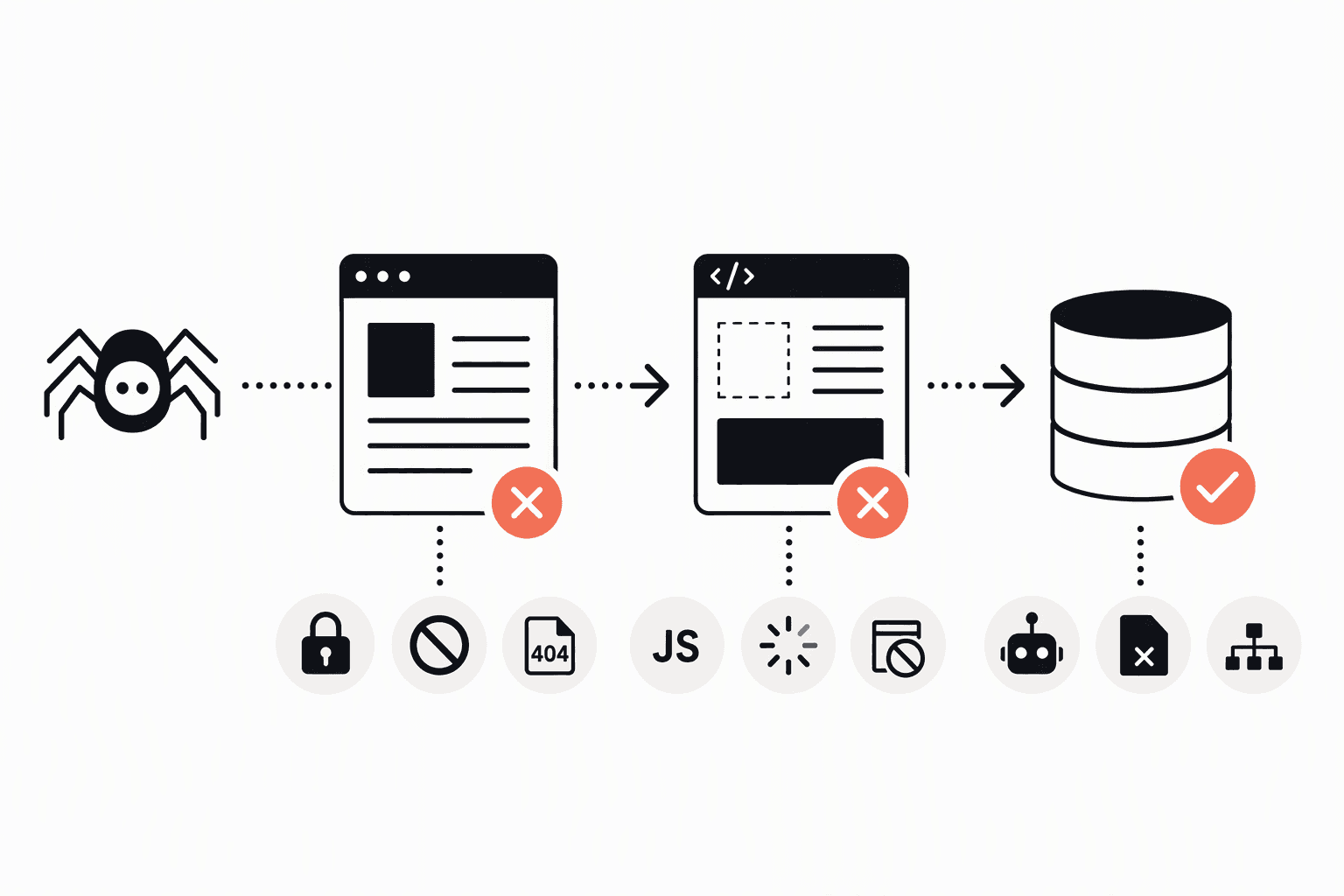
Technical SEO Explained, How It Works, What to Fix First, and Why It Matters
Learn technical seo basics, how crawl-render-index works, what breaks it, and a prioritized checklist to fix issues fast using GSC.

Internet Marketing SEO Feels Like a Maze? Here’s Your 90-Day Way Out
Learn internet marketing seo in 2026 with a beginner framework, Google Search Console steps, and a practical 30/60/90-day plan to measure results.